The nurse is discussing advance care planning with a client and emphasizes the importance of a Medical Power of Attorney (POA). The nurse explains that a Medical POA allows the client to do which of the following?
The nurse is discussing advance care planning with a client and emphasizes the importance of a Medical Power of Attorney (POA). The nurse explains that a Medical POA allows the client to do which of the following?
A. Designate a family member to make financial decisions on their behalf.
[3%]
B. Specify funeral arrangements and preferences for end-of-life care.
[2%]
C. Appoint a trusted individual to make healthcare decisions in case of incapacity.
[93%]
D. Choose the primary physician for ongoing medical care.
[2%]
Statistics
Subject/Lesson
Subject
Leadership & Management
Lesson
Ethical/Legal
Client Need
Test Plan
Management of Care
Related Topic
Advance Directives
Item Type
Item Type
Knowledge/Comprehension
Explanation
Choice C is correct. A Medical POA allows an individual to appoint a trusted person to make healthcare decisions on their behalf in case they become unable to do so due to incapacity. This helps ensure that the client's medical wishes are followed.
Choice A is incorrect. A Medical POA specifically pertains to healthcare decisions, not financial decisions. It grants someone the authority to make medical decisions on behalf of the individual if they become unable to do so.
Choice B is incorrect. While important for advance care planning, specifying funeral arrangements and preferences for end-of-life care is typically addressed through other documents, such as a Living Will or Advance Directive, rather than a Medical POA.
Choice D is incorrect. Choosing a primary physician for ongoing medical care is not typically addressed through a Medical POA. The focus of a Medical POA is on designating someone to make healthcare decisions when the individual is unable to make those decisions themselves.
Related Videos
2 Key Topics
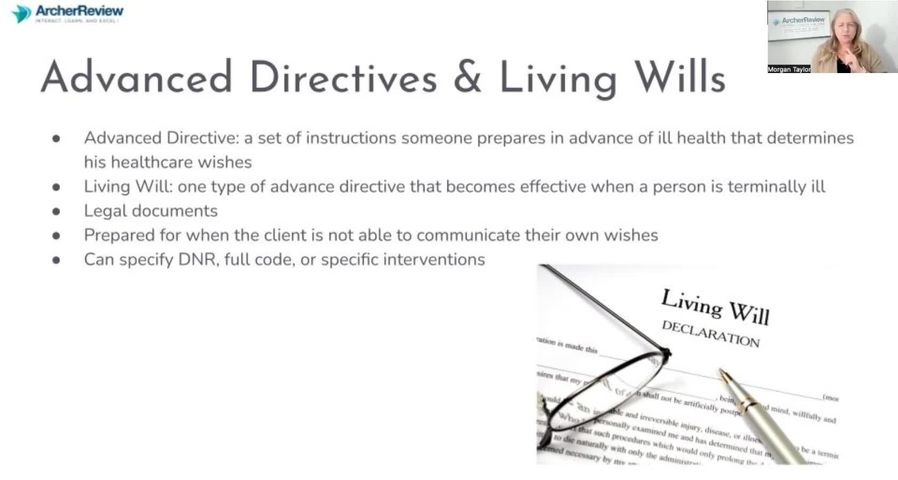
Medical Power of Attorney
15.11 Legal & Ethical Decision-Making Tools
Additional Info
✓ Historically, a relatively low percentage of the population has completed advance directives, including Medical Power of Attorney documents. Studies have suggested that less than 30% of adults in various countries have formalized their healthcare preferences through advance care planning documents.
✓ If applicable provide comprehensive education to clients about the importance of advance care planning, including the role of a Medical Power of Attorney. Encourage discussions with family members and loved ones to ensure understanding and alignment of preferences.
✓ Encourage clients to review and, if necessary, update their Medical POA regularly, especially if there are changes in health status, preferences, or the chosen healthcare agent. Ensuring that the document reflects current wishes is crucial.
