The nurse is working in a community clinic that provides care to clients regardless of their ability to pay. The clinic has recently received a limited number of influenza vaccines, and the nurse is instructed to prioritize high-risk individuals for vaccination.
Which of the following ethical principles is the nurse supporting?
The nurse is working in a community clinic that provides care to clients regardless of their ability to pay. The clinic has recently received a limited number of influenza vaccines, and the nurse is instructed to prioritize high-risk individuals for vaccination.
Which of the following ethical principles is the nurse supporting?
A. nonmaleficence
[15%]
B. paternalism
[14%]
C. justice
[60%]
D. veracity
[12%]
Statistics
Subject/Lesson
Subject
Leadership & Management
Lesson
Ethical/Legal
Client Need
Test Plan
Management of Care
Related Topic
Ethical Practice
Item Type
Item Type
Application
Explanation
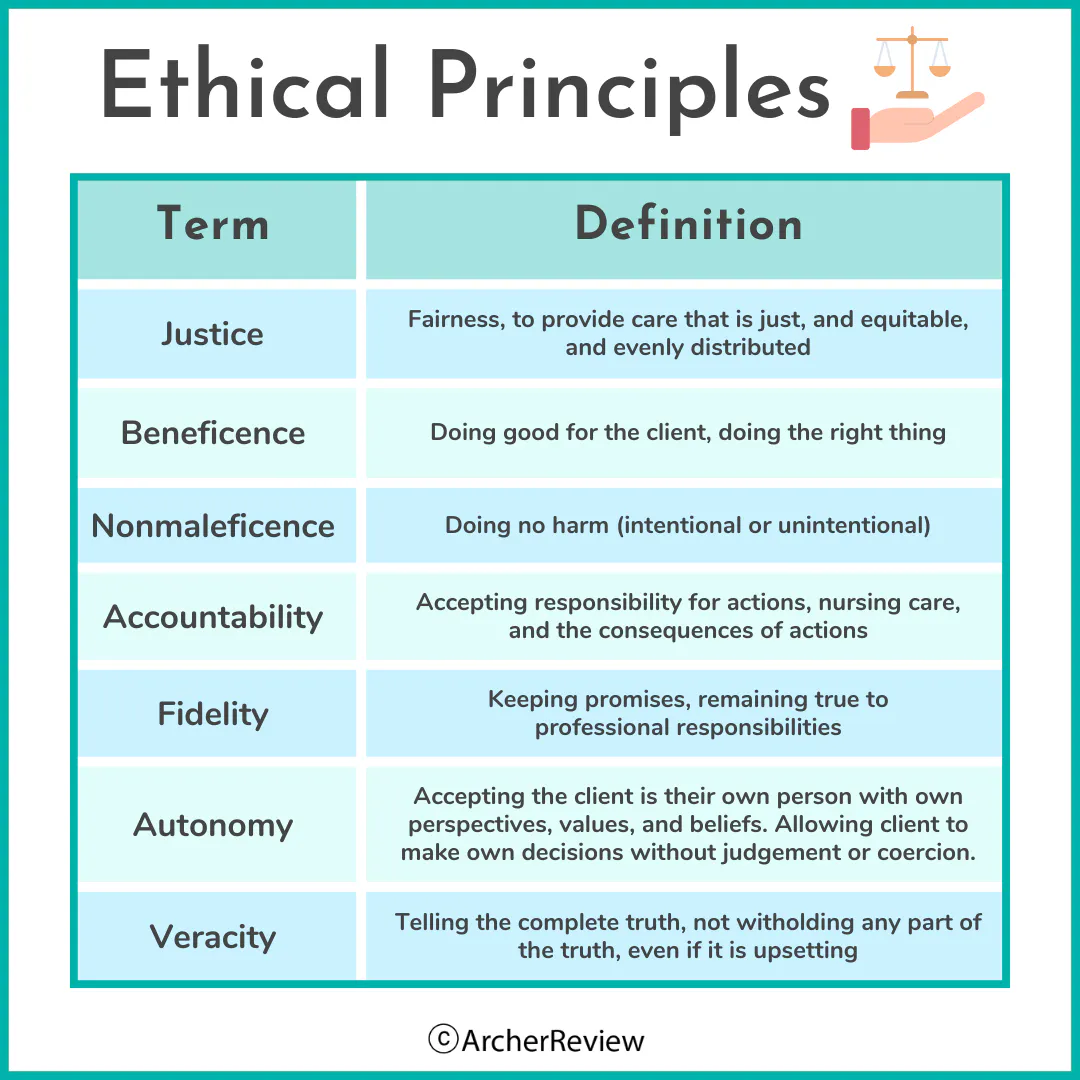
Choice C is correct. Justice refers to fairness and equitable treatment of all individuals, especially in access to care and resources. The nurse's advocacy for equal diagnostic scheduling reflects a commitment to ensuring clients are treated fairly regardless of insurance status.
Choice A is incorrect. Nonmaleficence means to do no harm. While delays could result in harm, the nurse's concern is explicitly focused on fairness, not harm avoidance.
Choice B is incorrect. Paternalism involves making decisions for a client based on what the provider believes is in the client's best interest, which is not the focus of this situation.
Choice D is incorrect. Veracity is the obligation to tell the truth. The issue in this scenario is not about honesty or dishonesty, but fairness in care delivery.
Learning Objective
Apply the principle of justice by identifying nursing actions that promote equitable treatment of clients regardless of socioeconomic or insurance status in clinical decision-making.
Related Videos
2 Key Topics

Justice