The nurse cares for a client with disseminated intravascular coagulation (DIC) and prescribed multiple blood products
Item 1 of 1
- Nurses’ Note
Blood consent was completed and obtained. Type and screen and type and cross results noted. 20-gauge peripheral vascular access device started in the right antecubital space. Flushed with no resistance and positive blood return. Educated the client on the purpose of the transfusion and signs and symptoms of a transfusion reaction.
- Orders
- Two units of Packed Red Blood Cells (PRBCs)
- Two units of Platelets
- One unit of Fresh Frozen Plasma (FFP)
- Laboratory
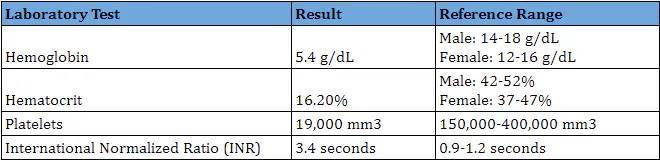
Select the most likely option for the missing information in the table below by choosing from the list of options. Each option may only be used once.
Select the most likely option for the missing information in the table below by choosing from the list of options. Each option may only be used once.
| Blood Product | Infusion Time | Nursing Intervention |
|---|---|---|
 | 2-4 hours | Give product with 0.9% saline with y-type tubing |
Fresh Frozen Plasma (FFP) |  | Reassess PT/INR after transfusion |
Platelets | 15-30 minutes |  |
Statistics
Subject/Lesson
Subject
Pharmacology
Lesson
Hematological/Oncological
Client Need
Test Plan
Pharmacological and Parenteral Therapies
Related Topic
Blood and Blood Products
Item Type
Item Type
TakeAction
Explanation
Packed Red Blood Cells
- Indicated for anemia or significant blood loss. Most commonly administered when hemoglobin levels are ≤7 g/dL or in active bleeding.
- The transfusion time for PRBCs is 2-4 hours.
- The blood product should be type-specific, but if not possible, O negative may be administered as the universal donor.
- When infusing PRBCs, 0.9% saline should be spiked with the blood product using Y-type tubing.
- Monitor vital signs and stay with the client during the first 15 minutes for early signs of transfusion reaction.
Fresh Frozen Plasma
- Indicated for clotting factor replacement and volume expansion.
- FFP must be type-specific and be administered over 30-60 minutes, or as quickly as the client can tolerate..
- Coagulation factors in FFP degrade over time. Infusing for more than 60 minutes risks diminishing factor potency, thereby reducing clinical effectiveness.
- The nurse should reassess the PT/INR after the transfusion to determine efficacy.
- After transfusion, nurses must reassess coagulation labs—specifically PT/INR—to determine efficacy.
Platelets
- Used to treat platelet dysfunction and thrombocytopenia.
- Platelet transfusions are indicated once the platelet count reaches 20,000-25,000 mm3.
- Platelets do not have to be type-specific, as they are pooled from as many as ten donors.
- The infusion time is 15-30 minutes.
- Platelets need to be infused through short tubing and a small filter so they do not stick to the inner lumen of the tubing and clog the filter.
- Platelet transfusions are not given to correct hemoglobin levels or anemia.
- Hemoglobin reflects red blood cell mass, not platelet function.
- The expected outcome of a platelet transfusion is an increased platelet count, not an increase in hemoglobin.
Related Videos
4 Key Topics
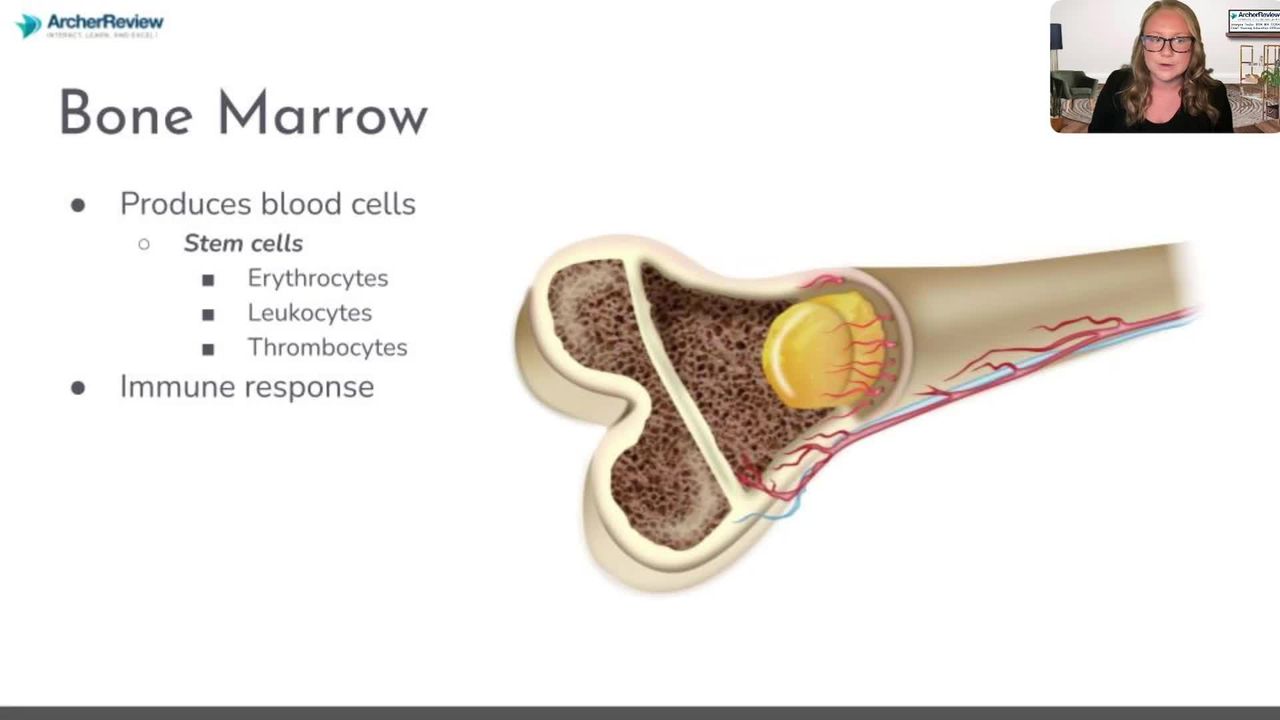
Hematologic Anatomy & Physiology
