The nurse assists a client with diverticulosis in selecting appropriate foods on a menu.
Which food choices made by the client would require further teaching? Select all that apply.
The nurse assists a client with diverticulosis in selecting appropriate foods on a menu.
Which food choices made by the client would require further teaching? Select all that apply.
Statistics
Subject/Lesson
Subject
Nutrition
Lesson
Nutrition
Client Need
Test Plan
Basic Care and Comfort
Related Topic
Nutrition and Oral Hydration
Item Type
Item Type
Knowledge/Comprehension
Explanation
Choice C is correct. Clients with diverticulosis require a high fiber diet to prevent diverticulitis. White rice is low in fiber and considered a refined grain. It does not support the high-fiber dietary goal and should be limited or substituted with whole grains like brown rice or quinoa.
Choice D is correct. Applesauce is low in fiber due to the removal of skins and processing. Whole apples with skin provide more fiber and are preferred in diverticulosis.
Choice A is incorrect. Bran cereal is a good source of fiber, which is beneficial for individuals with diverticulosis.
Choice B is incorrect. Leafy greens like kale are rich in fiber and beneficial for diverticulosis management.
Choice E is incorrect. Guava is high in dietary fiber and provides bulk to the stool. This would be an appropriate selection.
Related Videos
2 Key Topics
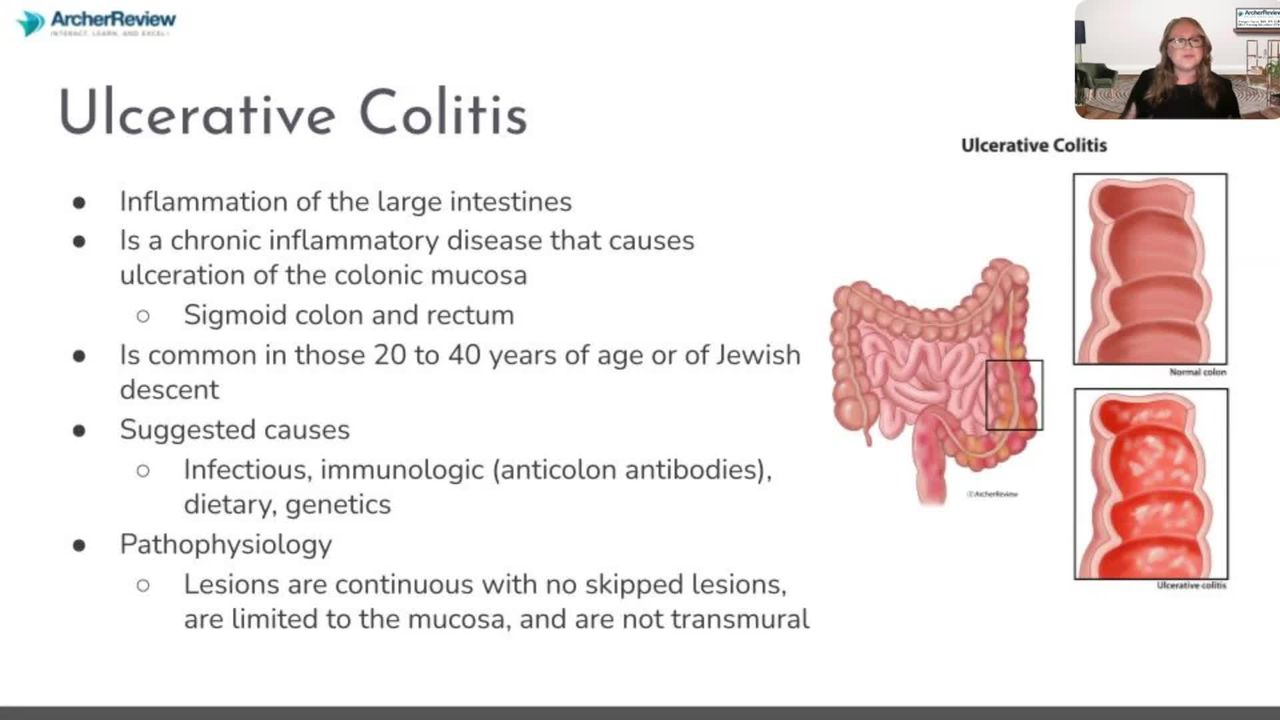
Diverticular Disease
20.6 Inflammatory & Structural Intestinal Disorders
Additional Info
✓ Diverticulosis is when the client develops small herniations in the large bowel
✓ A common cause of this condition is a low-fiber diet, and it causes manifestations such as abdominal cramping in the left lower quadrant, bloating, flatulence, and blood in the stool
✓ The client is instructed to increase their fiber and water intake as these measures are key in promoting bowel motility
✓ If the client has difficulty adhering to a high-fiber diet, bulk-forming laxatives are recommended
✓ If the client develops diverticulitis (inflamed diverticula), the recommended dietary regimen is NPO (nothing by mouth), which is gradually advanced to clear liquids, low fiber, and finally a high-fiber diet. Diets high in fiber have the potential to prevent diverticulitis and diverticulosis. Nevertheless, inflammation occurs during a flare of diverticulitis; consequently, a low-fiber diet is implemented to decrease the frequency of bowel movements until the flare subsides.
