The nurse is caring for a client who is edentulous.
Which of the following diet orders should the nurse request from the healthcare provider?
The nurse is caring for a client who is edentulous.
Which of the following diet orders should the nurse request from the healthcare provider?
A. a low sodium diet
[17%]
B. a mechanical soft diet
[66%]
C. a renal diet
[8%]
D. a high-fiber diet
[8%]
Statistics
Subject/Lesson
Subject
Nutrition
Lesson
Nutrition
Client Need
Test Plan
Basic Care and Comfort
Related Topic
Nutrition and Oral Hydration
Item Type
Item Type
Knowledge/Comprehension
Explanation
Choice B is correct. Edentulous is a medical term referring to the complete loss of all teeth (i.e., dentition). Edentulous clients lack teeth; therefore, a mechanical soft diet would be most likely ordered for this client, as this diet would facilitate mastication. Providing meals to the client in this manner would aid in the client's chewing or gnawing of their food with their gums. The other diet choices do not offer safe eating options for an edentulous client.
Choice A is incorrect. A low-sodium diet is typically ordered to prevent edema and excessive fluid. This type of diet is most often indicated for clients with conditions such as edema, renal disease, and heart disease but not those with edentulism.
Choice C is incorrect. A renal diet to prevent fluid retention and edema is indicated for clients affected with renal disease and kidney failure but not edentulism.
Choice D is incorrect. A high-fiber diet is typically ordered to ensure the frequency of bowel movements. This type of diet is most often indicated for clients at risk or who are currently constipated, but not those with edentulism.
Learning Objective
Correctly identify a mechanical soft diet as the diet most likely to be ordered for an edentulous client, as this diet would facilitate mastication.
Related Videos
2 Key Topics
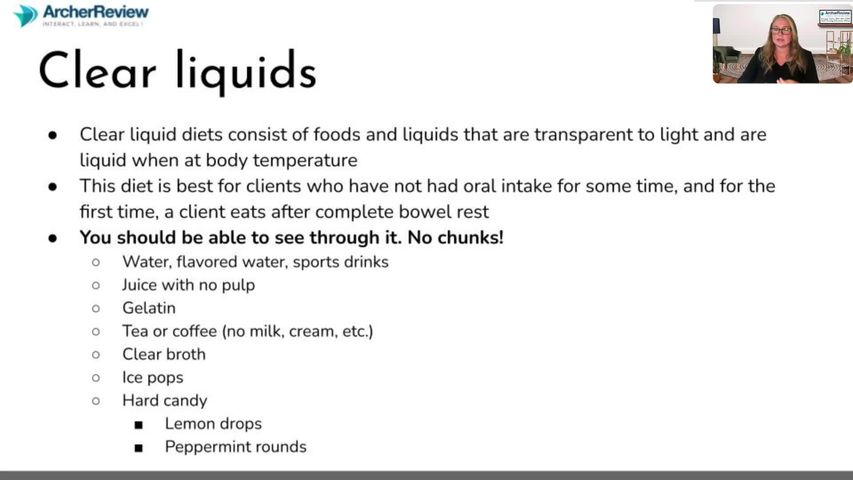
Miscellaneous Diets
3.4 Dietary Restrictions & Progression
Additional Info
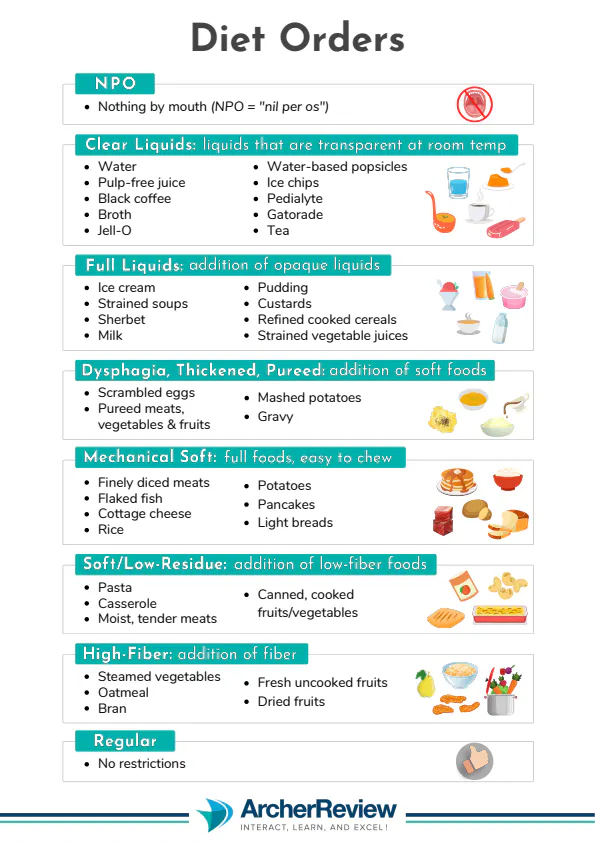
✓ A pureed or mechanical soft diet may be easier for clients who have problems chewing or do not have teeth.
✓ Foods appropriate for a mechanical soft diet include finely diced meats, flaked fish, cottage cheese, cheese, rice, potatoes, pancakes, light breads, cooked vegetables, cooked or canned fruits, bananas, soups, peanut butter, eggs (not fried)