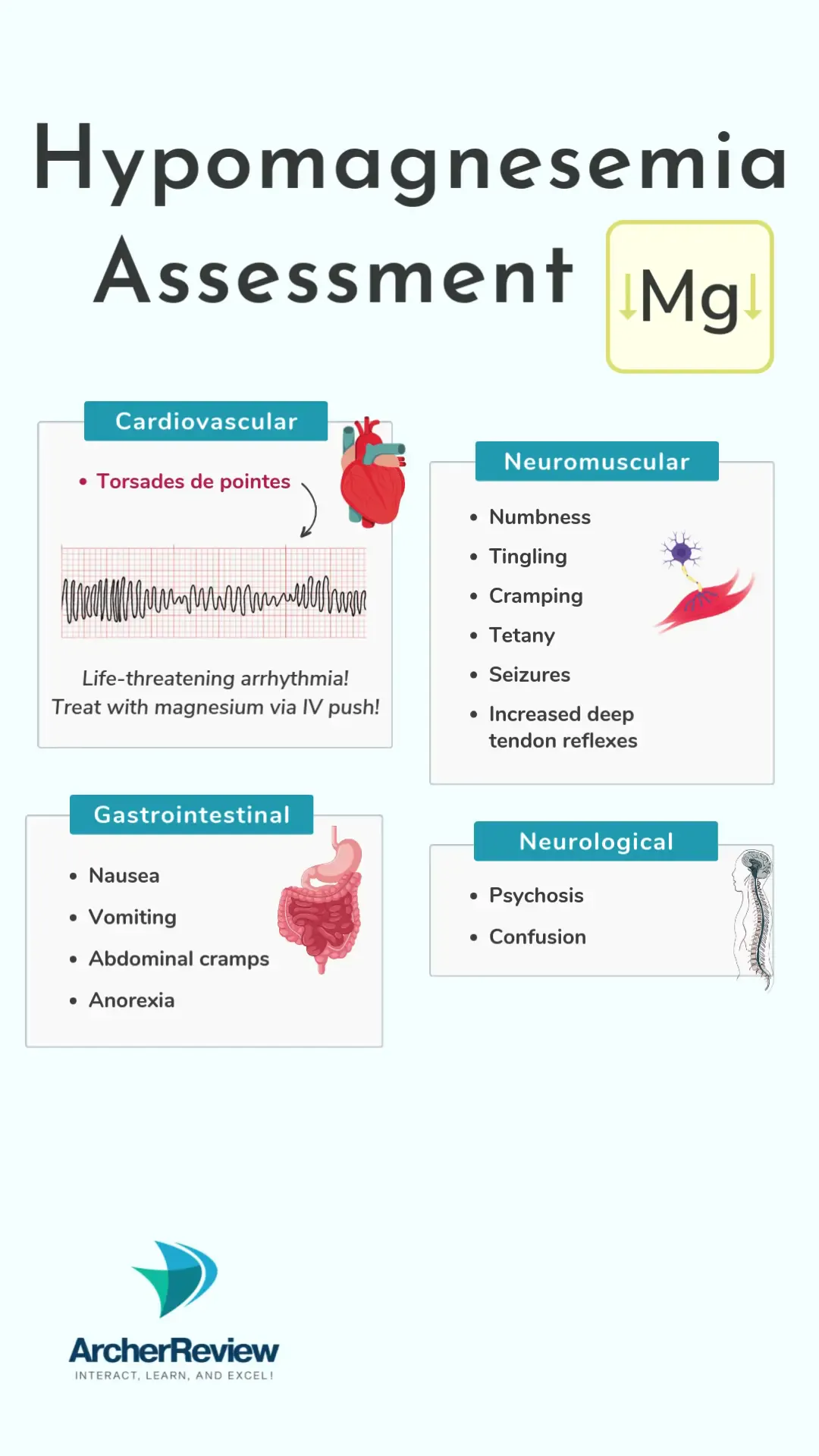
The nurse in the emergency department is caring for a client with a magnesium level of 1.4 mEq/L (0.58 mmol/L) [1.5-2.5 mEq/L, 0.6–1.2 mmol/L].
Which foods should the nurse recommend for the client to consume? Select all that apply.
The nurse in the emergency department is caring for a client with a magnesium level of 1.4 mEq/L (0.58 mmol/L) [1.5-2.5 mEq/L, 0.6–1.2 mmol/L].
Which foods should the nurse recommend for the client to consume? Select all that apply.
Statistics
Subject/Lesson
Subject
Nutrition
Lesson
Nutrition
Client Need
Test Plan
Basic Care and Comfort
Related Topic
Nutrition and Oral Hydration
Item Type
Item Type
Application
Explanation
Choice A is correct. This client's magnesium level is borderline low, so the nurse must encourage them to eat magnesium-rich foods. Spinach is an excellent source of magnesium, offering about 140 mg per cup.
Choice D is correct. Salmon is a good source of magnesium, offering about 88 mg per fillet.
Choice E is correct. Bananas are a good source of magnesium, with one medium-sized banana containing approximately 32 milligrams of magnesium, about 8% of the recommended intake.
Choice B is incorrect. Onions are not a significant source of magnesium. While they have various health benefits, they are not among the top choices when aiming to increase magnesium intake significantly.
Choice C is incorrect. Mushrooms contain some magnesium but are not considered an exceptionally high source of this mineral compared to other foods. While they can contribute to magnesium intake as part of a balanced diet, other foods are much richer in magnesium content. Overall, mushrooms are not a good source of magnesium, as they only have about 7 mg per cup.
Related Videos
2 Key Topics
Nutrition Assessment
9.4 Nutrition Support & Assessment
Additional Info
✓ Magnesium is an essential mineral that plays a vital role in various physiological functions, including muscle and nerve function, blood pressure regulation, and protein synthesis.
✓ The following are some dietary sources of magnesium recommended by the Academy of Nutrition and Dietetics:
- Green leafy vegetables
- Nuts and seeds
- Legumes
- Whole grains
- Seafood
- Dairy products
✓ It is essential to note that the magnesium content of foods can vary depending on the soil in which they are grown and the processing methods used. Therefore, it is recommended to consume a variety of magnesium-rich foods to meet daily magnesium requirements.
✓ The ADA recommends a daily intake of 310-320 mg of magnesium for adult women and 400-420 mg for adult men.