The nurse is caring for a client experiencing amphetamine intoxication.
It would be a priority for the nurse to
The nurse is caring for a client experiencing amphetamine intoxication.
It would be a priority for the nurse to
A. establish a therapeutic relationship with the client.
[3%]
B. initiate continuous electrocardiogram monitoring.
[85%]
C. monitor the client's mood and affect frequently.
[9%]
D. review the client's history of substance use.
[3%]
Statistics
Subject/Lesson
Subject
Mental Health
Lesson
Substance Abuse and other dependencies
Client Need
Test Plan
Psychosocial Integrity
Related Topic
Chemical and Other Dependencies/Substance Abuse Disorder
Item Type
Item Type
Application
Explanation
Choice B is correct. Amphetamines are potent central nervous system stimulants that increase catecholamine release, leading to tachycardia, hypertension, dysrhythmias, and potential myocardial ischemia. Cardiac monitoring is the priority to detect life-threatening complications early. Continuous ECG monitoring allows rapid recognition and response to arrhythmias or cardiovascular instability, which are common and potentially fatal.
Choice A is incorrect. This is important for long-term care and recovery, but not the immediate priority during acute intoxication when life-threatening symptoms (e.g., dysrhythmias) may occur.
Choice C is incorrect. While amphetamines can cause agitation, aggression, or paranoia, cardiac complications pose a more immediate risk to life and must take precedence.
Choice D is incorrect. This is valuable for comprehensive care and planning, but is not a priority during acute management.
Related Videos
2 Key Topics
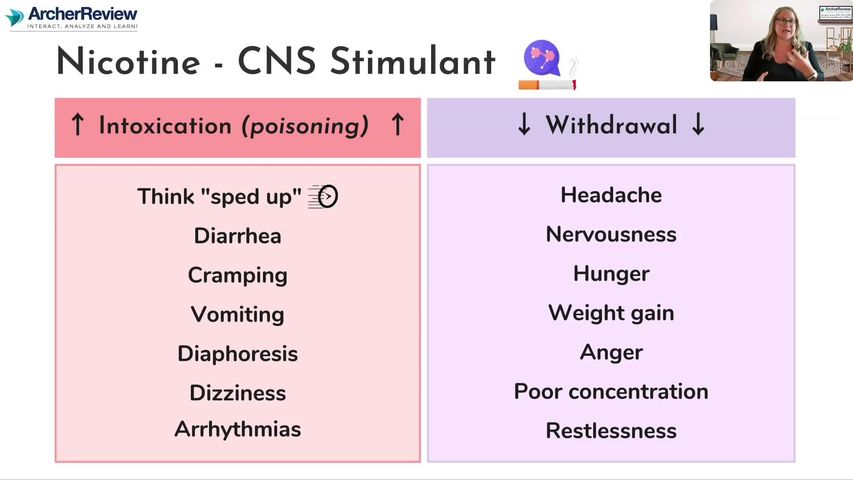
Substance abuse
13.4 Substance Use & Family Systems
Additional Info
✓ Amphetamine intoxication may cause an individual to experience increased heart rate, blood pressure, body temperature, metabolism, feelings of exhilaration, increased energy, mental alertness, tremors, reduced appetite, irritability, anxiety, panic, paranoia, violent behavior, and psychosis.
✓ A priority is monitoring the client's cardiovascular status because life-threatening cardiac dysrhythmias may occur. Frequent blood pressure monitoring is also advised.
