Which of the following best describes a newborn reflex that includes a hand opening with abducted and extended extremities following a jarring motion?
Which of the following best describes a newborn reflex that includes a hand opening with abducted and extended extremities following a jarring motion?
A. Moro reflex
[72%]
B. Grasp reflex
[16%]
C. Babinski reflex
[10%]
D. Rooting reflex
[2%]
Statistics
Subject/Lesson
Subject
Maternal & Newborn Health
Lesson
Newborn
Client Need
Test Plan
Health Promotion and Maintenance
Related Topic
Development Stages and Transitions
Item Type
Item Type
Knowledge/Comprehension
Explanation
Choice A is correct. The Moro reflex occurs in response to a slight drop, sudden movement of the crib, or a loud noise; the newborn quickly makes a symmetrical abduction of the extremities and places the index fingers and thumbs into a “C” shape.
Choice B is incorrect. The grasp reflex occurs when the newborn wraps the fingers around the examiner’s finger when placed in the newborn’s palm.
Choice C is incorrect. When the sole is stroked, the newborn’s big toe moves upward toward the top surface of the foot, and the other toes fan out. This is known as the Babinski reflex.
Choice D is incorrect. The rooting reflex occurs as the newborn turns their head to the side on which the cheek is stroked.
Related Videos
4 Key Topics
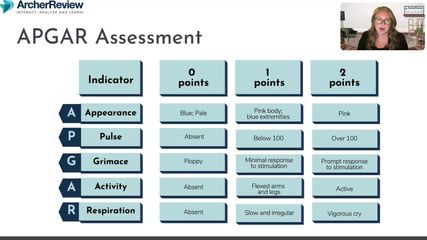
Newborn Assessment
31.1 Immediate Newborn Evaluation
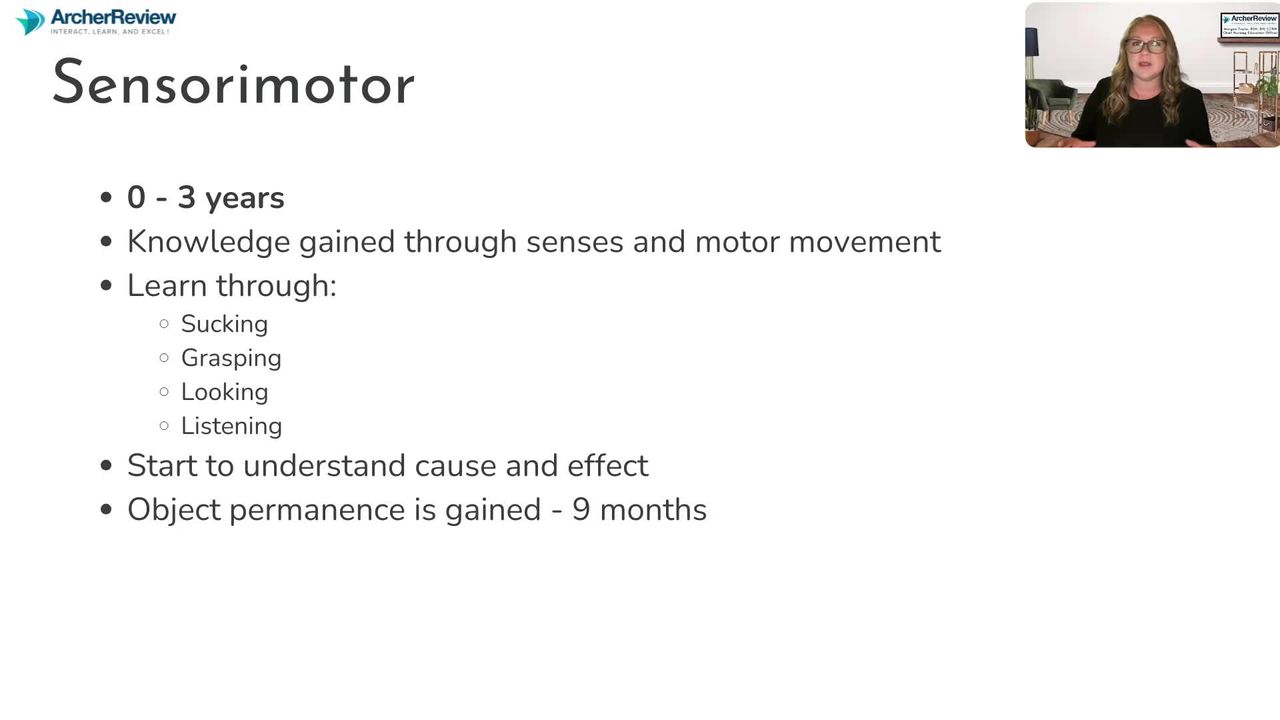
Reflexes
14.7 Infant Growth and Development
Additional Info
The newborn’s neurological system is immature at birth. Some primitive reflexes are expected and are normal in the newborn. Specific findings upon newborn assessments may provide clues to an underlying pathology.
- Moro reflex is a primitive protective motor reflex (fight/flight reaction) that is normal in the newborn. It is replaced by a startle reaction in adults.
- Periodic jerking or twitching is considered normal in the newborn. Tremors are not considered a normal finding in a newborn.
- The newborn’s cry can provide information about the neurological status. A high-pitched scream can indicate an increase in intracranial pressure.
- When assessing the reflexes, the nurse must consider the gestational age, not the birth weight. Premature infants will have a reduced response to the reflex evaluation.
The nurse should document and report any of the following warning signs noticed during the newborn assessment:
- Tremors
- High-pitched cry
- Abnormal pupil responses
- Hypertonic or hypotonic positions
- Absent newborn reflexes
