A pregnant client who is Rh-negative is ordered an indirect Coombs' test.
The nurse understands that the purpose of this test is to determine
The nurse understands that the purpose of this test is to determine
A. if antibodies are present from previous exposure to Rh-positive blood.
[55%]
B. the amount of time that it takes for fetal blood to clot.
[2%]
C. the blood type, Rh factor, and antibody titer of the newborn.
[41%]
D. if the fetus has a risk of developing pernicious anemia later in life.
[2%]
Statistics
Subject/Lesson
Subject
Maternal & Newborn Health
Lesson
Antepartum
Client Need
Test Plan
Health Promotion and Maintenance
Related Topic
Ante/Intra/Postpartum and Newborn Care
Item Type
Item Type
Knowledge/Comprehension
Explanation
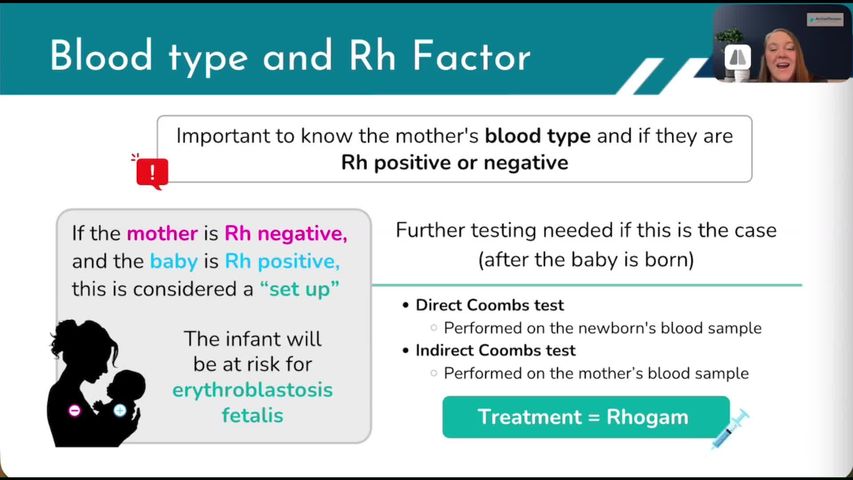
Choice A is correct. Rh-negative women should have an indirect Coombs’ test to determine whether they are sensitized (have developed antibodies) as a result of previous exposure to Rh-positive blood. This testing is done at the first prenatal visit.
Choice B is incorrect. Coombs' testing (direct or indirect) does not measure clotting time (either maternal or fetus).
Choice C is incorrect. The blood type, Rh factor, and antibody titer of the newborn are determined by the direct Coombs' test.
Choice D is incorrect. The indirect Coombs' test does not determine the probability of pernicious anemia, as this anemia is predicated on the lack of vitamin B12.
Related Videos
2 Key Topics
Blood Type & Rh Factor
28.3 Routine Prenatal Screening
Additional Info
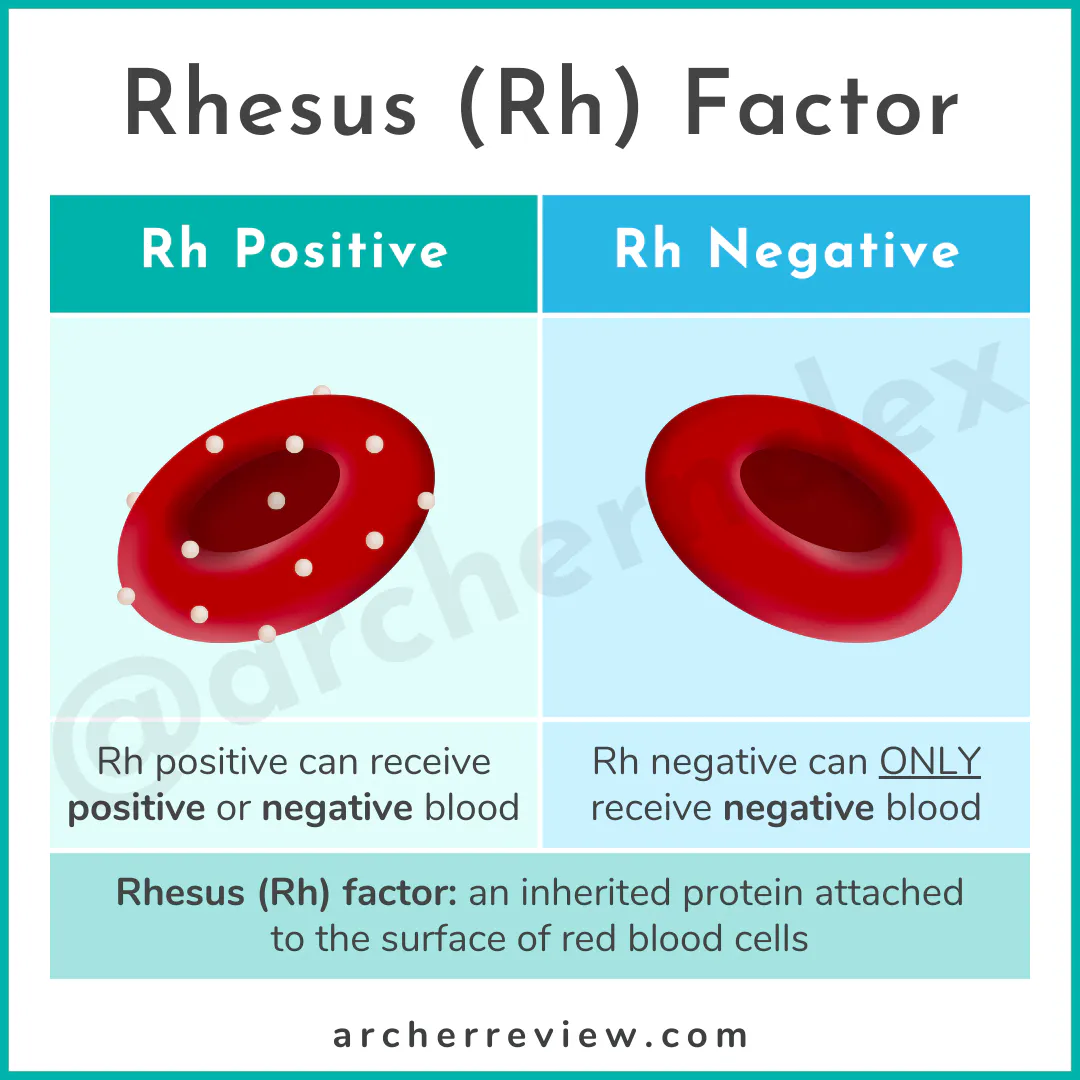
- Rh-negative women should have an indirect Coombs’ test to determine whether they are sensitized (have developed antibodies) due to previous exposure to Rh-positive blood. If the indirect Coombs’ test is negative, it is repeated at 28 weeks of gestation to identify whether they have developed subsequent sensitization.
- In direct Coombs' testing, if the mother is Rh-negative, the umbilical cord blood is taken at delivery to determine the blood type, Rh factor, and antibody titer of the newborn.
