The nurse is screening clients at risk of sudden infant death syndrome (SIDS).
The nurse correctly identifies which client is at the greatest risk for SIDS? An infant who is
The nurse is screening clients at risk of sudden infant death syndrome (SIDS).
The nurse correctly identifies which client is at the greatest risk for SIDS? An infant who is
A. a preterm 4-month-old female who sleeps supine and is formula fed.
[13%]
B. a preterm 12-month-old male who sleeps prone and is formula fed.
[52%]
C. a term 6-month-old male who sleeps supine and is formula fed.
[2%]
D. a preterm 3-month-old male who sleeps lateral and is breastfed.
[32%]
Statistics
Subject/Lesson
Subject
Maternal & Newborn Health
Lesson
Newborn
Client Need
Test Plan
Reduction of Risk Potential
Related Topic
Potential for Alterations in Body Systems
Item Type
Item Type
Analysis
Explanation
Choice D is correct. This infant has four risk factors for SIDS (preterm; 3 months; male sex; sleeping in a lateral or prone position). SIDS peaks between 2 and 3 months and occurs before 12 months of age. SIDS occurs more in males than females, and the lateral and prone position for sleeping should not be used until 12 months of age. The only mitigating factor for this client is that they are breastfed. This is a factor that does not increase risk because maternal antibodies are passed to the infant.
Choice A is incorrect. This client is preterm, 4 months, and is formula fed. These are three risk factors for SIDS. Two mitigating factors are that the client is female and sleeping supine.
Choice B is incorrect. This client is preterm, male, and formula fed. These are three risk factors for SIDS. The infant sleeping prone at this age (12 months) is allowed. SIDS peaks between 2 and 3 months. The infant sleeping prone at this age is not a risk factor.
Choice C is incorrect. This client is male, 6 months, and is formula fed. These are three risk factors for SIDS. The client is not in the highest age bracket for SIDS; however, by definition, it occurs in individuals younger than 12 months. The mitigating factors are that the client sleeps supine and is term. SIDS is higher in preterm infants.
Related Videos
2 Key Topics
Infant Education & Immunizations
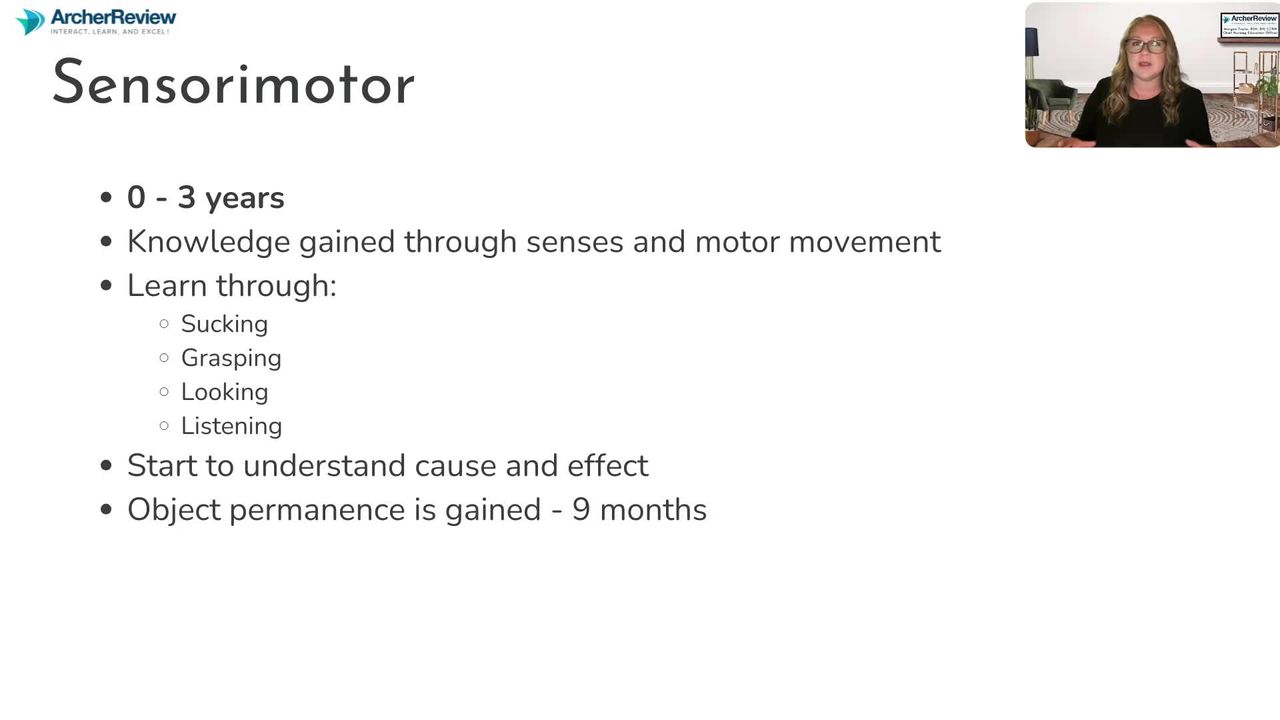
14.7 Infant Growth and Development
Additional Info
✓ Placing infants on their backs to sleep is a critical preventive measure as it minimizes the risk of airway obstruction and promotes optimal respiratory mechanics.
✓ Breastfeeding is a protective factor against SIDS due to the immunological benefits and the modulation of sleep patterns, which encourages frequent arousals during sleep, a feature that may protect against SIDS.
✓ Other risk factors include exposure to cigarette smoke, prematurity, prone sleeping position, formula feeding, and overheating
✓ Overheating is a significant risk factor for SIDS. It is crucial for caregivers to maintain a comfortably cool room temperature and avoid excessive clothing or bedding.
✓ Exposure to cigarette smoke is a well-documented risk factor for SIDS. This includes pre- and postnatal exposure.
