The nurse is caring for a client in the first trimester of pregnancy and notes that the client's serum potassium level is 2.9 mEq/L (mmol) [3.5-5 mEq/L, mmol/L].
Which assessment findings are most likely related to this laboratory result?
The nurse is caring for a client in the first trimester of pregnancy and notes that the client's serum potassium level is 2.9 mEq/L (mmol) [3.5-5 mEq/L, mmol/L].
Which assessment findings are most likely related to this laboratory result?
A. Gestational diabetes
[5%]
B. Hyperemesis gravidarum
[88%]
C. Lack of weight gain since the onset of pregnancy
[2%]
D. Food aversions
[6%]
Statistics
Subject/Lesson
Subject
Maternal & Newborn Health
Lesson
Antepartum
Client Need
Test Plan
Health Promotion and Maintenance
Related Topic
Ante/Intra/Postpartum and Newborn Care
Item Type
Item Type
Analysis
Explanation
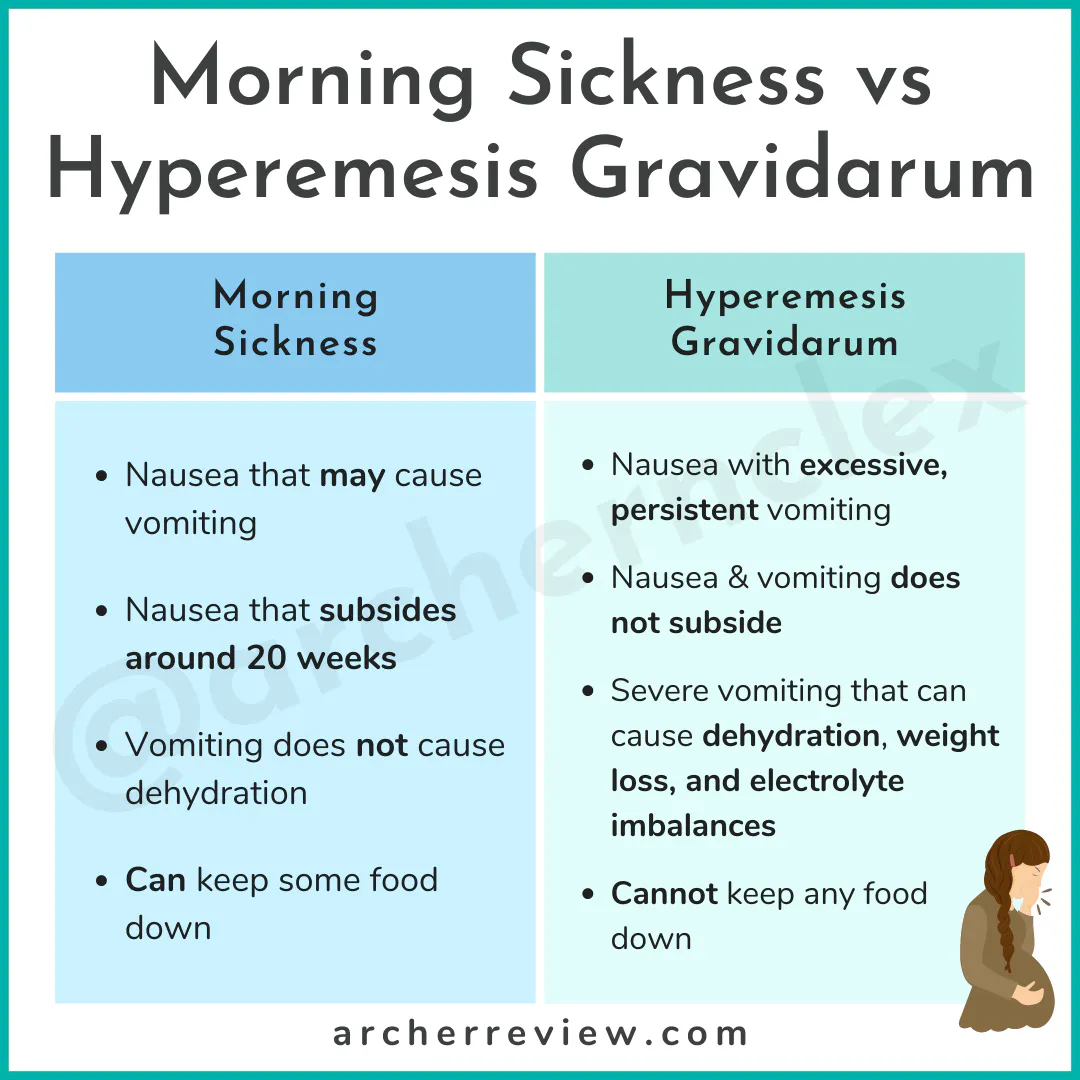
Choice B is correct. This condition involves severe, persistent nausea and vomiting during early pregnancy, leading to dehydration, electrolyte imbalances, and malnutrition. Excessive vomiting results in loss of potassium and other electrolytes, leading to hypokalemia. Common signs of hypokalemia include muscle weakness, fatigue, irregular heart rhythms (arrhythmias), and cramps.
Choice A is incorrect. Gestational diabetes mellitus (GDM) typically develops in the second or third trimester and is characterized by insulin resistance and hyperglycemia. It does not directly cause hypokalemia. In contrast, hypokalemia is more commonly associated with excessive vomiting (e.g., from hyperemesis gravidarum) or diuretic use rather than glucose metabolism disorders.
Choice C is incorrect. While a lack of weight gain in early pregnancy may suggest poor nutritional intake or nausea, it does not directly cause hypokalemia. A client may have stable potassium levels even with minimal weight gain unless excessive vomiting or other conditions contribute to electrolyte losses.
Choice D is incorrect. Food aversions, a common symptom of early pregnancy, may lead to nutrient deficiencies but are unlikely to cause significant electrolyte imbalances such as hypokalemia. Unlike hyperemesis gravidarum, which involves repeated vomiting, food aversions typically do not lead to severe fluid or electrolyte loss.
Related Videos
2 Key Topics
Hyperemesis Gravidarum