The nurse is providing education about a nonstress test (NST) to a client who is pregnant.
Which of the following statements by the client would require follow-up?
The nurse is providing education about a nonstress test (NST) to a client who is pregnant.
Which of the following statements by the client would require follow-up?
A. “I cannot have anything to eat eight hours prior to this test.”
[79%]
B. “I will have an external monitor across my abdomen.”
[3%]
C. “A reactive result means my baby is doing well.”
[13%]
D. “If this test is abnormal, I will need further testing.”
[4%]
Statistics
Subject/Lesson
Subject
Maternal & Newborn Health
Lesson
Antepartum
Client Need
Test Plan
Health Promotion and Maintenance
Related Topic
Ante/Intra/Postpartum and Newborn Care
Item Type
Item Type
Application
Explanation
Choice A is correct. A nonstress test does not require a client to abstain from eating or drinking before the test. This statement is false and would require follow-up. The client should be advised to follow regular eating habits unless specifically instructed otherwise by their healthcare provider.
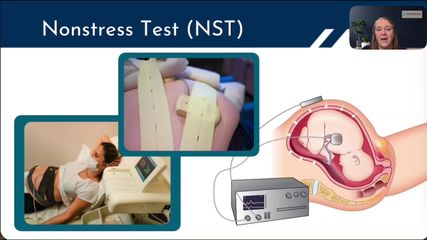
Choice B is incorrect. NST involves placing an external monitor on the abdomen to record fetal heart rate and movement. This statement is accurate.
Choice C is incorrect. In NST, a reactive result indicates that the fetal heart rate increases appropriately with fetal movement, suggesting a healthy and responsive baby. This statement is accurate.
Choice D is incorrect. If the NST result is nonreactive or shows abnormalities, additional testing may be needed to assess fetal well-being. This statement is accurate and reflects an understanding of the possible outcomes of the NST.
Related Videos
3 Key Topics
Nonstress Test
29.3 Fetal Assessment Tests
Additional Info
 Source : Source: Archer Review
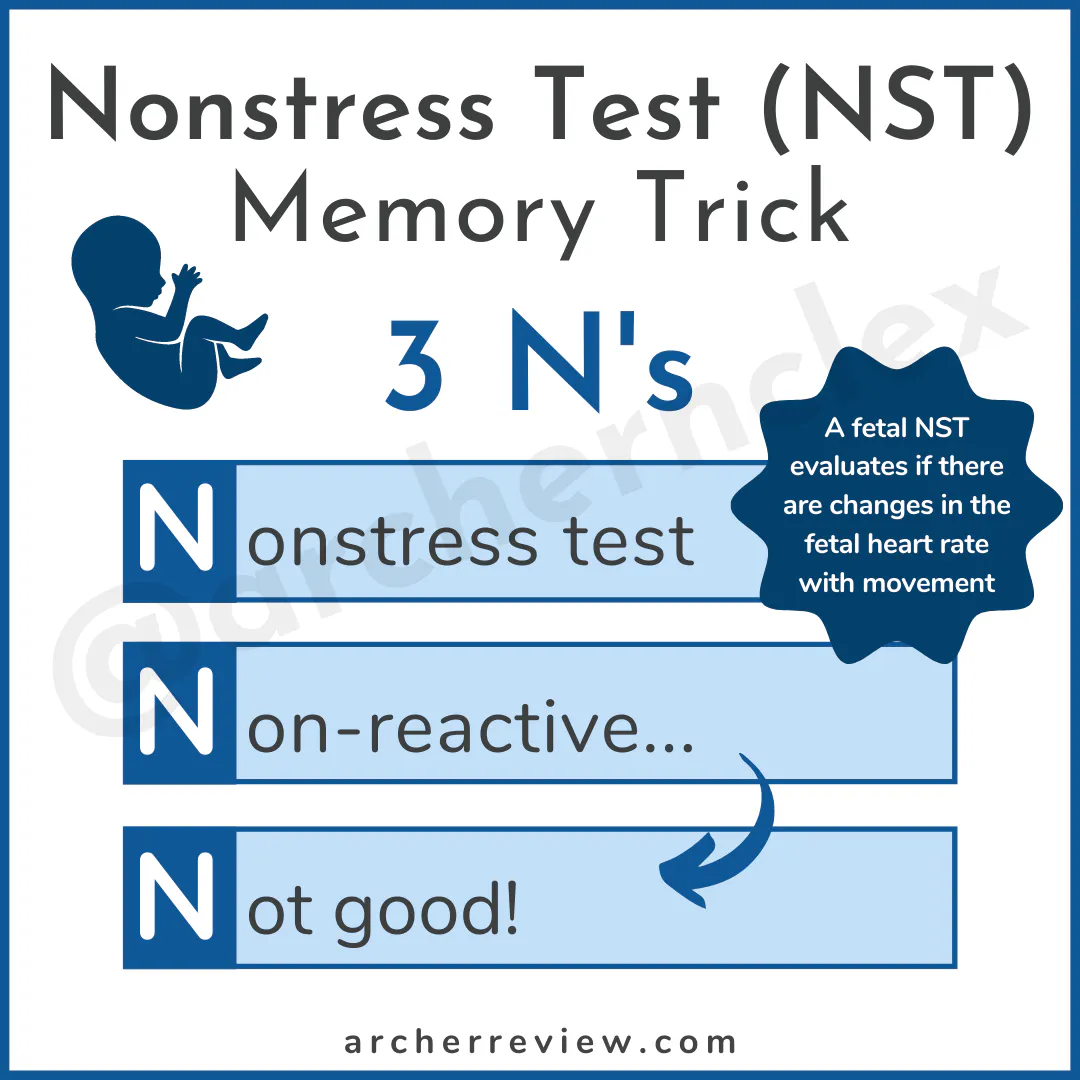
✓ An NST is a test that monitors fetal heart rate in response to the fetus's movements.
✓ A nonstress test is performed in the third trimester if the client has indications such as a high-risk pregnancy that may result in a stillbirth or complications such as fetal hypoxia.
- A reactive finding indicates fetal well-being; specifically, the fetal heart rate increased by 15 beats per minute, lasting for 15 seconds.
- A nonreactive NST is non-reassuring and indicates decreased variability with an absence in a fetal heart rate acceleration.
