A nurse is caring for a 90-year-old client who has been bedridden at home for two weeks. Which of the following is not an expected finding due to immobility?
A nurse is caring for a 90-year-old client who has been bedridden at home for two weeks. Which of the following is not an expected finding due to immobility?
A. A decrease in bone density
[4%]
B. Loss of short-term memory
[63%]
C. Atelectasis
[9%]
D. High serum calcium level
[23%]
Statistics
Subject/Lesson
Subject
Fundamentals
Lesson
Basic Care & Comfort
Client Need
Test Plan
Basic Care and Comfort
Related Topic
Mobility/Immobility
Item Type
Item Type
Knowledge/Comprehension
Explanation
Choice B is correct. Loss of short-term memory is not an expected complication of prolonged immobility and warrants further assessment. Short-term memory loss may indicate medication effects, Alzheimer’s dementia, Lewy body dementia, etc.
Choice A is incorrect. Prolonged immobility can lead to decreased bone density, also known as osteoporosis, due to reduced mechanical stress on the bones. Without regular weight-bearing activity, bone resorption may exceed bone formation, resulting in decreased bone density and increased risk of fractures.
Choice C is incorrect. Atelectasis is a common respiratory complication associated with immobility. Prolonged bedrest can lead to shallow breathing, reduced lung expansion, and impaired airway clearance, increasing the risk of atelectasis.
Choice D is incorrect. Hypercalcemia may occur with prolonged immobility. Prolonged immobilization deranges bone remodeling because of the lack of mechanical stress. This causes an imbalance between bone formation and bone resorption where resorption exceeds formation. Consequently, there is a net efflux of calcium from the bone.
Related Videos
2 Key Topics
Immobility Complications
9.2 Immobility & Skin Integrity
Additional Info
✓ Prolonged immobility can lead to decreased appetite, weight loss, and nutritional deficiencies. Nurses should assess the client's nutritional status, provide nutritional counseling, and monitor food intake to ensure adequate nutrition.
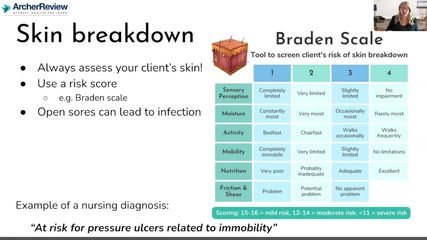
✓ Prolonged immobility increases the risk of pressure ulcers due to prolonged pressure on bony prominences. Nurses should assess the client's skin regularly, implement measures to relieve pressure, such as turning and repositioning, and use supportive devices such as specialized mattresses or cushions to prevent pressure ulcers.
✓ Immobility increases the risk of falls, which can lead to injuries and complications. The Centers for Disease Control and Prevention (CDC) estimates that approximately one in four older adults experiences a fall each year, with falls being the leading cause of fatal and nonfatal injuries among older adults. Nurses should assess the client's risk of falls, and implement fall prevention strategies such as keeping the environment free of hazards, providing assistive devices as needed, and supervising ambulation or transfers.
