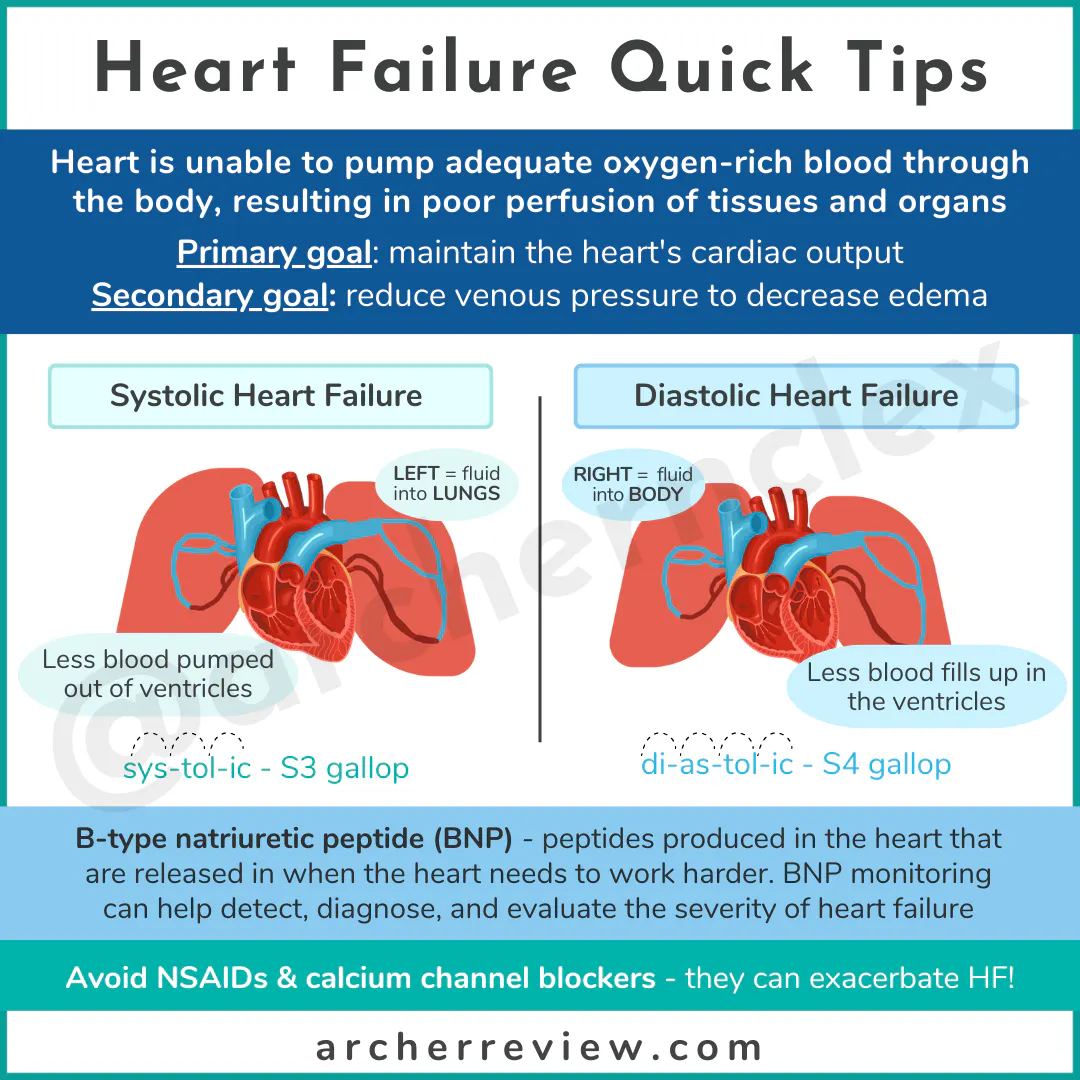
The nurse is caring for a client who was admitted for an exacerbation of congestive heart failure.
Click to highlight the findings in the nurses’ note which indicate that the client is progressing towards discharge.
The nurse is caring for a client who was admitted for an exacerbation of congestive heart failure.
Click to highlight the findings in the nurses’ note which indicate that the client is progressing towards discharge.
Nurses’ Notes
Day 1 – 0900 –
The client was ambulated 25 feet and did not tolerate the ambulation reporting dyspnea.
Gait was unsteady.
Provided education on aerobic exercise and the benefits for heart failure.
Client verbally taught back the education with understanding.
Day 3 – 0915 –
The client ambulated 30 feet in the hallway without assistance.
Gait was steady.
The oxygen saturation after ambulation was 95% on room air.
Scheduled furosemide was refused by the client.
Educated the client on the purpose of the medication and its benefits.
Statistics
Subject/Lesson
Subject
Adult Health
Lesson
Cardiovascular
Client Need
Test Plan
Physiological Adaptation
Related Topic
Illness Management
Item Type
Item Type
EvaluateOutcomes
Explanation
- On day one, the client did not tolerate a 25 feet ambulation as there was a report of dyspnea. Additionally, the client's gait was unsteady. These findings do not indicate that the client is not ready for discharge.
- The nurse providing education is a nursing responsibility and does not determine if the client is progressing towards discharge; however, their ability to verbally teach back the education provided on exercise and heart failure indicates engagement and a reassuring finding.
- On day three, the client could ambulate 30 feet in the hallway with a steady gait and without assistance, which is an improvement in their clinical progress compared to the ambulation trial on day one.
- Finally, the post-ambulation oxygen saturation was 95% which is optimal. This marked improvement in their progress toward discharge and proves that the prescribed treatment is efficacious.
- A concerning finding is the client's refusal of their prescribed furosemide. Clients have the right to refuse their medications; however, the nurse understands that refusing this medication will lead to a decline in their health status.
- This decline may cause serious complications such as pulmonary edema and hospital readmission. This finding does not indicate that the client is ready for discharge.
Related Videos
4 Key Topics
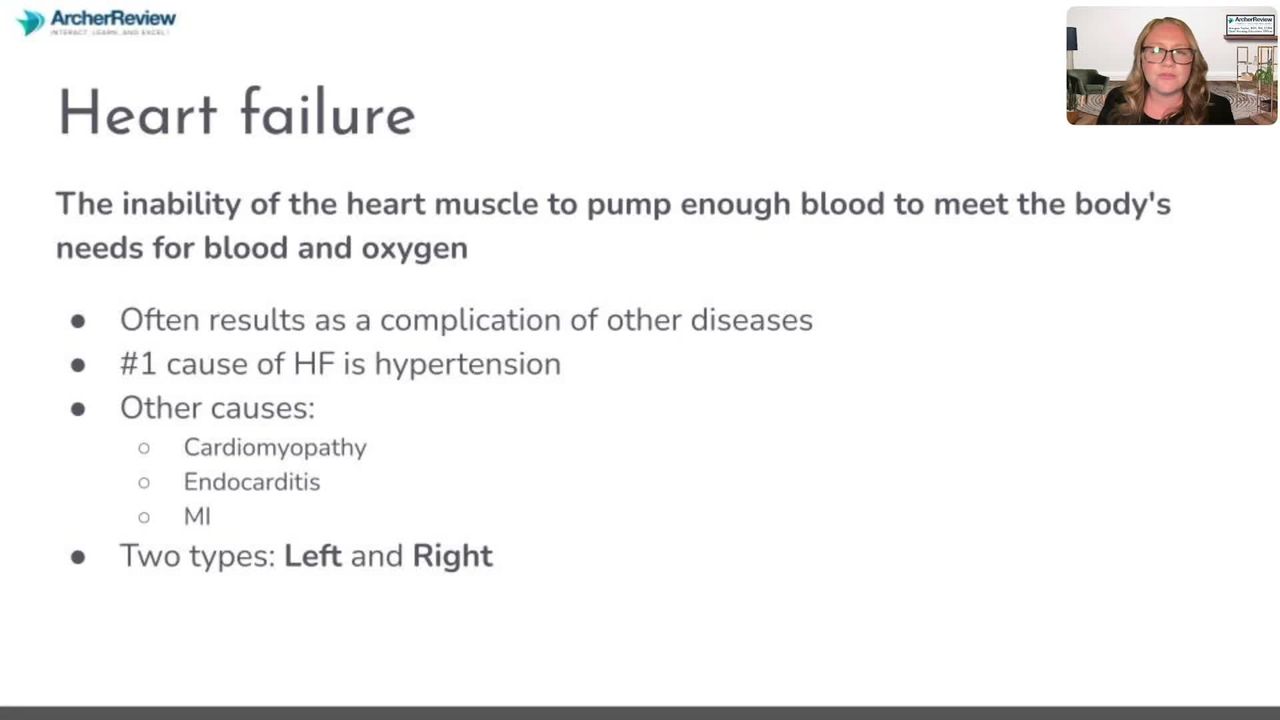
Heart Failure
18.13 Complications of Heart Disease
Additional Info
✓ For a client with congestive heart failure, aerobic exercises are encouraged to maintain the client’s strength and cardiovascular conditioning.
✓ Since congestive heart failure is a risk factor for venous thromboembolism, the client's ambulation is essential in avoiding this complication.
✓ When teaching a client with congestive heart failure, it is also important to know the prescribed medication regimen involving agents such as diuretics.
✓ Adherence to the treatment plan is critical to avoid further decline and readmission.
✓ Suppose a client should refuse a portion of their treatment plan. In that case, the nurse is obligated to actively listen to the client’s refusal, educate the client on the purpose of the prescribed treatment, and work with the healthcare provider to find a suitable alternative.