The nurse suspects that the client has developed chorioamnionitis.
Which of the following findings would support a diagnosis of chorioamnionitis? Select all that apply.
The nurse suspects that the client has developed chorioamnionitis.
Which of the following findings would support a diagnosis of chorioamnionitis? Select all that apply.
Statistics
Subject/Lesson
Subject
Maternal & Newborn Health
Lesson
Antepartum
Client Need
Test Plan
Physiological Adaptation
Related Topic
Alterations in Body Systems
Item Type
Item Type
Knowledge/Comprehension
Explanation
Choice A is correct. Uterine tenderness, maternal fever, leukocytosis (white blood cell [WBC] count >15,000/mm), fetal tachycardia, bacteremia, and maternal tachycardia are manifestations consistent with chorioamnionitis.
Choice D is correct. Maternal fever (oral temperature of 38.0°C [100.4°F]) is a hallmark finding associated with chorioamnionitis. The fever puts the client at risk for dehydration and requires the nurse to obtain an order for fluid replacement.
Choice B is incorrect. Proteinuria is associated with preeclampsia but is not a clinical finding associated with chorioamnionitis.
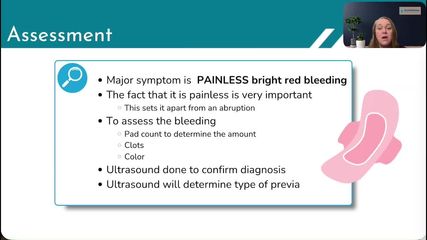
Choice C is incorrect. Painless, bright red vaginal bleeding is a finding associated with placenta previa. Chorioamnionitis may cause women to have purulent or malodorous amniotic fluid.
Choice E is incorrect. Fetal tachycardia (heart rate >160 bpm) is associated with chorioamnionitis. Fetal bradycardia is not an expected finding.
Related Videos
2 Key Topics
Chorioamnionitis
30.4 Intrapartum Complications
Additional Info
✓ Chorioamnionitis is an infection that may be bacterial, fungal, or viral.
✓ A significant risk factor for chorioamnionitis is a longer duration of labor and ruptured membranes.
✓ Manifestations of this ascending infection include maternal fever, maternal and fetal tachycardia, uterine tenderness, maternal leukocytosis, and bacteremia.
✓ Treatment includes delivery of the fetus and antibiotics (gentamycin) if the chorioamnionitis is bacterial.
