The nurse is caring for a client who has septic shock. Which of the following findings would indicate that the client is meeting the treatment goals?
The nurse is caring for a client who has septic shock. Which of the following findings would indicate that the client is meeting the treatment goals?
A. Mean arterial pressure (MAP) 67 mmHg
[82%]
B. Urine output (UOP) 20 ml/hr
[8%]
C. Capillary blood glucose 253 mg/dL
[2%]
D. Serum pH level of 7.33
[8%]
Statistics
Subject/Lesson
Subject
Critical Care
Lesson
Critical Care Concepts
Client Need
Test Plan
Physiological Adaptation
Related Topic
Illness Management
Item Type
Item Type
Analysis
Explanation
Choice A is correct. Septic shock is a life-threatening illness that may cause a client to have decreased perfusion. A client having a MAP of 65 mmHg or greater is one of the desired goals of septic shock. Thus, a MAP of 67 mmHg would be a favorable finding.
Choice B is incorrect. In septic shock, maintaining adequate urine output is essential to ensure renal perfusion and prevent acute kidney injury. While the absolute value of urine output can vary depending on factors such as fluid resuscitation, a UOP of at least 0.5 ml/kg/hr is often considered a treatment goal.
Choice C is incorrect. Hyperglycemia is an expected finding in shock, but it also is a detrimental finding. Hyperglycemia stunts healing and have been linked to a plethora of complications.
Choice D is incorrect. Acid-base balance is crucial for normal physiological function. In septic shock, metabolic acidosis often occurs due to tissue hypoperfusion and the accumulation of lactic acid. A serum pH level of 7.33 suggests some degree of acidosis, which may still require intervention to normalize pH levels and improve tissue perfusion.
Related Videos
4 Key Topics

Sepsis
23.3 Infection Control & Infectious Diseases
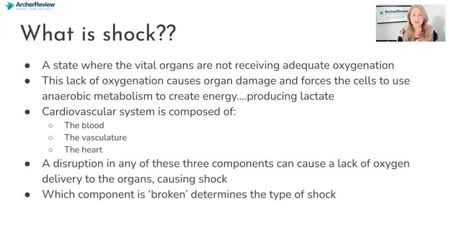
Distributive Shock
27.5 Shock
Additional Info
✓ Treatment goals for a client with septic shock include the following:
- · Optimal perfusion as demonstrated by a MAP ≥ 65 mmHg.
- · Normal respiratory rate, pulse, temperature, pulse oximetry, mentation, and urine output.
- · Clearance of lactic acid. A falling lactic acid indicates a favorable response to fluids and oxygenation.
✓ Lactic acid is produced when tissue is not being perfused. A serum lactic acid level of 2 mmol/L or greater may indicate the severity of sepsis.
✓ Septic shock is associated with a high mortality rate, ranging from 20% to 50%, depending on various factors such as the underlying cause, comorbidities, and the promptness of treatment initiation.
