The nurse is caring for a client with a pneumothorax with a chest tube system attached to wall suction.
Which of the following assessment findings requires follow-up?
The nurse is caring for a client with a pneumothorax with a chest tube system attached to wall suction.
Which of the following assessment findings requires follow-up?
A. Continuous bubbling in the suction control chamber
[19%]
B. Continuous bubbling in the water seal chamber
[51%]
C. Drainage of 50 mL of serosanguinous fluid in the first hour after chest tube insertion
[6%]
D. Absence of any drainage in the collection chamber
[24%]
Statistics
Subject/Lesson
Subject
Critical Care
Lesson
Critical Care Concepts
Client Need
Test Plan
Reduction of Risk Potential
Related Topic
System Specific Assessments
Item Type
Item Type
Analysis
Explanation
Choice B is correct. Continuous bubbling in the water seal chamber indicates an air leak. If a client has a pneumothorax, the client should have tidaling and intermittent bubbling in the water seal chamber.
Choice A is incorrect. Continuous bubbling in the suction control chamber is appropriate when the client has wall suction. Wall suction is often added to augment the suction effects of the chest tube. When wall suction works, continuous bubbling in the suction control chamber is expected.
Choice C is incorrect. Drainage of 50 mL of serosanguinous fluid in the first hour after chest tube insertion is within an acceptable range and is considered a normal finding. No immediate follow-up is required for this finding. Some drainage is expected after the chest tube has been inserted, especially within the first hour after insertion.
Choice D is incorrect. The absence of drainage in the collection chamber does not necessarily indicate that the chest tube is not working properly. It could be due to various factors, such as minimal production of fluid or the lung already being fully re-expanded. As long as the client's condition is stable and there are no signs of respiratory distress, the absence of drainage alone does not necessarily indicate a problem with the chest tube. Monitoring other parameters, such as lung sounds and the client's overall clinical status, would be important in assessing the effectiveness of the chest tube.
Learning Objective
Recognize that the continuous bubbling in the water seal chamber of the chest tube system indicates an air leak and must be promptly investigated.
Related Videos
7 Key Topics
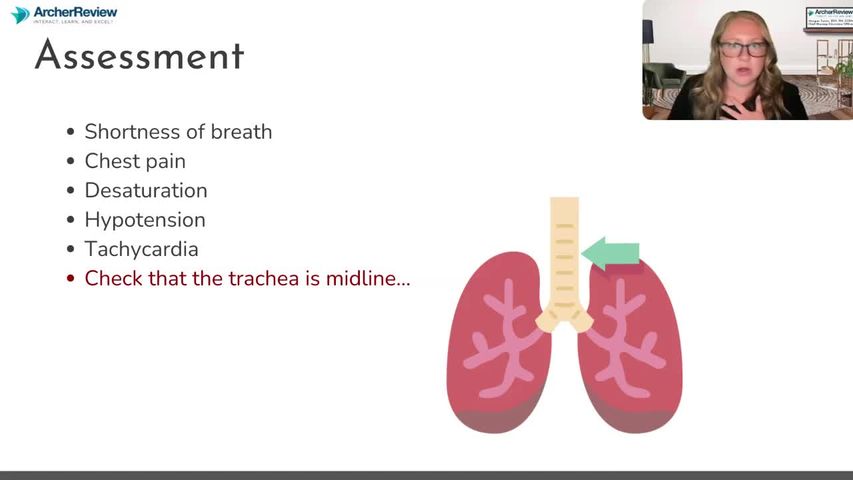
Pneumothorax
17.8 Respiratory Emergencies

Chest Tubes
4.2 Thoracic Drainage
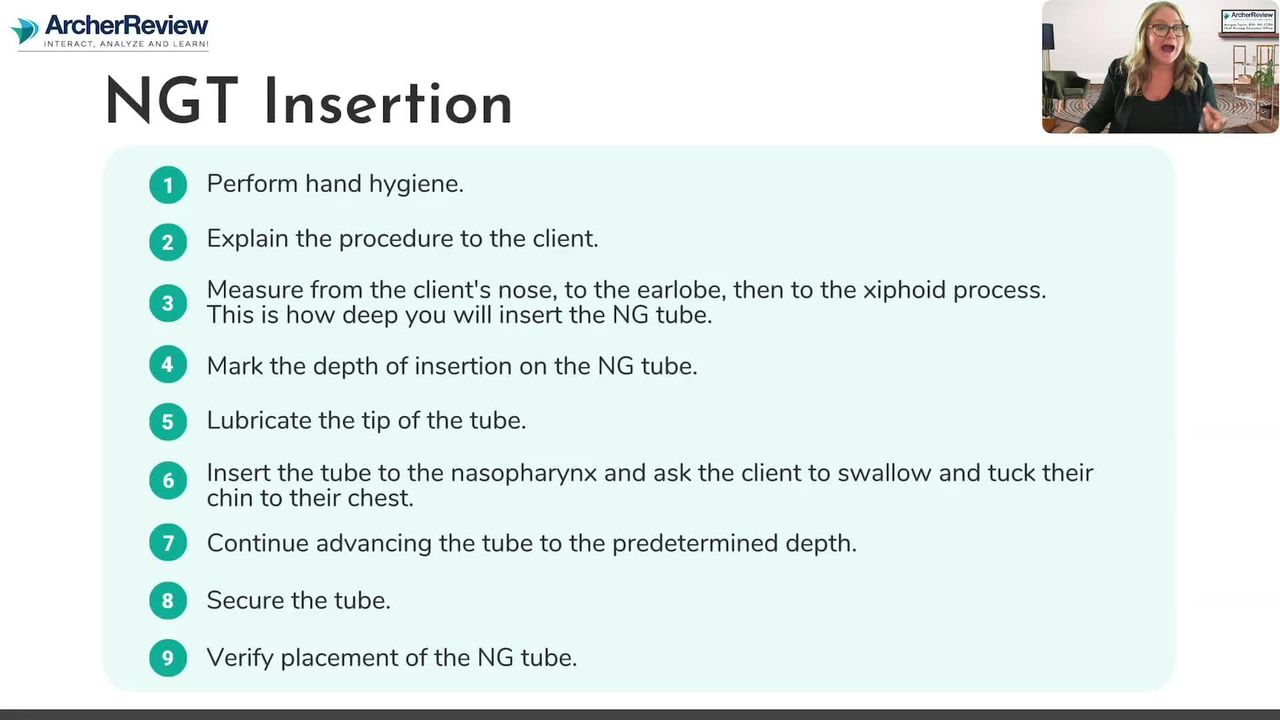
Reduction of Chest Tube Risk
12.6 Tubes, Lines & Catheters
Additional Info
✓ A chest tube is placed to remove air and fluid so the lung can reinflate.
✓ Stationary chest tube drainage systems, such as the Pleur-evac system, use a water-seal mechanism that acts as a one-way valve to prevent air or liquid from moving back into the chest cavity.
✓ Keep the chest tube as straight as possible from the bed to the suction unit, avoiding kinks and dependent loops. Extra tubing can be loosely coiled on the bed.
