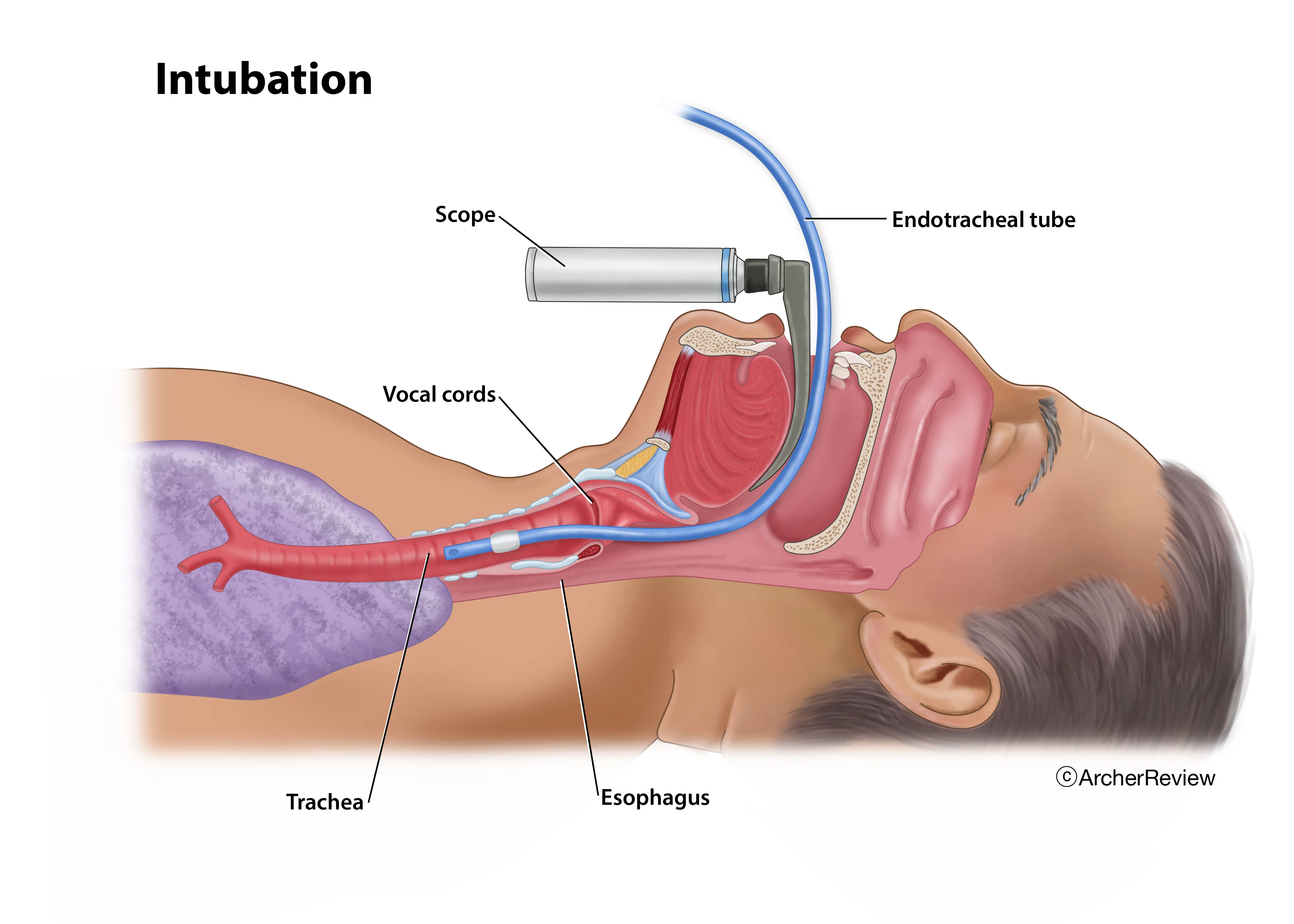
The nurse is caring for a client receiving mechanical ventilation via an endotracheal tube.
Which of the following actions would not reduce the client's risk of ventilator-acquired pneumonia (VAP)?
The nurse is caring for a client receiving mechanical ventilation via an endotracheal tube.
Which of the following actions would not reduce the client's risk of ventilator-acquired pneumonia (VAP)?
A. Performing oral care a minimum of every 2 hours.
[16%]
B. Obtain a specimen for culture via tracheal suctioning.
[58%]
C. Elevating the head of the bed to 30 to 45 degrees.
[18%]
D. Performing hand hygiene before and after suctioning.
[8%]
Statistics
Subject/Lesson
Subject
Critical Care
Lesson
Critical Care Concepts
Client Need
Test Plan
Reduction of Risk Potential
Related Topic
Potential for Complications of Diagnostic Tests/Treatments/Procedures
Item Type
Item Type
Application
Explanation
Choice B is correct. If pneumonia is suspected, cultures may be taken via tracheal suctioning or bronchoscopy to establish the diagnosis and identify the causative organism. However, this strategy helps diagnose pneumonia and tailor the treatment against the specific causative organism but has no role in prevention.
Choice A is incorrect. Performing oral care a minimum of every 2 hours, is important in reducing the risk of VAP. Proper oral hygiene helps prevent the buildup of bacteria in the oral cavity, which can be aspirated into the lungs.
Choice C is incorrect. Elevating the head of the bed to 30-45 degrees reduces the client's risk of developing pneumonia secondary to aspiration. This would be an appropriate nursing intervention as it helps decrease secretions from pooling and going backward.
Choice D is incorrect. Performing hand hygiene before and after suctioning, is crucial to prevent the introduction of infection. Proper hand hygiene is essential in all aspects of client care, including suctioning procedures.
Learning Objective
Understand the evidence-based nursing strategies that can help reduce VAP risk. These include proper positioning, good oral care, subglottic suctioning, hand hygiene practices, early mobilization, and reducing the use of agents that increase gastric pH.
Related Videos
2 Key Topics
Endotracheal Tube
4.1 Enteral & Airway Tubes
Additional Info
✓ VAP is an infection of pulmonary parenchyma in clients exposed to mechanical ventilation for 48 hours or more.
✓ VAP can be complicated by Acute Respiratory Distress Syndrome (ARDS) and is often associated with high mortality.
✓ Some nursing strategies that have been recommended to reduce the risk of VAP in mechanically ventilated clients are as follows:
- Proper positioning: elevation of the head of the bed to 30-45 degrees is a recommended VAP prevention strategy. Elevation of the head of the bed also reduces gastric reflux and reduces the subsequent risk of aspiration pneumonia.
- Excellent oral care: oral health can deteriorate quickly among mechanically ventilated clients. Good oral care decreases bacterial overgrowth and thereby reduces the risk of infection.
- Subglottic suctioning: secretions accumulate around the mechanically ventilated client's endotracheal tube cuff. Aspiration of these contents into the lungs heralds an infection/ pneumonia. Some endotracheal tubes have a small hole in the shaft above the cuff. Subglottic suctioning of secretions through this opening is a recommended strategy to prevent VAP. The Centers for Disease Control (CDC) recommends an endotracheal tube dorsal lumen positioned above the endotracheal cuff to allow continuous or frequent suctioning of subglottic tracheal secretions.
- Early mobilization: early mobilization of mechanically ventilated clients is associated with more ventilator-free days. Nurses can coordinate exercise and mobilization activities with physical and occupational therapists.
- Medications: Medications such as H2 antagonists and proton pump inhibitors make the gastric pH more alkaline, which may contribute to bacterial growth, which may be aspirated.