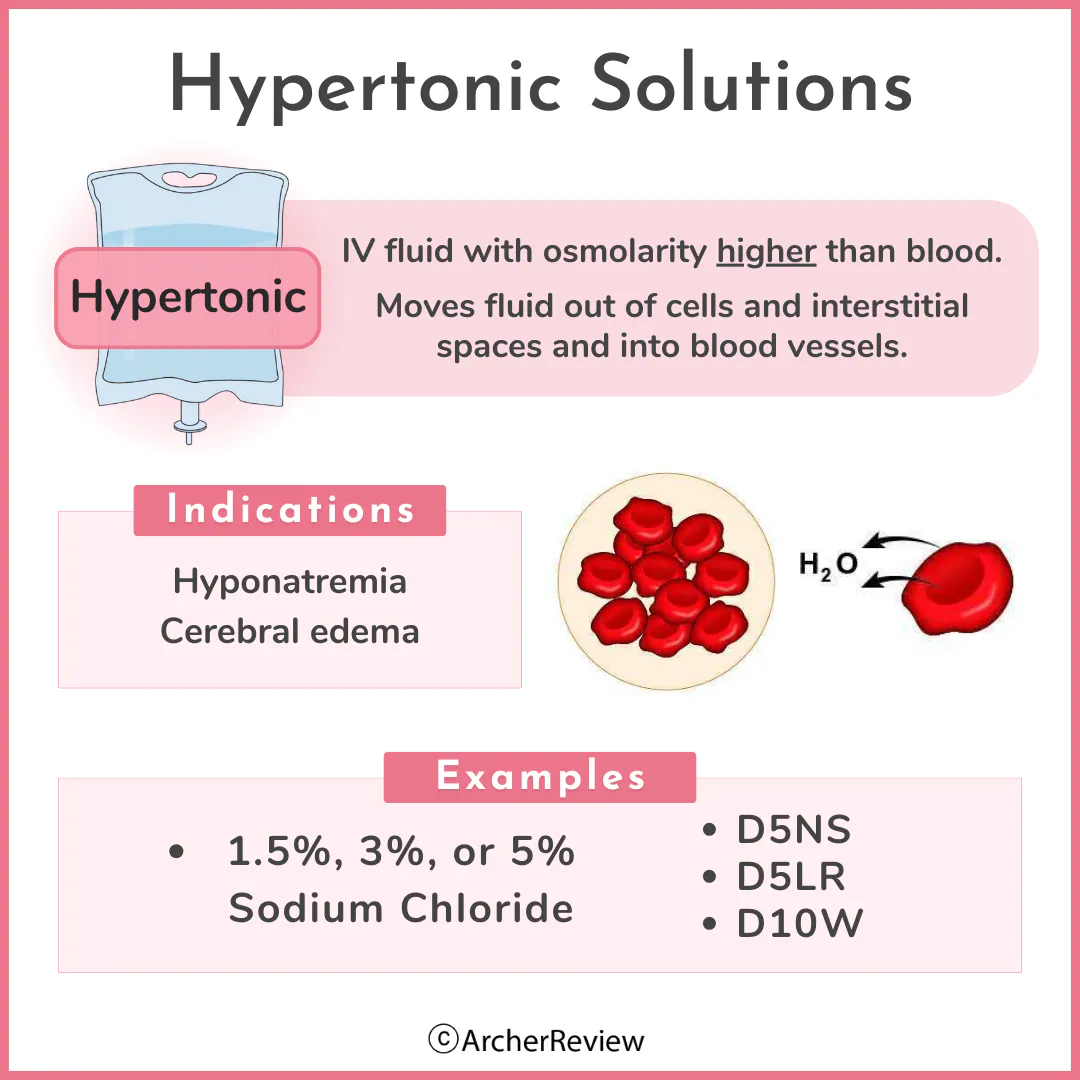
The nurse is caring for a client with cerebral edema who is receiving 3% sodium chloride intravenously.
Which finding would require immediate intervention?
The nurse is caring for a client with cerebral edema who is receiving 3% sodium chloride intravenously.
Which finding would require immediate intervention?
A. Serum sodium level of 132 mEq/L [132 mmol/L] Reference range: 136-145 mEq/L [136-145 mmol/L]
[5%]
B. New onset of restlessness and confusion
[91%]
C. Reports of a mild headache and fatigue
[1%]
D. Urine output of 350 mL over the past 4 hours
[2%]
Statistics
Subject/Lesson
Subject
Critical Care
Lesson
Critical Care Concepts
Client Need
Test Plan
Pharmacological and Parenteral Therapies
Related Topic
Parenteral/IV Therapies
Item Type
Item Type
Analysis
Explanation
Choice B is correct. New onset of restlessness and confusion represents an acute change in mental status, which could indicate worsening cerebral edema, increased intracranial pressure, or developing complications from hypertonic therapy. These symptoms require immediate assessment and possible intervention, such as halting infusion and notifying the provider.
Choice A is incorrect. Although a sodium level of 132 mEq/L [132 mmol/L] is below the normal range (136-145 mEq/L) [136-145 mmol/L], it may be the client’s baseline prior to correction. This level suggests incomplete correction and requires close monitoring, but not immediate intervention unless symptomatic.
Choice C is incorrect. A mild headache and fatigue may be expected in a client recovering from head trauma, and do not alone indicate acute decompensation. They require routine monitoring, not immediate intervention.
Choice D is incorrect. A urine output of 350 mL over 4 hours is borderline high but not immediately alarming. It may reflect fluid shifts or transient oliguria and should be trended.
Learning Objective
Evaluate and prioritize client assessment data to identify early signs of complications associated with hypertonic (3%) saline administration.
Related Videos
3 Key Topics
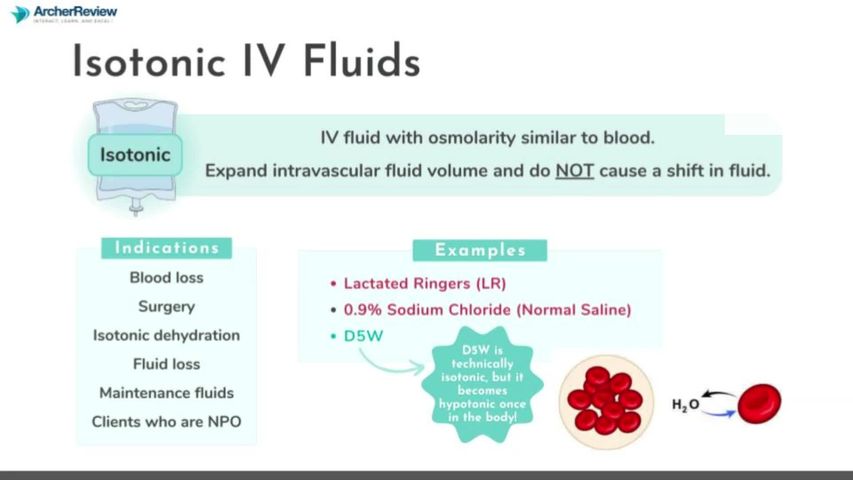
Hypertonic IV Fluids