A nurse is caring for a client in the ICU following major abdominal surgery. The nurse notes the client’s central venous pressure (CVP) is 1 mm Hg, blood pressure is 90/58 mm Hg, and heart rate is 118 bpm.
Which of the following conditions should the nurse recognize as the most likely cause of these findings?
A nurse is caring for a client in the ICU following major abdominal surgery. The nurse notes the client’s central venous pressure (CVP) is 1 mm Hg, blood pressure is 90/58 mm Hg, and heart rate is 118 bpm.
Which of the following conditions should the nurse recognize as the most likely cause of these findings?
A. impending septic shock
[12%]
B. hypovolemia
[67%]
C. cardiogenic shock
[19%]
D. fluid overload
[1%]
Statistics
Subject/Lesson
Subject
Critical Care
Lesson
Critical Care Concepts
Client Need
Test Plan
Physiological Adaptation
Related Topic
Hemodynamics
Item Type
Item Type
Analysis
Explanation
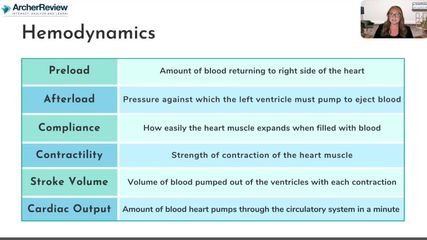
Choice B is correct. A CVP of 1 mm Hg, hypotension, and tachycardia indicate a low circulating blood volume. This is common after surgery with potential fluid losses or third spacing, and it leads to decreased preload and compromised perfusion.
Choice A is incorrect. Septic shock can present similarly but typically involves a higher or variable CVP in early distributive stages. Without fever or infection signs, it’s less likely to be the primary cause in this scenario.
Choice C is incorrect. An MI may cause hypotension, but CVP is often elevated due to impaired contractility and backup of blood flow. It also presents with chest pain, ECG changes, or elevated cardiac enzymes, none of which are mentioned.
Choice D is incorrect. CVP would be elevated in fluid overload (often >8 mm Hg), along with signs like pulmonary crackles or edema, which are not present here.
Learning Objective
Analyze hemodynamic data (e.g., CVP, blood pressure, heart rate) to identify early signs of hypovolemic shock and differentiate it from other types of shock to determine appropriate nursing priorities.
Related Videos
4 Key Topics
Burn Complications
25.7 Burns: Classification, Management & Complications
Central Venous Catheters & Arterial Lines
27.3 Critical Care Cardiovascular System
Additional Info
✓ CVP indicates volume status. A low central venous pressure (CVP <2 mm Hg) typically means the client is hypovolemic and may need fluid resuscitation.
✓ Hypotension with tachycardia indicates the body is compensating for decreased circulating volume, a hallmark of early hypovolemic shock.
✓ Hypovolemic shock presents with low CVP and blood pressure, while cardiogenic and septic shock have different hemodynamic profiles that help guide interventions.
