The nurse is caring for a client receiving mechanical ventilation. Which essential item should the nurse keep at the bedside?
The nurse is caring for a client receiving mechanical ventilation. Which essential item should the nurse keep at the bedside?
Correct
A. Bag valve mask
[72%]
B. Nasal cannula oxygen
[2%]
C. Chest tube
[2%]
D. Tracheostomy set
[24%]
Statistics
Difficulty level - Easy
72%of peers got it right
Time taken - 20 s
Subject/Lesson
Subject
Critical Care
Lesson
Critical Care Concepts
Client Need
Test Plan
Physiological Adaptation
Related Topic
Alterations in Body Systems
Item Type
Item Type
Knowledge/Comprehension
Explanation
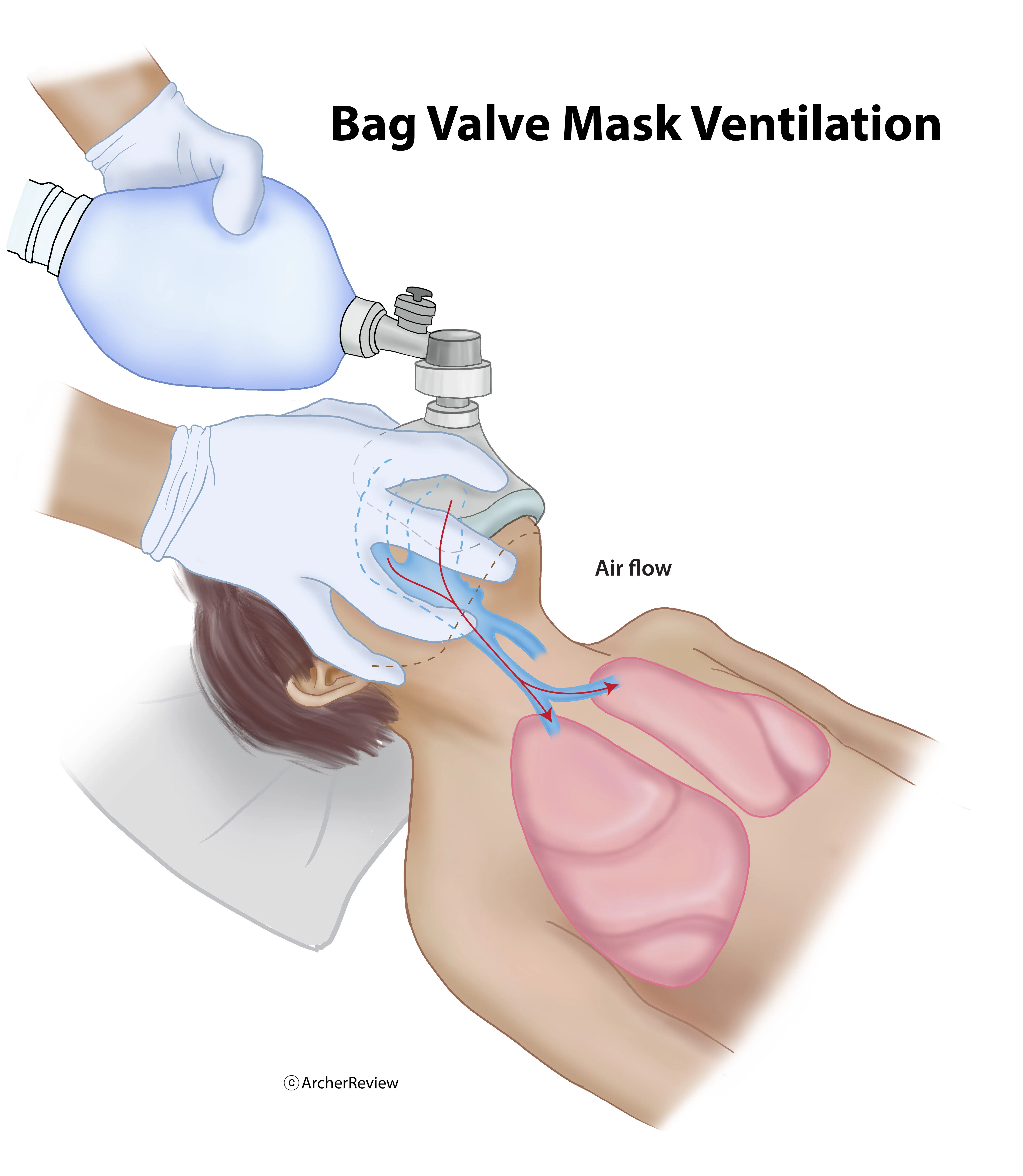
Choice A is correct. A nurse must keep a bag valve mask for a client receiving mechanical ventilation at the bedside. This allows the nurse to promptly ventilate the client if there is a power failure or significant difficulty with mechanical ventilation.
Choices B, C, and D are incorrect.
- Nasal cannula oxygen is not necessary for a client receiving mechanical ventilation. If a client is receiving mechanical ventilation, their oxygenation needs far exceed what a nasal cannula may deliver. Oxygen should be on hand - not nasal cannula oxygen (choice B).
- A chest tube is not necessary to keep at the bedside for a client receiving mechanical ventilation (choice C).
- A tracheostomy set is not necessary to keep at the bedside either. This will be a supply item essential if a client is recovering from a thyroidectomy or if the client has epiglottitis (choice D).
Related Videos
3 Key Topics
00:17:07
Ventilators
00:03:06
00:13:11
11.2 Respiratory Procedures & Support
Additional Info
While a client is receiving mechanical ventilation (regardless if they have an ET tube or tracheostomy), the nurse should follow the guidelines below:
- Ensure that the bag-valve-mask device and suction equipment are at the bedside at all times.
- Collect vital signs every four hours and obtain arterial blood gasses (ABGs) as directed.
- Assess the placement of the ET tube.
- Assess breath sounds.
- Maintain the head of the bed at least 30 degrees to prevent ventilator-acquired pneumonia.
- Suction the mouth and ET tube, as clinically indicated.
- Provide oral care frequently.
- Ensure that alarms are enabled on the ventilator.
- Empty ventilator tubings when moisture collects.
Last Updated - 11 Jan 2024
