The nurse is planning care for a client who is receiving mechanical ventilation via an endotracheal tube (ETT).
Which acid-base imbalance would suggest that the client may need to have their ETT suctioned?
The nurse is planning care for a client who is receiving mechanical ventilation via an endotracheal tube (ETT).
Which acid-base imbalance would suggest that the client may need to have their ETT suctioned?
A. Respiratory acidosis
[66%]
B. Metabolic alkalosis
[7%]
C. Respiratory alkalosis
[21%]
D. Metabolic acidosis
[6%]
Statistics
Subject/Lesson
Subject
Critical Care
Lesson
Critical Care Concepts
Client Need
Test Plan
Physiological Adaptation
Related Topic
Alterations in Body Systems
Item Type
Item Type
Knowledge/Comprehension
Explanation
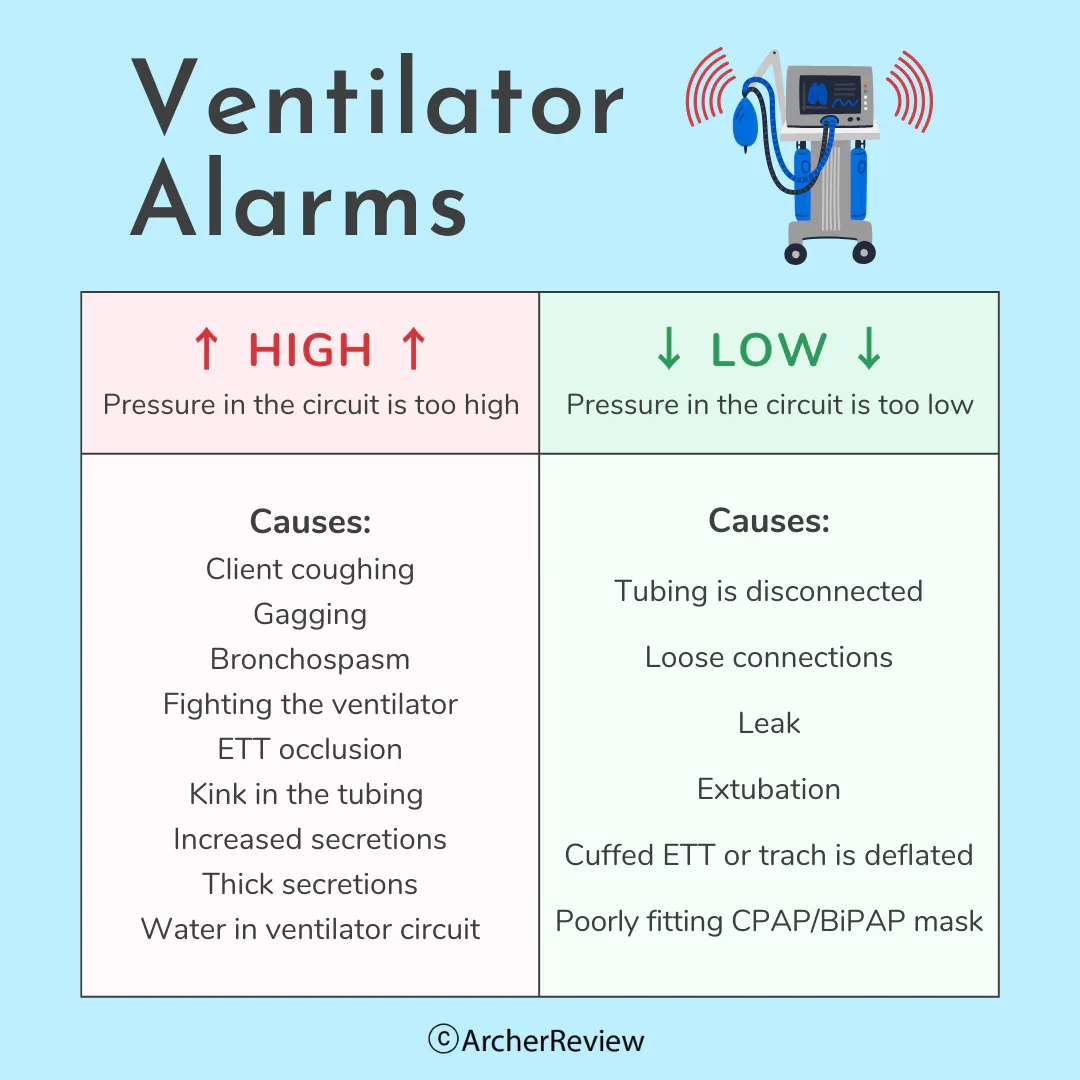
Choice A is correct. Respiratory acidosis occurs when inadequate ventilation leads to a buildup of carbon dioxide (CO2) in the blood. In a mechanically ventilated client, respiratory acidosis may suggest that there is an issue with the endotracheal tube (ETT), such as obstruction or secretions in the airway, which can impair effective ventilation and lead to CO2 retention. Suctioning the ETT may be necessary to clear the airway and restore proper ventilation.
Choice B is incorrect. Metabolic alkalosis occurs when there is an excess of bicarbonate or a loss of hydrogen ions, resulting in an elevated pH in the blood. Excessive vomiting, diuretics, or excessive intake of antacids often cause this condition. It is not typically associated with mechanical ventilation or the need for suctioning. Therefore, this imbalance is unrelated to airway obstruction or the need to suction the ETT in a ventilated patient.
Choice C is incorrect. Respiratory alkalosis occurs when excessive ventilation leads to the loss of CO2 from the blood, increasing pH. This can happen in mechanically ventilated patients if the ventilator settings are too high, causing the patient to hyperventilate. While this may lead to an imbalance in the acid-base status, it does not indicate a need for suctioning. Suctioning would not resolve the loss of CO2 or the underlying cause of respiratory alkalosis, which is typically related to ventilation settings rather than airway obstruction.
Choice D is incorrect. Metabolic acidosis occurs when there is an accumulation of acids in the blood (such as from renal failure, diabetic ketoacidosis, or lactic acidosis) or a loss of bicarbonate. It is not directly related to mechanical ventilation or the need for suctioning. While metabolic acidosis requires correction through management of the underlying condition, it does not point to airway obstruction or the need to suction the ETT. This condition is unrelated to the ventilator’s function or the need to clear the airway.
Related Videos
3 Key Topics
Ventilators