The nurse is caring for a client who is receiving mechanical ventilation.
It would indicate a correct understanding of managing a client on a ventilator if the nurse
The nurse is caring for a client who is receiving mechanical ventilation.
It would indicate a correct understanding of managing a client on a ventilator if the nurse
A. suctions the endotracheal (ET) tube every two hours.
[14%]
B. verifies that the endotracheal tube tip rests 4 cm above the carina.
[20%]
C. deflates the cuff before suctioning the endotracheal (ET) tube.
[11%]
D. maintains the head of the bed more than 30 degrees.
[55%]
Statistics
Subject/Lesson
Subject
Critical Care
Lesson
Critical Care Concepts
Client Need
Test Plan
Reduction of Risk Potential
Related Topic
Potential for Complications of Diagnostic Tests/Treatments/Procedures
Item Type
Item Type
Application
Explanation
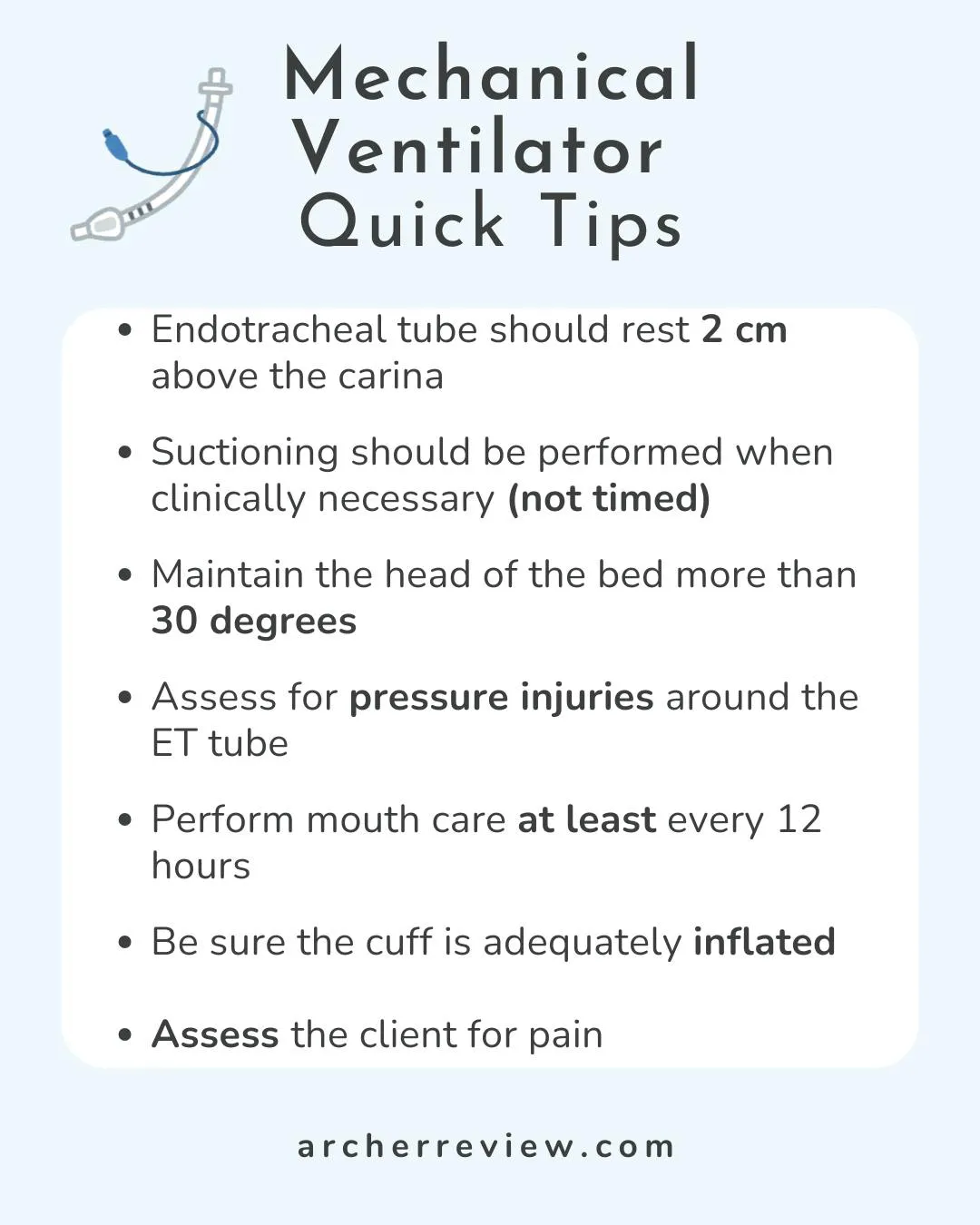
Choice D is correct. Elevating the head of the bed to at least 30 degrees reduces the risk of ventilator-associated pneumonia (VAP) by minimizing aspiration of secretions into the lower airways. This aligns with standard VAP prevention bundles.
Choice A is incorrect. Routine suctioning at set intervals is no longer recommended. Suctioning should be done based on client assessment (e.g., visible secretions, auscultated rhonchi, decreased oxygen saturation) to prevent mucosal damage and hypoxia.
Choice B is incorrect. The correct position for the ET tube tip is typically 2 cm above the carina, not 4 cm. A tube positioned too high can result in ineffective ventilation or inadvertent extubation.
Choice C is incorrect. The cuff must remain inflated during suctioning to prevent aspiration and maintain airway pressure. Deflating the cuff increases the risk of aspiration and loss of positive pressure ventilation.
Related Videos
5 Key Topics
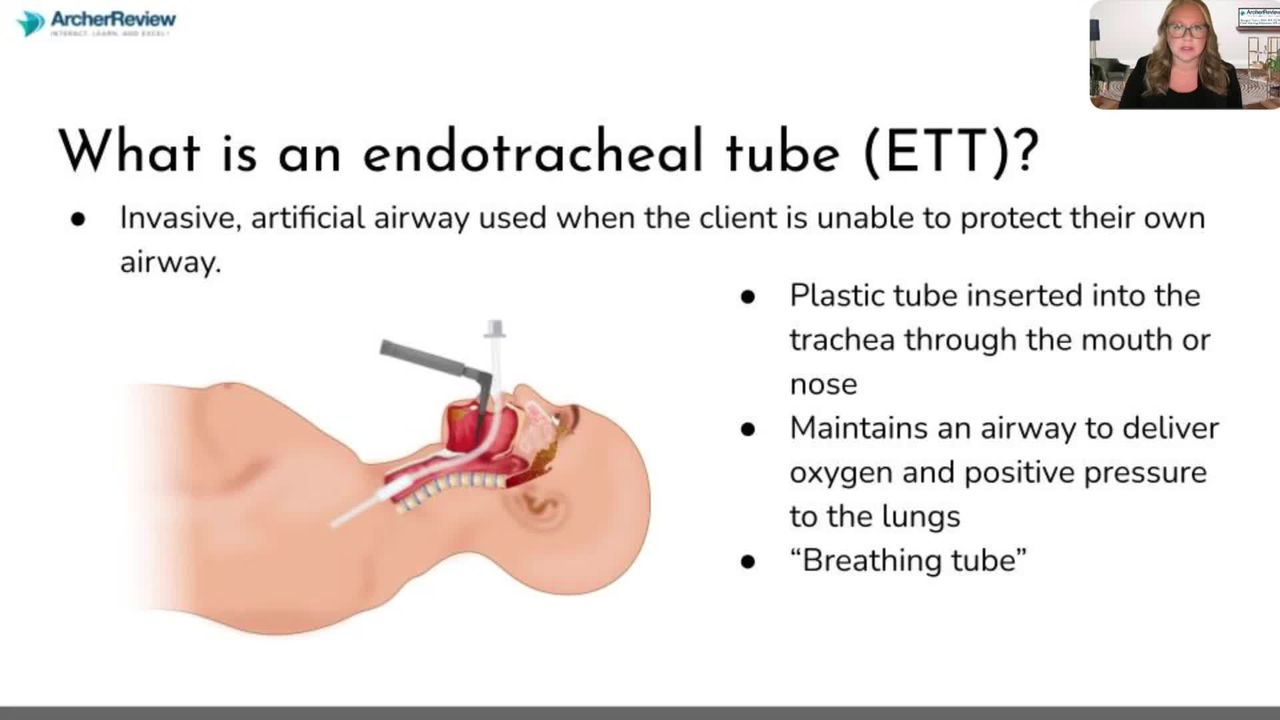
Endotracheal Tubes
27.1 Critical Care Respiratory System
Ventilators- Critical Care
27.1 Critical Care Respiratory System
Additional Info