The nurse is caring for a client who experienced a myocardial infarction (MI) 24 hours ago. It would be necessary for the nurse to immediately notify the primary health care provider (PHCP) if the client has which of the following?
The nurse is caring for a client who experienced a myocardial infarction (MI) 24 hours ago. It would be necessary for the nurse to immediately notify the primary health care provider (PHCP) if the client has which of the following?
A. An elevated troponin level
[33%]
B. A white blood cell (WBC) count of 13,000 mm3 (Both Sexes: 5-10 mm3)
[10%]
C. Apprehension about attending cardiac rehabilitation
[2%]
D. Crackles auscultated to the midline of the lung fields
[55%]
Statistics
Subject/Lesson
Subject
Critical Care
Lesson
Critical Care Concepts
Client Need
Test Plan
Reduction of Risk Potential
Related Topic
Potential for Alterations in Body Systems
Item Type
Item Type
Analysis
Explanation
Choice D is correct. Following a myocardial infarction (MI), the client is at risk for developing pulmonary edema due to the heart's inability to eject blood, resulting from myocardial insult. When caring for an MI client, nurses should monitor for life-threatening ventricular arrhythmias and pulmonary edema, characterized by lung crackles, tachypnea, and hypoxia.
Choice A is incorrect. Elevations in troponin levels are expected 24 hours after an MI and can persist for up to two weeks.
Choice B is incorrect. Leukocytosis (elevated white blood cell count) is a common response to an MI, reflecting myocardial inflammation.
Choice C is incorrect. Apprehension about cardiac rehabilitation is a normal response, as it often requires a lifelong commitment to lifestyle changes as part of tertiary prevention strategies.
Related Videos
2 Key Topics
Myocardial Infarction
18.11 Acute Coronary Syndrome
Additional Info
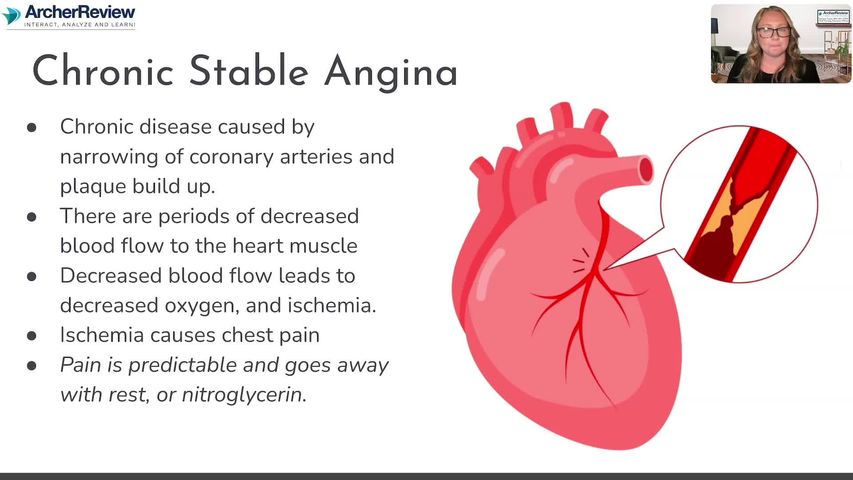
✓ Myocardial infarction (MI) occurs when there is a sudden interruption in the blood supply to a part of the heart muscle, leading to ischemia (lack of oxygen) and subsequent tissue damage in the affected area of the heart. The lack of oxygen-rich blood can cause irreversible damage to the heart muscle cells.
✓ A client experiencing an MI will have symptoms such as substernal chest pain (which may be described as tightness or pressure), which may radiate to the jaw or down the arm, diaphoresis, dyspnea, or a feeling of apprehension.
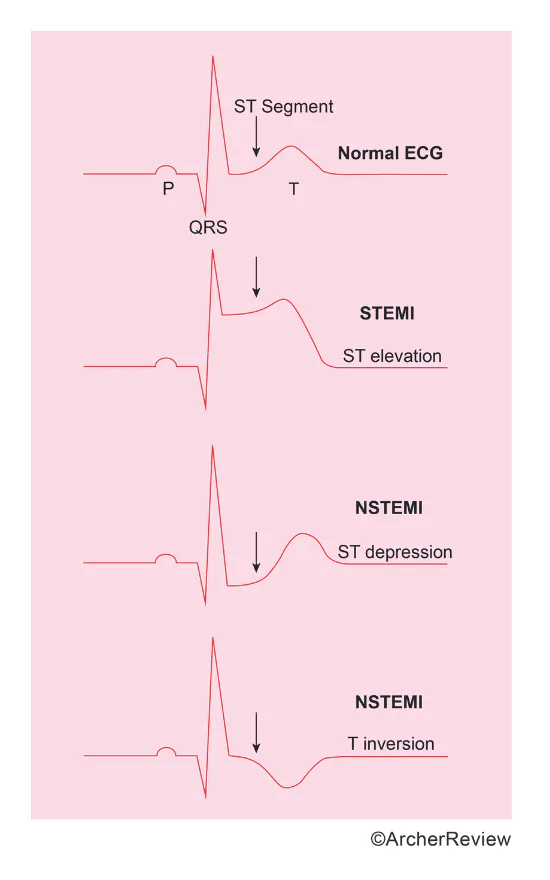
✓ The nurse should immediately obtain a 12-lead electrocardiogram to confirm the presence of an acute myocardial infarction (may be ST elevation MI or a non-ST elevation MI).
✓ Administer prescribed medications, such as diuretics, angiotensin-converting enzyme (ACE) inhibitors, and beta-blockers, as ordered. These medications play a significant role in managing cardiac workload and preventing complications moving forward.