A nurse is caring for a client with a traumatic brain injury who has an External Ventricular Drain (EVD) in place for cerebrospinal fluid (CSF) drainage. Which action by the nurse is essential when managing the EVD?
A nurse is caring for a client with a traumatic brain injury who has an External Ventricular Drain (EVD) in place for cerebrospinal fluid (CSF) drainage. Which action by the nurse is essential when managing the EVD?
A. Elevate the drainage bag above the level of the client's head.
[5%]
B. Flush the EVD tubing with normal saline every 4 hours.
[4%]
C. Monitor the client's intracranial pressure (ICP) waveform periodically.
[63%]
D. Clamp the EVD before repositioning the client.
[29%]
Statistics
Subject/Lesson
Subject
Critical Care
Lesson
Critical Care Concepts
Client Need
Test Plan
Reduction of Risk Potential
Related Topic
Potential for Complications of Diagnostic Tests/Treatments/Procedures
Item Type
Item Type
Application
Explanation
Choice D is correct. Clamping the EVD before repositioning the client is essential to prevent rapid pressure fluctuations, especially when adjusting the bed head or changing the client's position. This practice helps maintain stability in ICP and prevents complications such as cerebral edema or herniation during client movements.
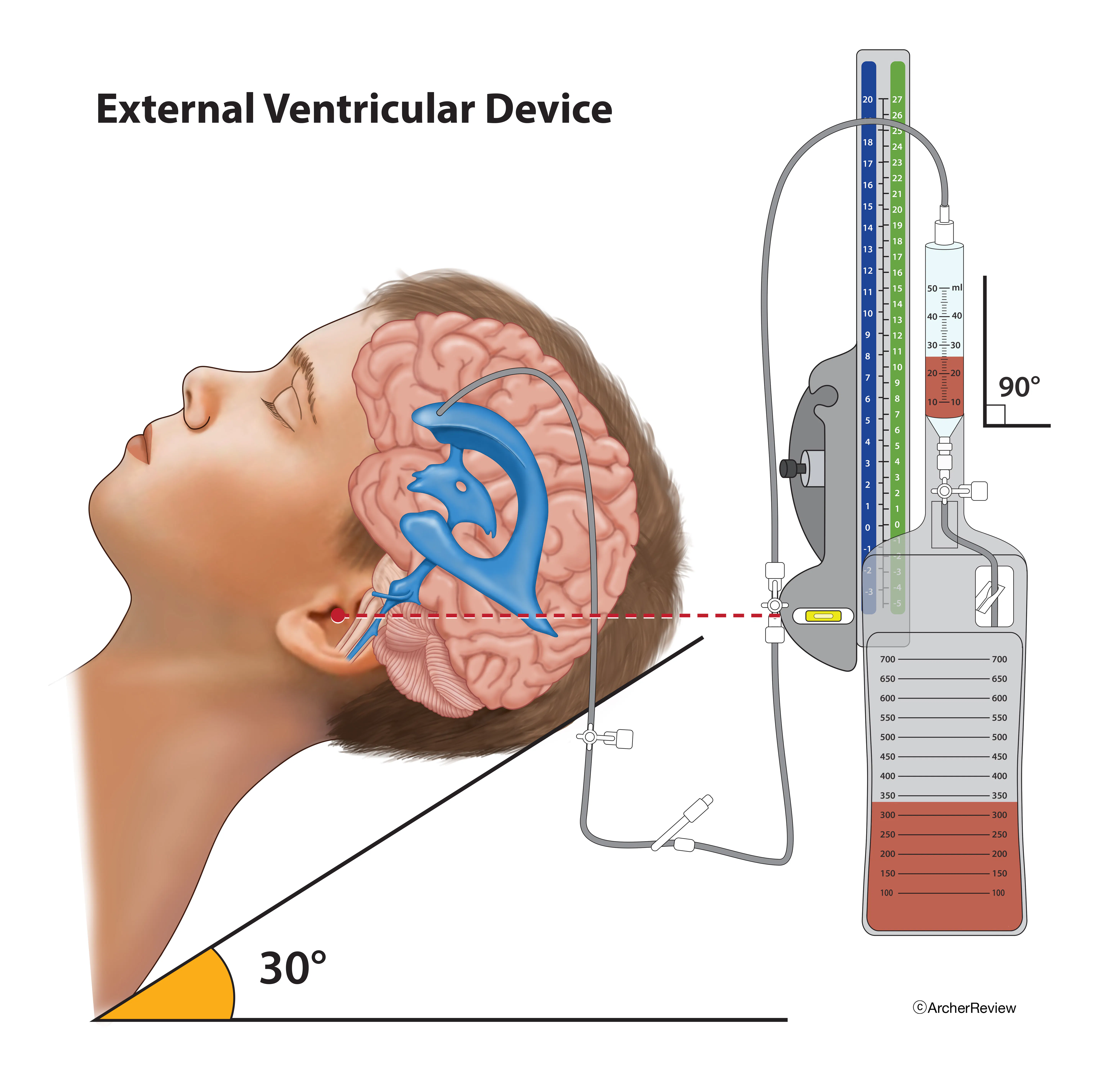
Choice A is incorrect. Elevating the drainage bag above the level of the client's head is not recommended for EVD drainage. Instead, the EVD should be leveled at the tragus to ensure accurate CSF drainage. The tragus serves as a common reference point that corresponds to the level of the skull base. Proper alignment of the EVD with the tragus helps maintain accurate CSF drainage and prevents fluctuations in intracranial pressure.
Choice B is incorrect. Flushing the EVD tubing with normal saline every 4 hours is not necessary and may disrupt the drainage system. Flushing is typically performed as needed to maintain the patency of the EVD tubing and should be done according to institutional protocols. Furthermore, the nurse should not flush EVD lines without permission from neurosurgical support.
Choice C is incorrect. While monitoring the client's ICP waveform is important for assessing changes in ICP, it is not directly related to the action of managing the EVD during routine care activities.
Related Videos
2 Key Topics
EVD & VP Shunts
31.9 Neurologic Disorders
Additional Info
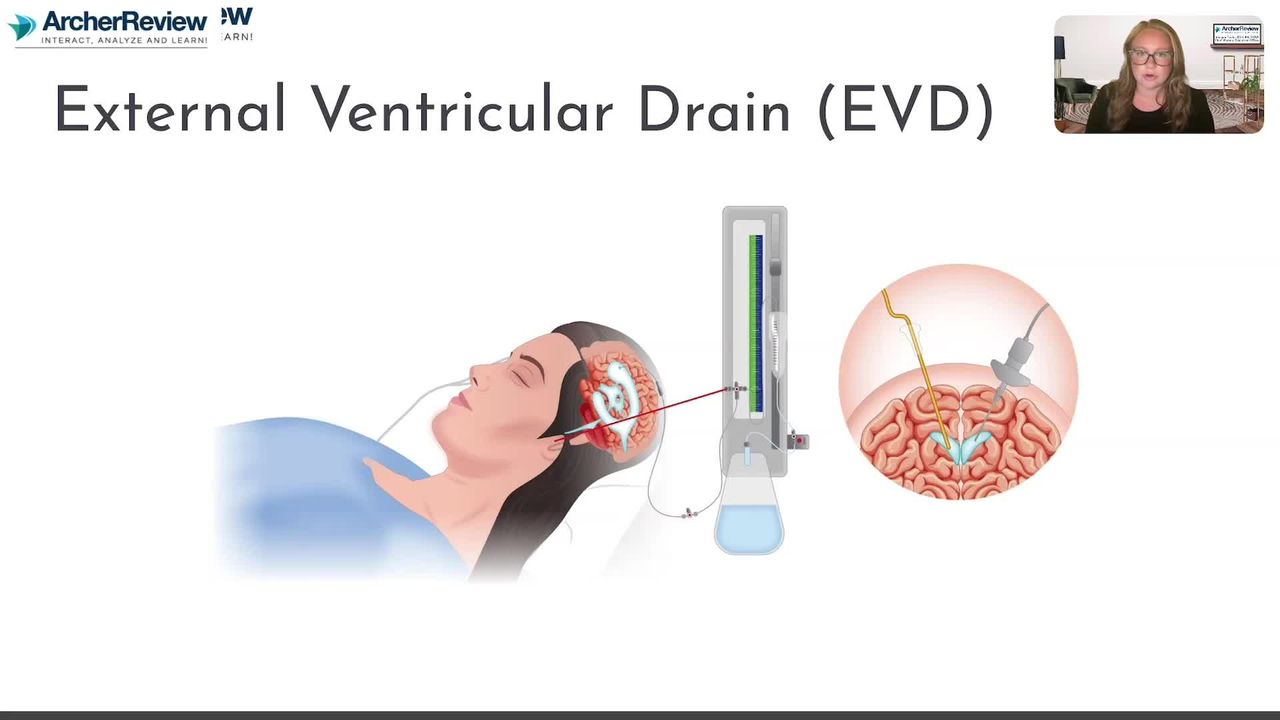
✓ An EVD, or External Ventricular Drain, is a medical device used in neurocritical care to manage conditions such as hydrocephalus, traumatic brain injury, intracranial hemorrhage, or increased intracranial pressure (ICP).
✓ Its purpose is to drain excess cerebrospinal fluid (CSF) from the brain's ventricular system to reduce pressure within the skull.
✓ Proper positioning of the client's head is important to optimize CSF drainage and accurate measurement of intracranial pressure. Typically nurses should ensure the client's head is elevated to 30 degrees, and the EVD transducer is leveled at the tragus to maintain accurate pressure readings.