Which interventions should the nurse anticipate for an infant with omphalocele awaiting surgical repair? Select all that apply.
Which interventions should the nurse anticipate for an infant with omphalocele awaiting surgical repair? Select all that apply.
Statistics
Subject/Lesson
Subject
Child Health
Lesson
Gastrointestinal
Client Need
Test Plan
Physiological Adaptation
Related Topic
Alterations in Body Systems
Item Type
Item Type
Application
Explanation
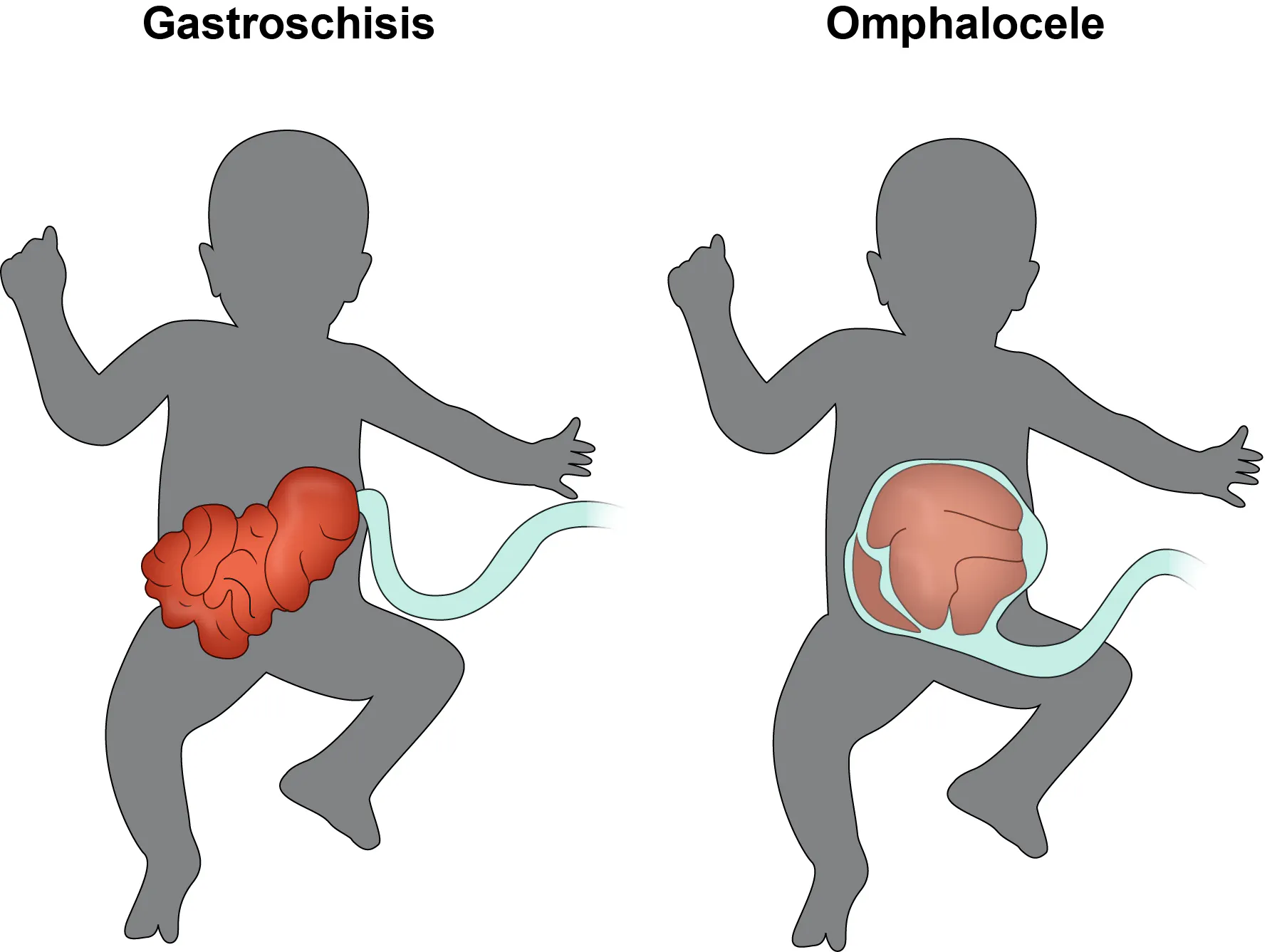
Choices A and C are correct—these postnatal nursing interventions for omphalocele aim to minimize the complications to the neonate. Although the intestines remain in a peritoneal sac in an omphalocele, no skin covers the defect. Therefore, there is an insensible loss of heat and fluids. Complications such as dehydration, electrolyte imbalance, hypothermia, and infection (necrotizing enterocolitis) may ensue. Because of the defect, infants with omphalocele have reduced chest capacity and respiratory reserve. The pre-operative nursing management of neonates with omphalocele involves airway stabilization, covering the defect with sterile gauze soaked in saline, inserting an orogastric tube for bowel decompression, and establishing peripheral intravenous access. Subsequent interventions include the administration of intravenous fluids and broad-spectrum antibiotics.
- The defect should be covered with sterile gauze soaked in saline (choice A). This keeps the intestines moist and reduces insensible fluid loss. Additionally, such a protective covering will prevent infection. Infection prevention in omphalocele clients is a priority because exposed abdominal contents are prone to severe infection without protective skin covering.
- Due to insensible heat loss from the exposed viscera, hypothermia is a critical complication of an omphalocele. Affected infants struggle to maintain their body temperature. The affected infants should not be tightly swaddled because this would put pressure on the exposed intestines compromising the blood flow. Strategies such as a radiant warmer can help thermoregulate these infants without compromising the intestines (choice C).
Choice B is incorrect. It is inappropriate to position an infant with an omphalocele in a prone position. Prone positioning would place the exposed intestines directly onto the surface, causing compression of the intestines and blood-flow compromise. Instead, supine positioning is preferred.
Choice D is incorrect. Trophic feeding refers to feeding small volumes of enteral feeds to stimulate the development of the infant's immature gastrointestinal tract. Trophic feedings would not be started in an infant with an omphalocele before the surgical repair. The intestines must be placed back in position before initiating the feeds. Initially, the feeding will be primarily parenteral, gradually transitioning to enteral feeds.
Choice E is incorrect. The recommended method is to cover the defect with sterile gauze soaked in thermal-neutral saline. Using excessively wet dressings may increase the hypothermia risk. The nurse must avoid circumferential abdominal wraps and dressings because they can press on the omphalocele sac and compromise blood flow.
Learning Objective
Recognize that priority postnatal nursing interventions for an infant with omphalocele are aimed at preventing insensible fluid loss, heat loss, and infection.
Related Videos
2 Key Topics
Omphalocele
31.11 GI Obstructions & Abdominal Wall Defects
Additional Info
Two important abdominal wall defects encountered in the neonatal period are omphalocele and gastroschisis.
- An omphalocele is a midline abdominal wall defect at the base of the umbilical cord, with herniation of the intestine and other viscera. In an omphalocele, the viscera are covered with a peritoneal sac.
- Gastroschisis is an abdominal wall defect that presents laterally and to the right of the umbilicus. There is no peritoneal sac covering the exposed intestines in a gastroschisis defect.