Multiple clients have been brought to the emergency department after being struck by lightning during a severe thunderstorm.
Which of the following clients should the nurse prioritize? The client who
Multiple clients have been brought to the emergency department after being struck by lightning during a severe thunderstorm.
Which of the following clients should the nurse prioritize? The client who
A. reports numbness and tingling in all their extremities.
[23%]
B. has paralysis on both lower extremities.
[5%]
C. is confused and cannot remember their name or why they are in the emergency department.
[21%]
D. experienced a massive electrical current discharge to their body.
[50%]
Statistics
Subject/Lesson
Subject
Adult Health
Lesson
Environmental Emergencies
Client Need
Test Plan
Physiological Adaptation
Related Topic
Medical Emergencies
Item Type
Item Type
Application
Explanation
Choice D is correct. The nurse should prioritize the care of this client. The most lethal initial effect of a massive electrical current discharge is cardiac arrest. Severe lightning injuries can cause cardiac arrest due to the cardiopulmonary and central nervous systems being profoundly affected by lightning injuries. The nurse should initiate resuscitation measures by immediate airway and ventilatory management, chest compressions, and other life support interventions as needed.
Choice A is incorrect. While it is concerning and requires evaluation, it is not immediately life-threatening compared to a client experiencing a massive electrical current discharge, which could lead to cardiac or respiratory arrest.
Choice B is incorrect. Clients with a moderate lightning injury may experience paralysis, confusion, or be comatose. Although these are serious injuries needing medical attention, the nurse would need to prioritize a client with a severe lightning injury.
Choice C is incorrect. Clients who have been struck by lightning and who are confused or stunned would be categorized as having a mild lightning injury. Although these serious injuries need medical attention, the nurse must prioritize a client with a severe lightning injury.
Related Videos
2 Key Topics
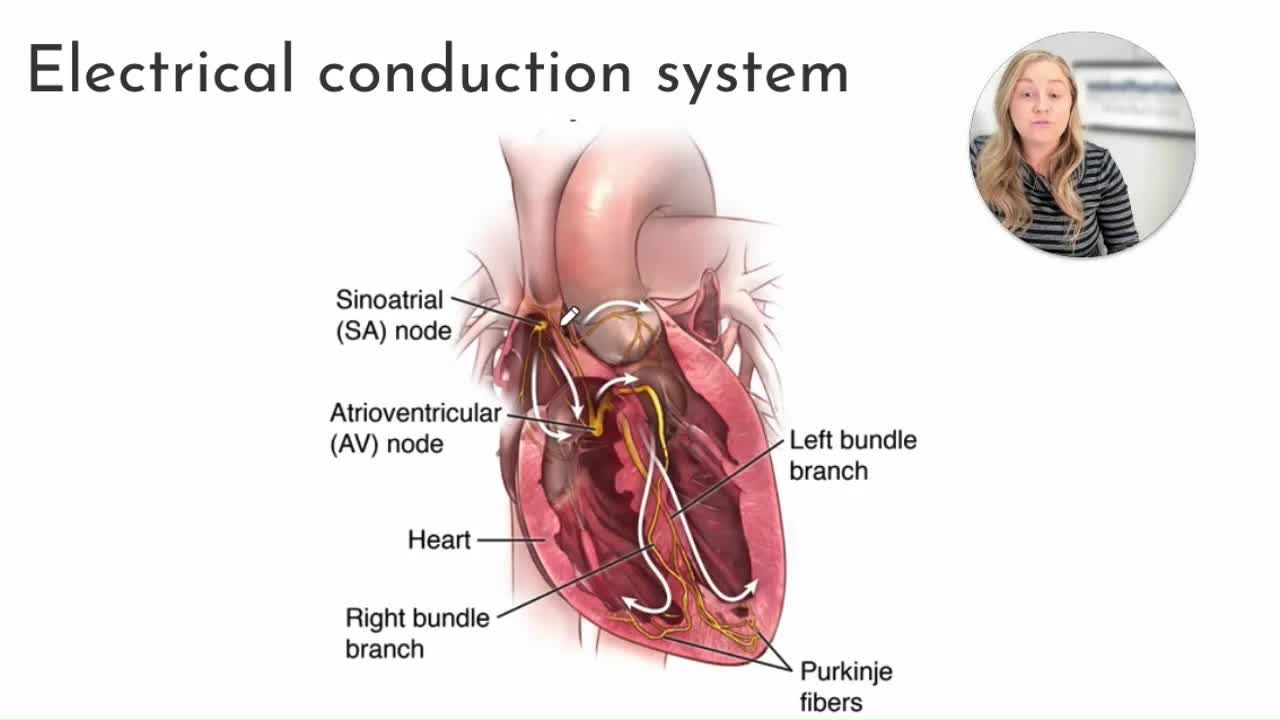
Electrical Conduction System
7.1 Electrical Conduction System
Additional Info
✓ Clients with mild or moderate lightning injury are treated less emergently. However, it is important to understand that these clients may still have serious myocardial complications, which can be identified by an electrocardiogram (ECG), and myocardial perfusion abnormalities (angina and dysrhythmias).
✓ The nurse should educate clients for lightning strike prevention:
• Observe weather forecasts before going outside
• Seek shelter if outside and thunder is heard
• Avoid metal objects such as chairs or bleachers (put down tools, fishing rods, garden equipment, golf clubs, and umbrellas)
✓ Signs of an imminent lightning strike include hair standing on end, seeing a blue halo around objects, and hearing high-pitched or crackling noises. If a person experiences any of these signs and cannot immediately move away from the area, they should crouch on the balls of their feet and tuck their head down to minimize the target size. They should not lie on the ground or touch the ground with their hands.
