A 12-year-old female presented to the emergency department with ongoing fatigue and recent weight loss over the past two weeks.
Item 2 of 6
- Nurses’ Notes
1000: A 12-year-old female presented to the emergency department with ongoing fatigue and recent weight loss over the past two weeks. The client’s caregiver states she has been experiencing increased thirst and frequent urination, including throughout the night. The client has no significant past medical history. Upon assessment, the client’s mucous membranes are dry. Pulses are regular and palpable. Lung sounds are clear. The abdomen is soft and nontender. The client is alert and oriented x4, but reports a headache, rated 5/10. Immunizations are up to date. Vital signs are T 98.9°F (37.2°C), HR 112, RR 26, BP 92/54, SpO₂ 98% on room air. Fingerstick glucose level is 396 mg/dL (22.0 mmol/L).
1005: Blood and urine specimens collected and sent to the lab. Client tolerated well.
- Laboratory & Imaging Results
Source : Archer ReviewSource : Archer ReviewSource : Archer ReviewSource : Archer Review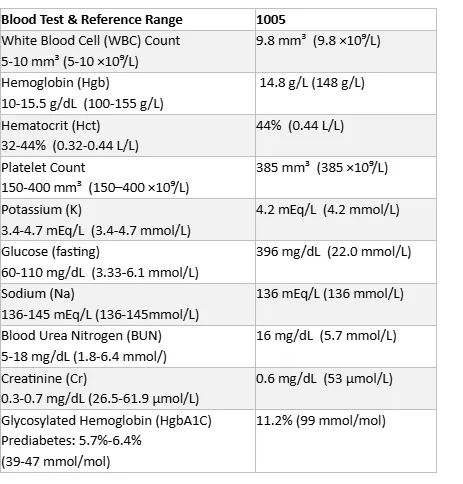 Source : Archer ReviewSource : Archer ReviewSource : Archer ReviewSource : Archer Review
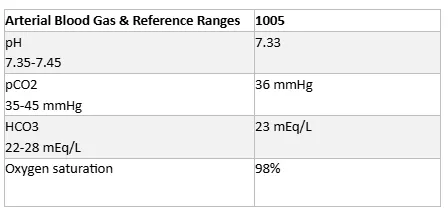 Source : Archer ReviewSource : Archer ReviewSource : Archer ReviewSource : Archer Review
Source : Archer ReviewSource : Archer ReviewSource : Archer ReviewSource : Archer Review
Source : Archer ReviewSource : Archer ReviewSource : Archer ReviewSource : Archer Review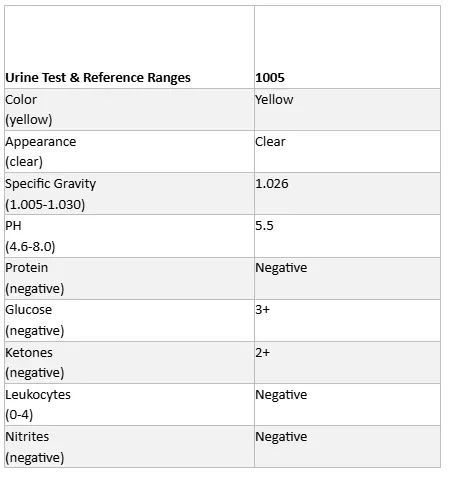 Source : Archer ReviewSource : Archer ReviewSource : Archer ReviewSource : Archer Review
- Orders
1000
- CBC
- BMP
- UA
- HbA1C
- ABG
For each client finding below, click to specify if the finding is consistent with the disease process of diabetes mellitus (type one) or diabetes mellitus (type two).
Each finding may support more than one (1) disease process. Each column must have at least one (1) response option selected.

For each client finding below, click to specify if the finding is consistent with the disease process of diabetes mellitus (type one) or diabetes mellitus (type two).
Each finding may support more than one (1) disease process. Each column must have at least one (1) response option selected.
| Clinical Features | diabetes mellitus (type one) | diabetes mellitus (type two) |
|---|---|---|
Gradual onset of symptoms over several months | ||
Polyuria | ||
Caused by an autoimmune condition | ||
Glycosylated Hemoglobin (HgbA1C) >7% | ||
Presence of ketones in urine |
Statistics
Subject/Lesson
Subject
Child Health
Lesson
Endocrine
Client Need
Test Plan
Physiological Adaptation
Related Topic
Alterations in Body Systems
Item Type
Item Type
AnalyzeCues
Explanation
Diabetes mellitus (type one)
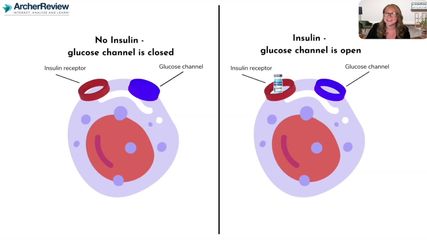
- Type 1 diabetes is a chronic autoimmune condition in which the body’s immune system attacks and destroys the insulin-producing beta cells of the pancreas. This results in an absolute insulin deficiency, requiring lifelong insulin therapy. It most commonly develops in childhood or adolescence and typically presents with a sudden onset of symptoms, such as polyuria, polydipsia, weight loss, and fatigue. The presence of ketones in the urine suggests significant insulin deficiency, leading to fat metabolism and ketone production.
Diabetes mellitus (type two)
- Type 2 diabetes is a chronic metabolic disorder characterized by insulin resistance and relative insulin deficiency. The pancreas still produces insulin, but the body’s cells do not respond effectively. It typically develops in adulthood, but is increasingly seen in children and adolescents, especially those with obesity or a family history. Onset is usually gradual, occurring over weeks to months, and early symptoms may be subtle or go unnoticed. Polyuria is a shared symptom of both types due to osmotic diuresis from elevated glucose levels. A hemoglobin A1c greater than 7% indicates prolonged hyperglycemia and is a diagnostic marker for both types of diabetes.
Related Videos
2 Key Topics
Diabetes Mellitus Type I
