A 12-year-old female presented to the emergency department with ongoing fatigue and recent weight loss over the past two weeks.
Item 3 of 6
- Orders
1000
- CBC
- BMP
- UA
- HbA1C
- ABG
- Laboratory & Imaging Results
Source : Archer ReviewSource : Archer ReviewSource : Archer ReviewSource : Archer Review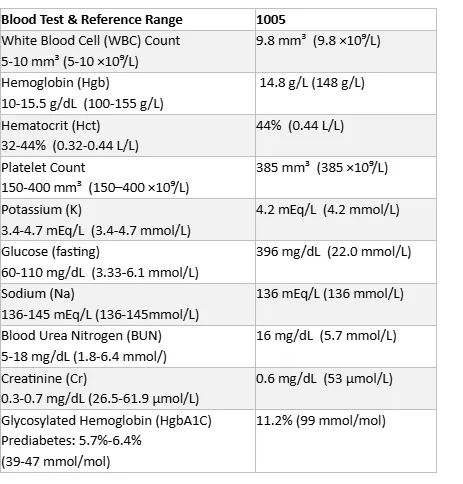 Source : Archer ReviewSource : Archer ReviewSource : Archer ReviewSource : Archer Review
 Source : Archer ReviewSource : Archer ReviewSource : Archer ReviewSource : Archer Review
Source : Archer ReviewSource : Archer ReviewSource : Archer ReviewSource : Archer Review
Source : Archer ReviewSource : Archer ReviewSource : Archer ReviewSource : Archer Review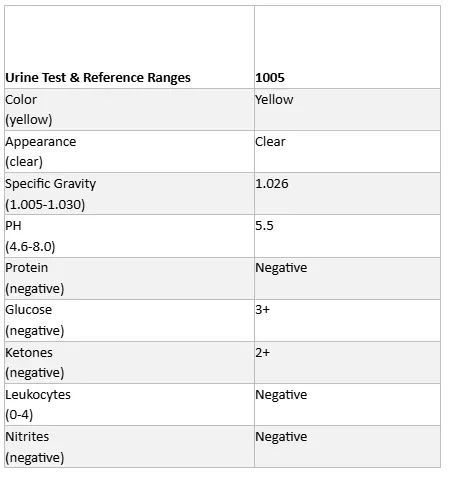 Source : Archer ReviewSource : Archer ReviewSource : Archer ReviewSource : Archer Review
- Nurses’ Notes
1000: A 12-year-old female presented to the emergency department with ongoing fatigue and recent weight loss over the past two weeks. The client’s caregiver states she has been experiencing increased thirst and frequent urination, including throughout the night. The client has no significant past medical history. Upon assessment, the client’s mucous membranes are dry. Pulses are regular and palpable. Lung sounds are clear. The abdomen is soft and nontender. The client is alert and oriented x4, but reports a headache, rated 5/10. Immunizations are up to date. Vital signs are T 98.9°F (37.2°C), HR 112, RR 26, BP 92/54, SpO₂ 98% on room air. Fingerstick glucose level is 396 mg/dL (22.0 mmol/L).
1005: Blood and urine specimens collected and sent to the lab. Client tolerated well.
1010: Provider is at the bedside speaking with the client and their caregiver. The provider confirmed a diagnosis of Type 1 diabetes mellitus. Plans to admit the client for observation and begin initial management.
The nurse considers the complications associated with the condition.
Complete the sentence below from the lists of options.
The nurse considers the complications associated with the condition.
Complete the sentence below from the lists of options.
The client is most at risk for developing

due to

Statistics
Subject/Lesson
Subject
Child Health
Lesson
Endocrine
Client Need
Test Plan
Reduction of Risk Potential
Related Topic
Potential for Alterations in Body Systems
Item Type
Item Type
PrioritizeHypothesis
Explanation
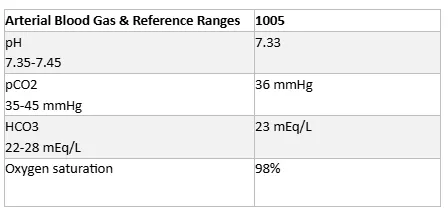
- The client is most at risk for developing DKA due to the accumulation of ketone bodies.
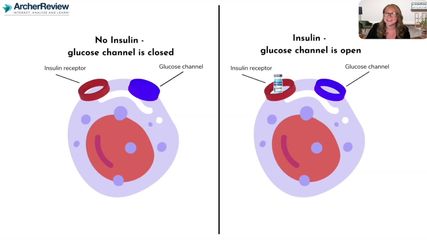
- DKA is a serious complication that results from absolute or near-absolute insulin deficiency, most commonly seen in clients with new-onset diabetes mellitus (type one).
- Without sufficient insulin, the body is unable to utilize glucose effectively, so it turns to fat breakdown for energy. This process generates ketone bodies, which are acidic and accumulate in the blood, leading to metabolic acidosis and dehydration.
- HHNS is a different hyperglycemic emergency more commonly seen in adults with diabetes mellitus (type two). It is caused by severe insulin resistance, not insulin absence, and does not typically involve ketone production. HHNS usually presents with very high glucose levels and profound dehydration, but without acidosis or ketonuria, making it an unlikely complication in this pediatric client.
- Diabetic nephropathy is a chronic microvascular complication of long-standing diabetes, especially in clients with poor glycemic control. It develops slowly over time due to microvascular damage, not from acute metabolic changes. While it is a known complication of diabetes mellitus (type one), it does not present in newly diagnosed pediatric clients and is not an acute concern in this case.
Related Videos
2 Key Topics
Diabetes Mellitus Type I
