The nurse is caring for a client in the emergency department (ED), reporting, “I’ve had this cough for weeks."
Item 3 of 6
- History and Physical
0700
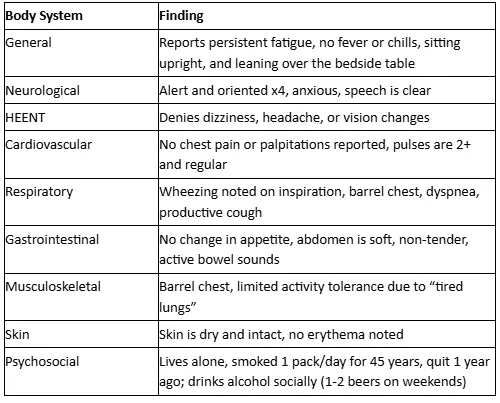
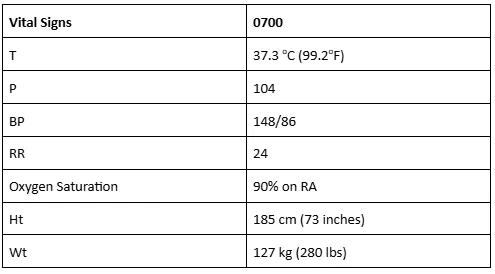
The client arrived at the ED this morning and reported, “I’ve had this cough for weeks. It’s been getting worse now, and now it's hard to breathe.” He has been admitted to the observational unit. The client’s medical history includes DM type 2 and hypertension.
 Source : Archer ReviewSource : Archer ReviewSource : Archer Review
- Flow Sheet
- Orders
0700
- Vital signs q4h
- Oxygen to maintain SpO2 >92%
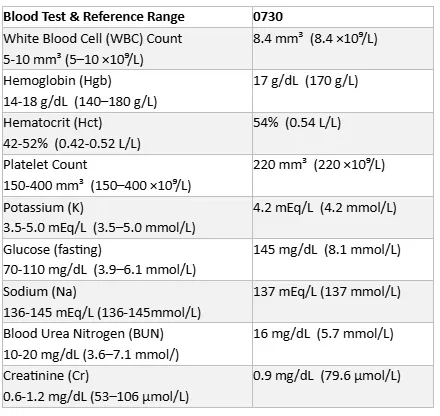
- Complete blood count
- Basic metabolic panel
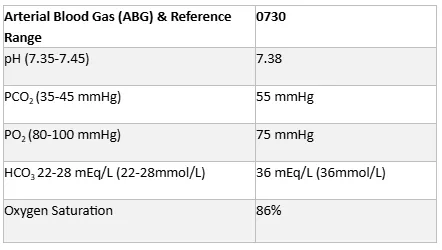
- Arterial blood gas
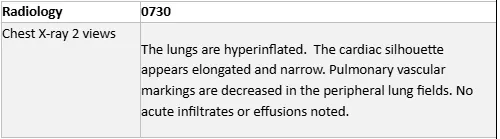
- X-ray, chest 2 views
- Pulmonary function test for evaluation of dyspnea
- Diagnostic Results
- Laboratory & Imaging Results
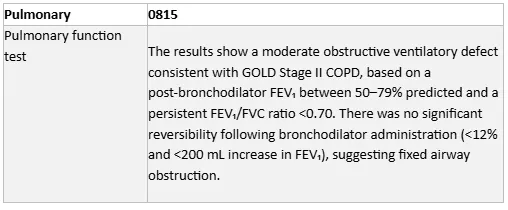
After reviewing the results of the pulmonary function test and confirming the diagnosis, the nurse is considering the associated risks.
Choose the most likely options for the information missing from the statement by selecting from the lists of options provided.
After reviewing the results of the pulmonary function test and confirming the diagnosis, the nurse is considering the associated risks.
Choose the most likely options for the information missing from the statement by selecting from the lists of options provided.
The client is most at risk for developing
due to
Choices for 1
- respiratory acidosis
- metabolic acidosis
- metabolic alkalosis
Choices for 2
- loss of hydrogen ions.
- impaired alveolar ventilation.
- accumulation of ketone acids.

Statistics
Subject/Lesson
Subject
Adult Health
Lesson
Respiratory
Client Need
Test Plan
Physiological Adaptation
Related Topic
Alterations in Body Systems
Item Type
Item Type
PrioritizeHypothesis
Explanation
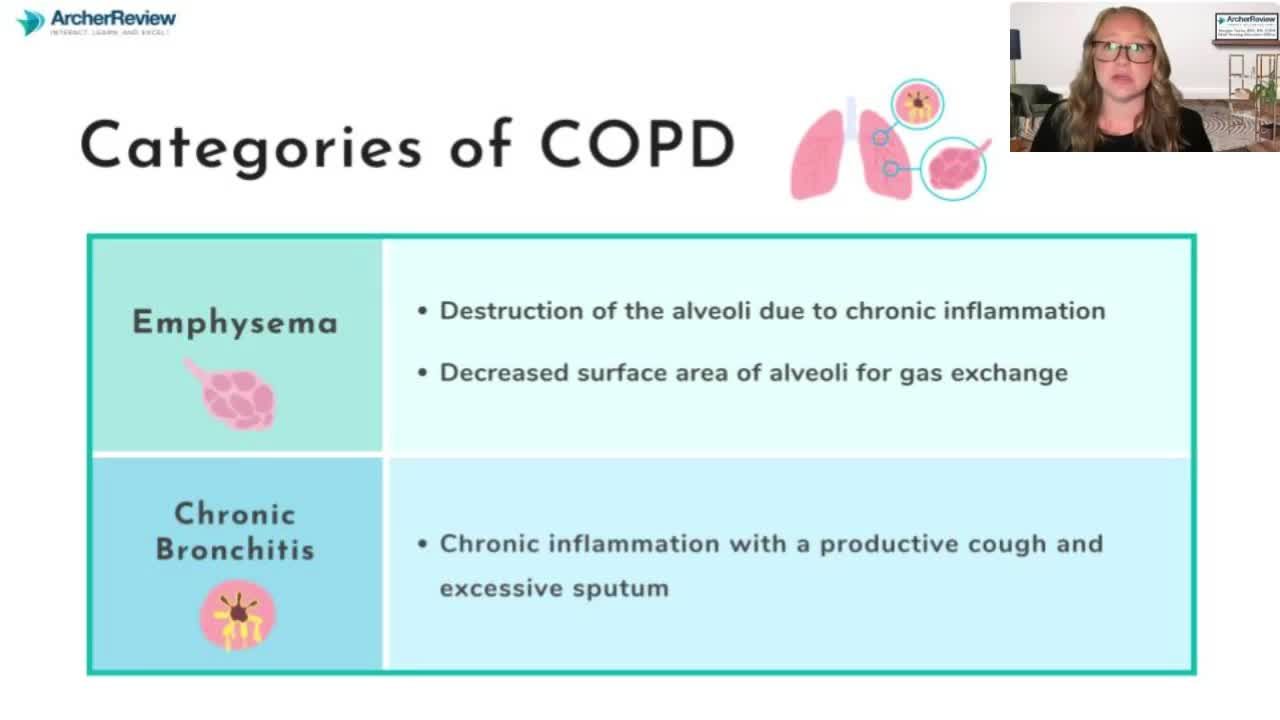
Respiratory acidosis occurs when there is an excess of carbon dioxide (CO₂) in the bloodstream, typically due to hypoventilation or impaired ability to exhale CO₂ effectively. The primary cause is a decrease in alveolar ventilation, which leads to CO₂ retention. This is seen in conditions like chronic obstructive pulmonary disease (COPD), neuromuscular disorders, or central nervous system depression (e.g., due to opioids or sedation).
Impaired alveolar ventilation is the correct pathophysiologic mechanism leading to this acid–base imbalance. As CO₂ builds up, it combines with water to form carbonic acid, lowering blood pH and resulting in acidosis. The pH may appear normal in chronic cases due to renal compensation (as seen in the client’s ABG with a near-normal pH and elevated HCO₃⁻), but the elevated PaCO₂ confirms a respiratory origin.
Respiratory alkalosis due to rapid breathing causes CO₂ loss, not retention, leading to alkalosis, the opposite of the scenario presented. Metabolic acidosis caused by the accumulation of ketone acids is characteristic of diabetic ketoacidosis (DKA), not a respiratory disorder. Metabolic alkalosis with a loss of hydrogen ions typically occurs due to vomiting or nasogastric suction, not respiratory compromise.
Related Videos
2 Key Topics
COPD
