The nurse is caring for a client in the emergency department (ED), reporting, “I’ve had this cough for weeks."
Item 4 of 6
- History and Physical
0700
The client arrived at the ED this morning and reported, “I’ve had this cough for weeks. It’s been getting worse now, and now it's hard to breathe.” He has been admitted to the observational unit. The client’s medical history includes DM type 2 and hypertension.
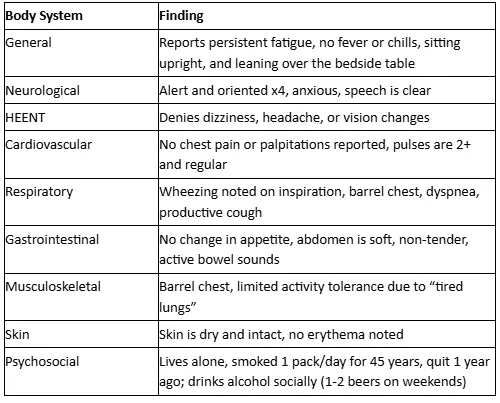 Source : Archer ReviewSource : Archer ReviewSource : Archer Review
- Flow Sheet
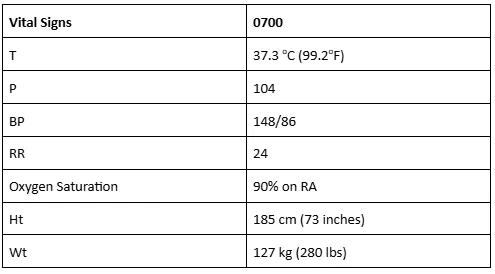
- Orders
0700
- Vital signs q4h
- Oxygen to maintain SpO2 >92%
- Complete blood count
- Basic metabolic panel
- Arterial blood gas
- X-ray, chest 2 views
- Pulmonary function test for evaluation of dyspnea
- Diagnostic Results
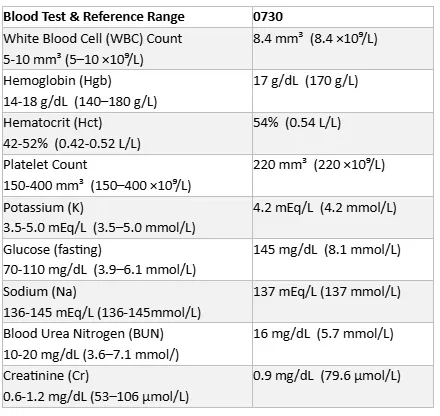
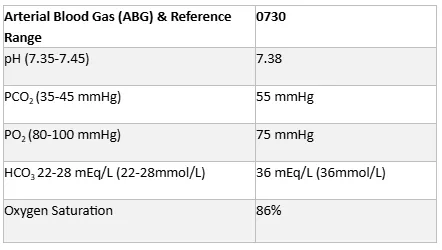
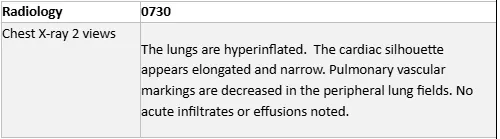
- Laboratory & Imaging Results
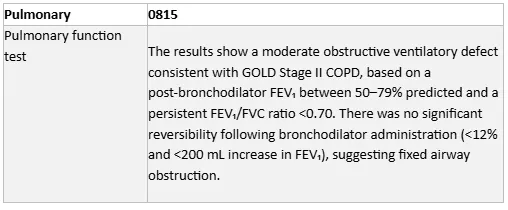
The nurse is planning care for the client.
Drag from word choices to complete the sentence.
The nurse is planning care for the client.
Drag from word choices to complete the sentence.
3/3
Your Score/Max
0/1 Scoring Rule

Given the client’s current condition, the nurse knows that the client’s plan of care should be focused on
lifestyle modifications
medication education
and
nutritional changes
Word Choices
- surgical intervention
Statistics
Difficulty level - Easy
3/3Avg. Peers Score
Time taken - 106 s
Subject/Lesson
Subject
Adult Health
Lesson
Respiratory
Client Need
Test Plan
Management of Care
Related Topic
Case Management
Item Type
Item Type
GenerateSolutions
Explanation
- Medication education is critical, as clients must understand the difference between maintenance and rescue inhalers, the correct use of inhalation devices, and the importance of adherence to long-acting bronchodilators such as LAMAs. Clear instructions on timing, technique, and purpose improve respiratory outcomes.
- Lifestyle modifications such as smoking cessation, pacing activities, and infection prevention directly impact disease progression and quality of life. Clients should be supported in identifying harmful behaviors and adopting habits that reduce COPD exacerbations and preserve lung function.
- Nutritional changes also play an important role. Clients with COPD often experience fatigue, early satiety, or unintended weight changes. Eating smaller, frequent meals can reduce pressure on the diaphragm and improve breathing comfort. Adequate hydration helps thin secretions, and nutritional support may be needed in advanced stages to maintain energy and muscle strength.
- Surgical intervention is not part of standard care for clients with newly diagnosed or moderate COPD. Surgical options, such as lung volume reduction surgery (LVRS) or lung transplantation, are considered only in severe or end-stage COPD when medical therapy no longer provides adequate symptom control.
Related Videos
2 Key Topics
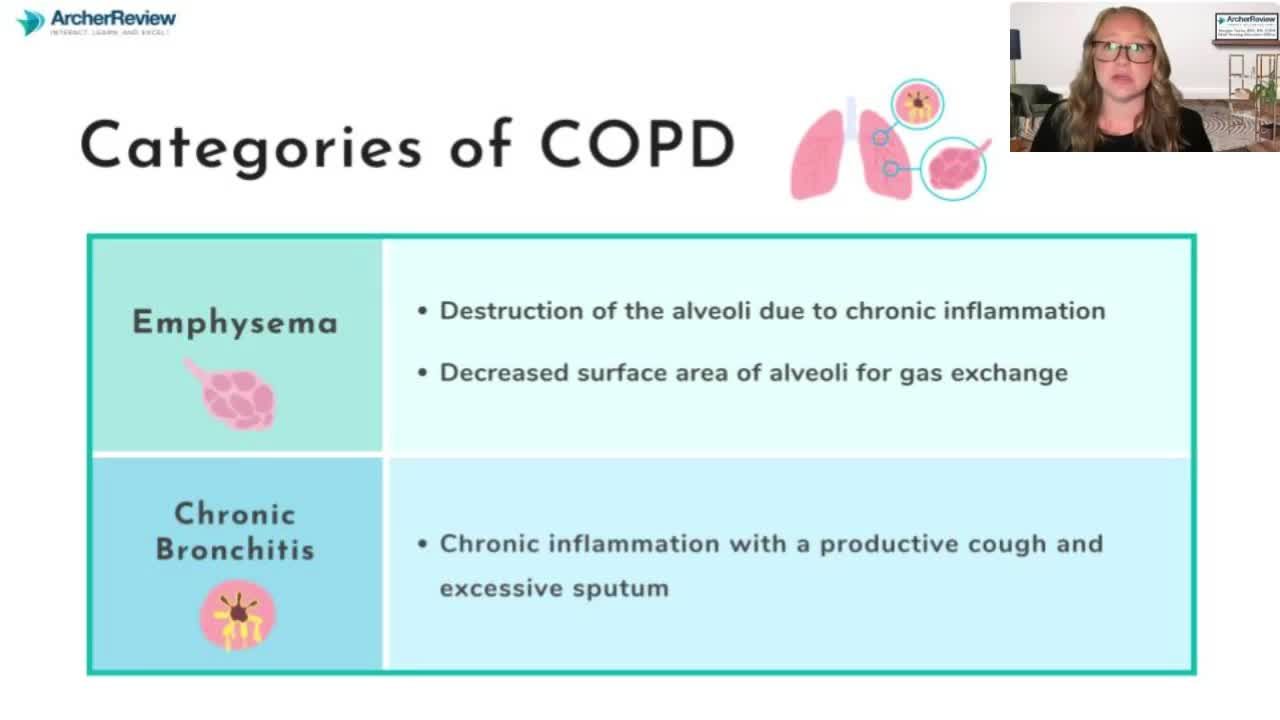
00:26:46
COPD
00:00:00
00:13:36
17.6 Airway Disorders
Last Updated - 29 Jun 2026
