The nurse is caring for a client in the emergency department (ED), reporting, “I’ve had this cough for weeks."
Item 2 of 6
- History and Physical
0700
The client arrived at the ED this morning and reported, “I’ve had this cough for weeks. It’s been getting worse now, and now it's hard to breathe.” He has been admitted to the observational unit. The client’s medical history includes DM type 2 and hypertension.
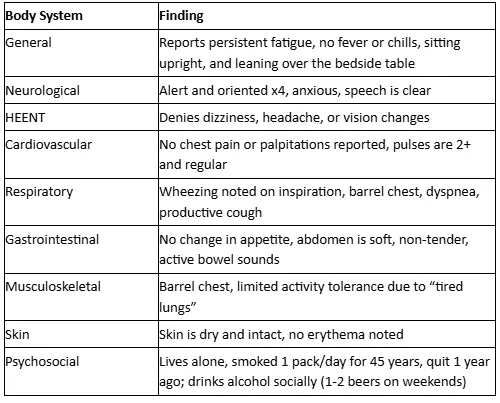 Source : Archer ReviewSource : Archer ReviewSource : Archer Review
- Flow Sheet
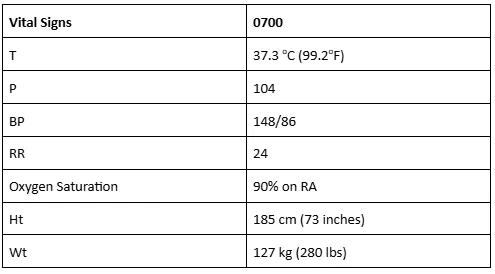
- Orders
0700
- Vital signs q4h
- Oxygen to maintain SpO2 >92%
- Complete blood count
- Basic metabolic panel
- Arterial blood gas
- X-ray, chest 2 views
- Pulmonary function test for evaluation of dyspnea
- Diagnostic Results
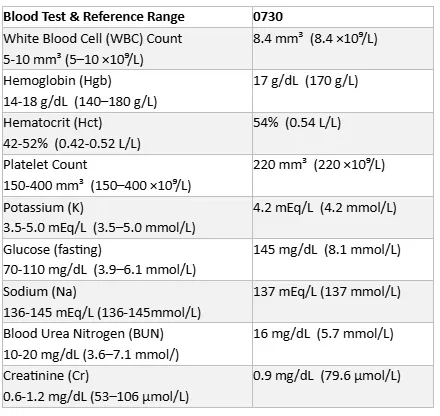
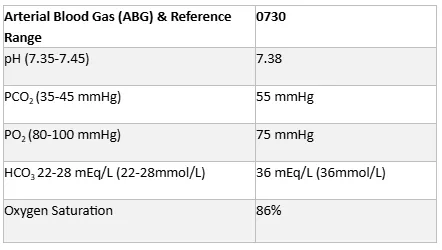
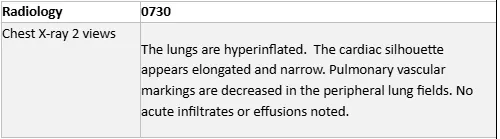
The nurse considers the possible cause of the client’s symptoms.
Click to indicate which finding is commonly associated with asthma or chronic obstructive pulmonary disease. Each row must have at least one, but may have more than one, response option selected.

The nurse considers the possible cause of the client’s symptoms.
Click to indicate which finding is commonly associated with asthma or chronic obstructive pulmonary disease. Each row must have at least one, but may have more than one, response option selected.
| Assessment Finding | Asthma | Chronic Obstructive Pulmonary Disease |
|---|---|---|
Chronic productive cough | ||
Intermittent wheezing | ||
Dyspnea on exertion | ||
Barrel-shaped chest | ||
History of long-term smoking | ||
Frequent respiratory infections |
Statistics
Subject/Lesson
Subject
Adult Health
Lesson
Respiratory
Client Need
Test Plan
Physiological Adaptation
Related Topic
Alterations in Body Systems
Item Type
Item Type
AnalyzeCues
Explanation
Asthma
Asthma is characterized by intermittent wheezing, which results from reversible airway obstruction and bronchial hyperresponsiveness. Dyspnea on exertion may occur during episodes of bronchoconstriction or if asthma is poorly controlled. Frequent respiratory infections can act as triggers for exacerbations in asthma. However, findings such as chronic productive cough and barrel chest are not typically present. Asthma usually begins earlier in life and does not typically involve a history of long-term smoking.
Chronic obstructive pulmonary disease (COPD)
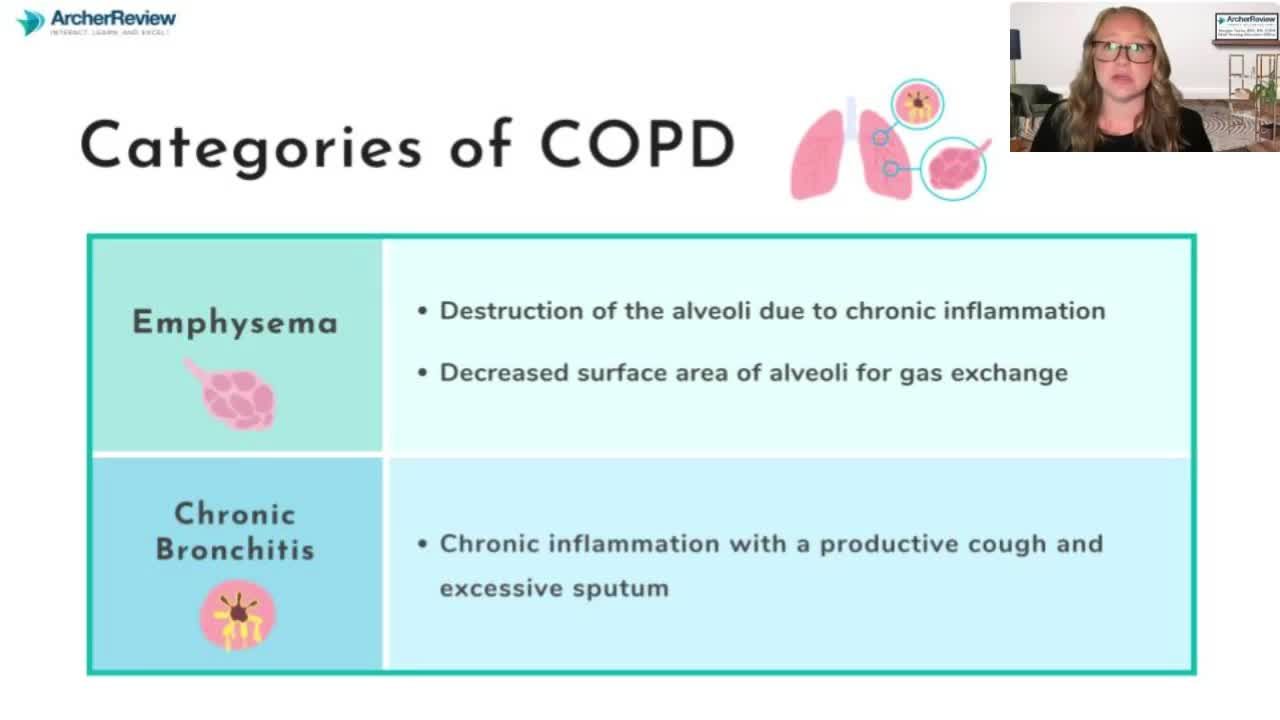
COPD is strongly associated with a chronic productive cough due to mucus hypersecretion, particularly in clients with chronic bronchitis. Intermittent wheezing may also occur, reflecting airway narrowing and airflow limitation. Clients frequently report dyspnea on exertion, and over time, they may develop a barrel-shaped chest due to lung hyperinflation, as confirmed in this client’s chest X-ray. A history of long-term smoking is the most significant risk factor for COPD. Frequent respiratory infections are also common, resulting from impaired mucociliary clearance and chronic airway inflammation.
Related Videos
4 Key Topics
COPD
17.6 Airway Disorders
Asthma
