The nurse is caring for a client with a major thermal burn. Which initial laboratory abnormalities does the nurse anticipate in response to the burn? Select all that apply.
The nurse is caring for a client with a major thermal burn. Which initial laboratory abnormalities does the nurse anticipate in response to the burn? Select all that apply.
Statistics
Subject/Lesson
Subject
Adult Health
Lesson
Integumentary
Client Need
Test Plan
Physiological Adaptation
Related Topic
Alterations in Body Systems
Item Type
Item Type
Knowledge/Comprehension
Explanation
Choices B, C, D, and E are correct. Following a major burn, significant fluid and electrolyte changes occur from cellular damage, which causes potassium to leak into the extracellular space. Thus, life-threatening hyperkalemia may occur. Metabolic acidosis is likely because of the impairment the burn causes to the kidney's ability to recycle bicarbonate. The discharge of catecholamines causes glucose release from the liver, raising the blood glucose. Finally, the loss of fluid causes hemoconcentration, illustrated by elevated hematocrit.
Choice A is incorrect. Initially, the client with a major thermal burn will have hemoconcentration from all of the fluid loss. Hemodilution may occur later in the process from the fluid shift.
Related Videos
2 Key Topics
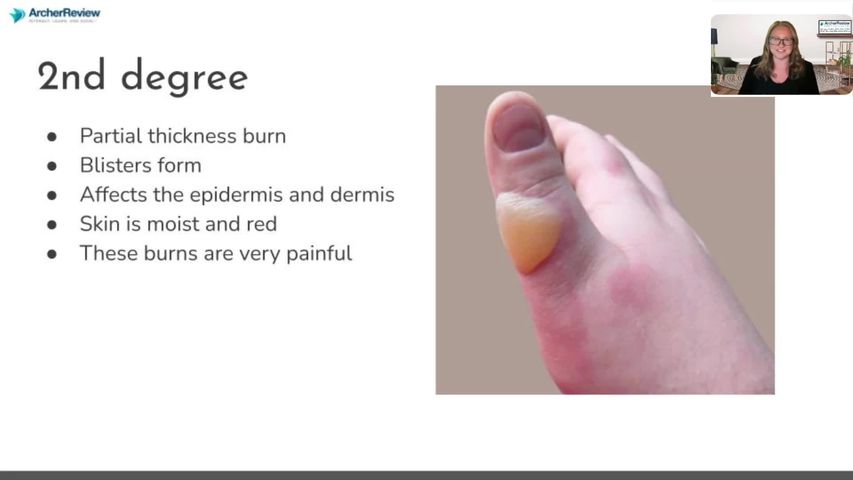
Burn Management
25.7 Burns: Classification, Management & Complications
Additional Info
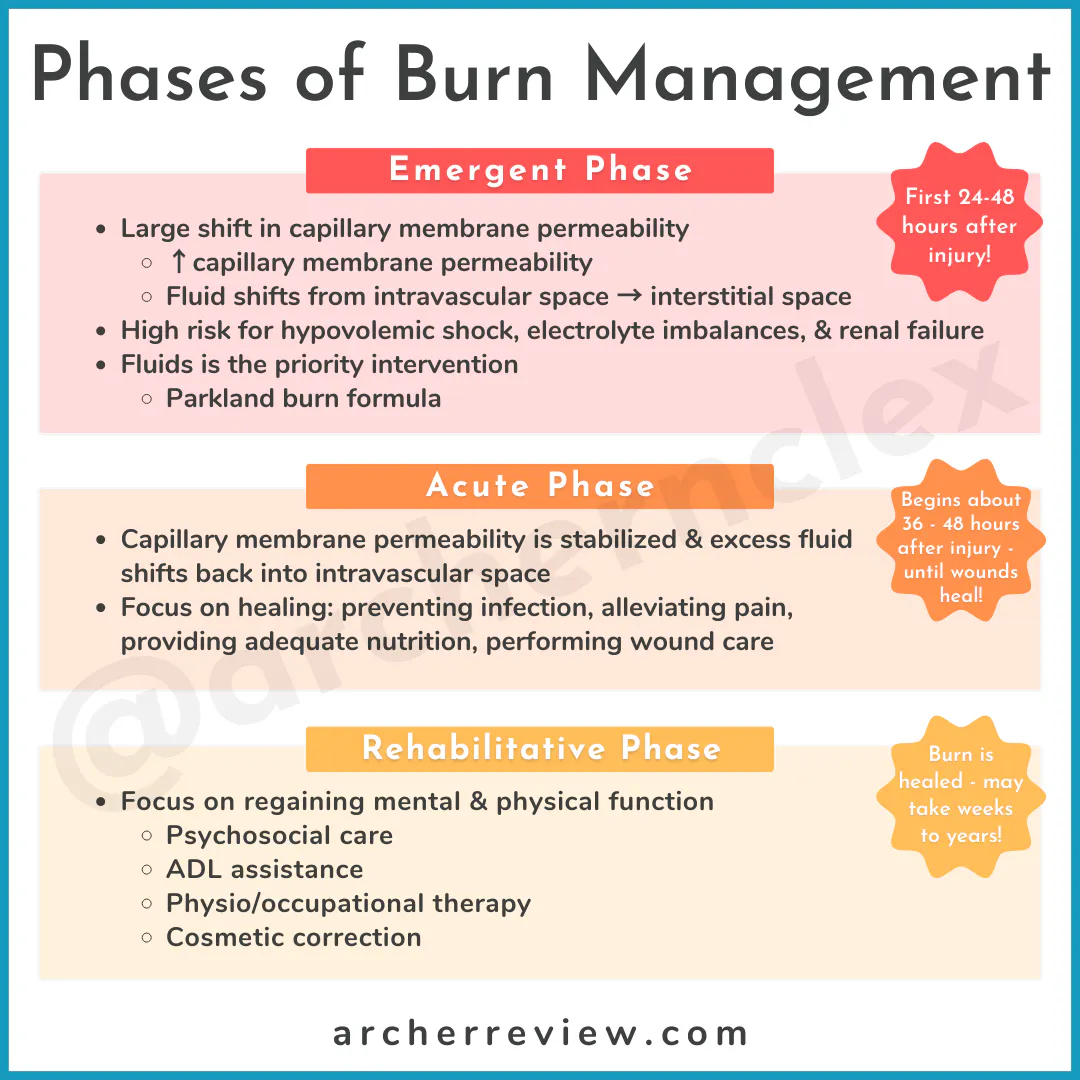
The criteria for a major thermal burn are as follows -
✓ Partial thickness burns greater than 10% TBSA
✓ Burns that involve the face, hands, feet, genitalia, perineum, or major joints
✓ Third-degree burns in any age-group
✓ Electrical burns, including lightning injury
✓ Chemical burns
✓ Inhalation injury
https://app.archerreview.com/test-screen/MjQzMzczNDk=/MTE0MDc=
