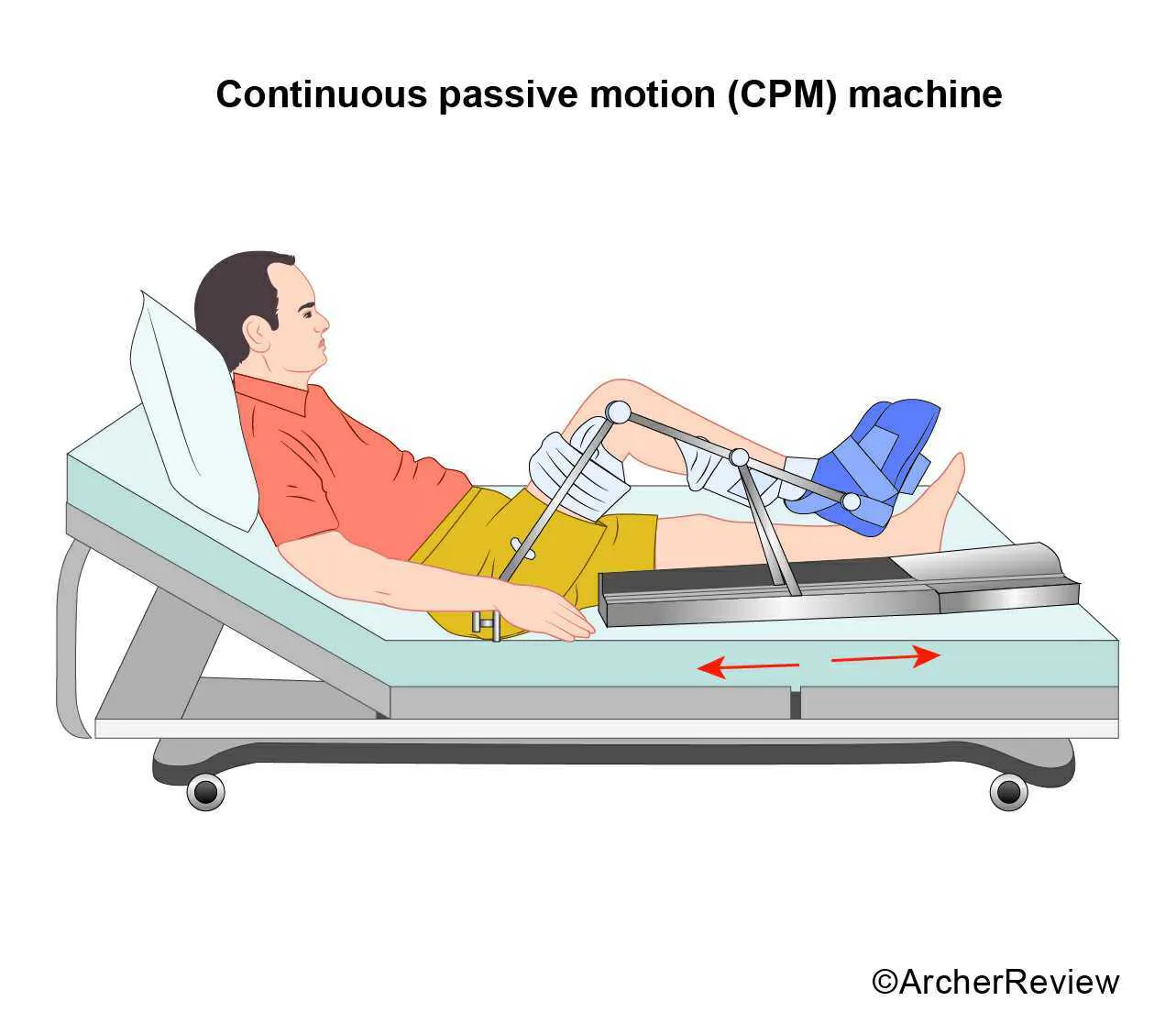
The nurse is caring for a client two days post-op total knee replacement with a continuous passive motion (CPM) device at the bedside. The nurse would recognize that the primary purpose of this machine is to:
The nurse is caring for a client two days post-op total knee replacement with a continuous passive motion (CPM) device at the bedside. The nurse would recognize that the primary purpose of this machine is to:
A. Stabilize the knee joint during ambulation
[14%]
B. Promote knee flexion
[36%]
C. Reduce post-surgical swelling
[6%]
D. Prevent blood clots
[44%]
Statistics
Subject/Lesson
Subject
Adult Health
Lesson
Musculoskeletal
Client Need
Test Plan
Reduction of Risk Potential
Related Topic
Potential for Complications from Surgical Procedures and Health Alterations
Item Type
Item Type
Knowledge/Comprehension
Explanation
Choice B is correct. Maintaining joint flexion and mobility is a high priority for the post-op total knee replacement (TKR) client. The continuous passive motion (CPM) device would be worn intermittently while the client is in bed to flex and extend the knee, reduce scar tissue formation, and help the client maintain optimal joint mobility.
Choice A is incorrect. The CPM machine will assist the client in flexing and extending the knee joint through a passive range of motion while in bed. If needed, a knee brace or immobilizer would be used to support and stabilize the knee during ambulation/activity.
Choice C is incorrect. The CPM machine is not intended to limit swelling after surgery. Ice packs and cold therapy may be ordered to improve post-op swelling.
Choice D is incorrect. Although leg exercises would reduce the client's risk of DVT, the primary purpose of the CPM machine is to promote flexion and mobility of the joint, not to prevent blood clots.
Learning Objective
Recognize that the primary purpose of a continuous passive motion device is to maintain joint flexion and mobility and reduce contractures.
Additional Info