A nurse is caring for a client with a history of seizures who is at risk for injury. Which intervention is the highest priority to reduce the client's risk of injury?
A nurse is caring for a client with a history of seizures who is at risk for injury. Which intervention is the highest priority to reduce the client's risk of injury?
A. Keeping the client's room dimly lit to minimize visual stimulation
[1%]
B. Administer antiepileptic medications as prescribed.
[5%]
C. Implement seizure precautions, including padded side rails up and the bed in the lowest position.
[90%]
D. Provide education to the client and family about seizure triggers and safety measures.
[5%]
Statistics
Subject/Lesson
Subject
Adult Health
Lesson
Neurologic
Client Need
Test Plan
Reduction of Risk Potential
Related Topic
Potential for Alterations in Body Systems
Item Type
Item Type
Application
Explanation
Choice C is correct. Seizures pose a significant risk of injury, and implementing seizure precautions helps to create a safe environment for the client during a seizure episode. Side rails up and padded as well as the bed in the lowest position prevent the client from falling out of bed or injuring themselves on nearby furniture. These precautions can minimize the potential for head injuries, fractures, and other injuries associated with seizures. Other precautions might include ensuring that oxygen and suctioning equipment with an airway are readily available. If the client does not have IV access, insert a saline lock, especially if he or she is at significant risk for generalized tonic-clonic seizures. The saline lock provides ready access if IV drug therapy must be given to stop the seizure. Specific seizure precautions vary, depending on health care agency policy.
Choice A is incorrect. Keeping the room dimly lit may be beneficial for some clients, but it is not the highest priority intervention to reduce the risk of injury during a seizure.
Choice B is incorrect. Administering antiepileptic medications as prescribed is important for seizure control but may not immediately reduce the risk of injury during a potential seizure episode.
Choice D is incorrect. Providing education to the client and family about seizure triggers and safety measures is essential for long-term management but does not directly address the immediate risk of injury during a seizure.
Related Videos
4 Key Topics
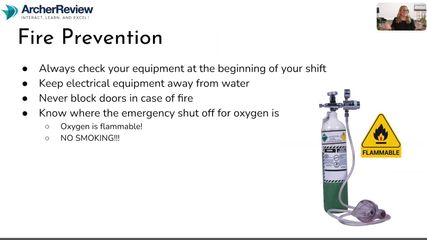
Seizure Precautions
8.4 Specialized Safety Measures
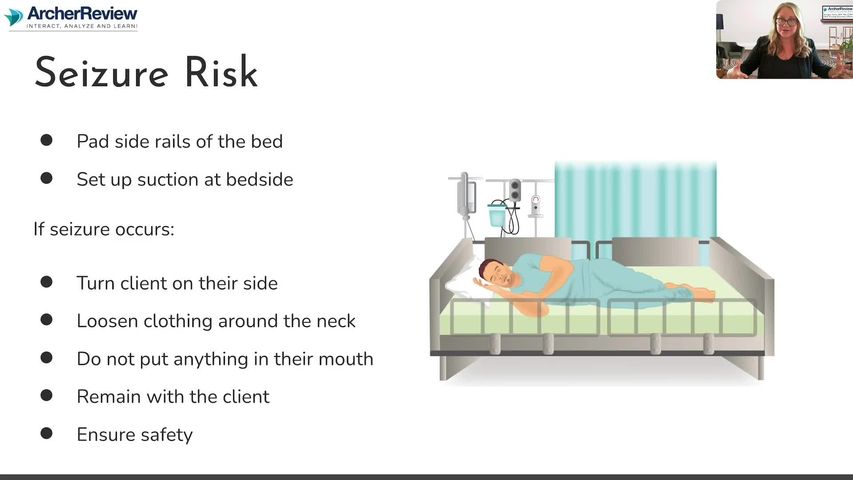
Seizure Risk
12.8 Risks
Additional Info
✓ During a seizure, clients are at risk for musculoskeletal or head injury as a result of a fall or striking a body part against a hard object. Clients with a history of seizures are placed on seizure precautions so that if a seizure occurs, the risk of injury can be minimized.
✓ If a seizure is witnessed: during and after a seizure, closely observe the client's movements, behavior, and duration of the seizure. Note the type of seizure and document relevant details such as the onset time, duration, and any associated symptoms.
✓ Work with the client and their family to identify potential triggers that may precipitate seizures. Common triggers include stress, lack of sleep, specific foods or drinks, and certain medications.
https://app.archerreview.com/test-screen/MjQzMzczNDk=/MTMwOTQ=
