The nurse approached a client with a blood pressure cuff, and the client extended their arm to allow the nurse to obtain a reading.
The nurse understands that this exemplifies what type of consent?
The nurse approached a client with a blood pressure cuff, and the client extended their arm to allow the nurse to obtain a reading.
The nurse understands that this exemplifies what type of consent?
A. Informed consent
[5%]
B. Implied consent
[61%]
C. Expressive consent
[33%]
D. Written consent
[0%]
Statistics
Subject/Lesson
Subject
Leadership & Management
Lesson
Ethical/Legal
Client Need
Test Plan
Management of Care
Related Topic
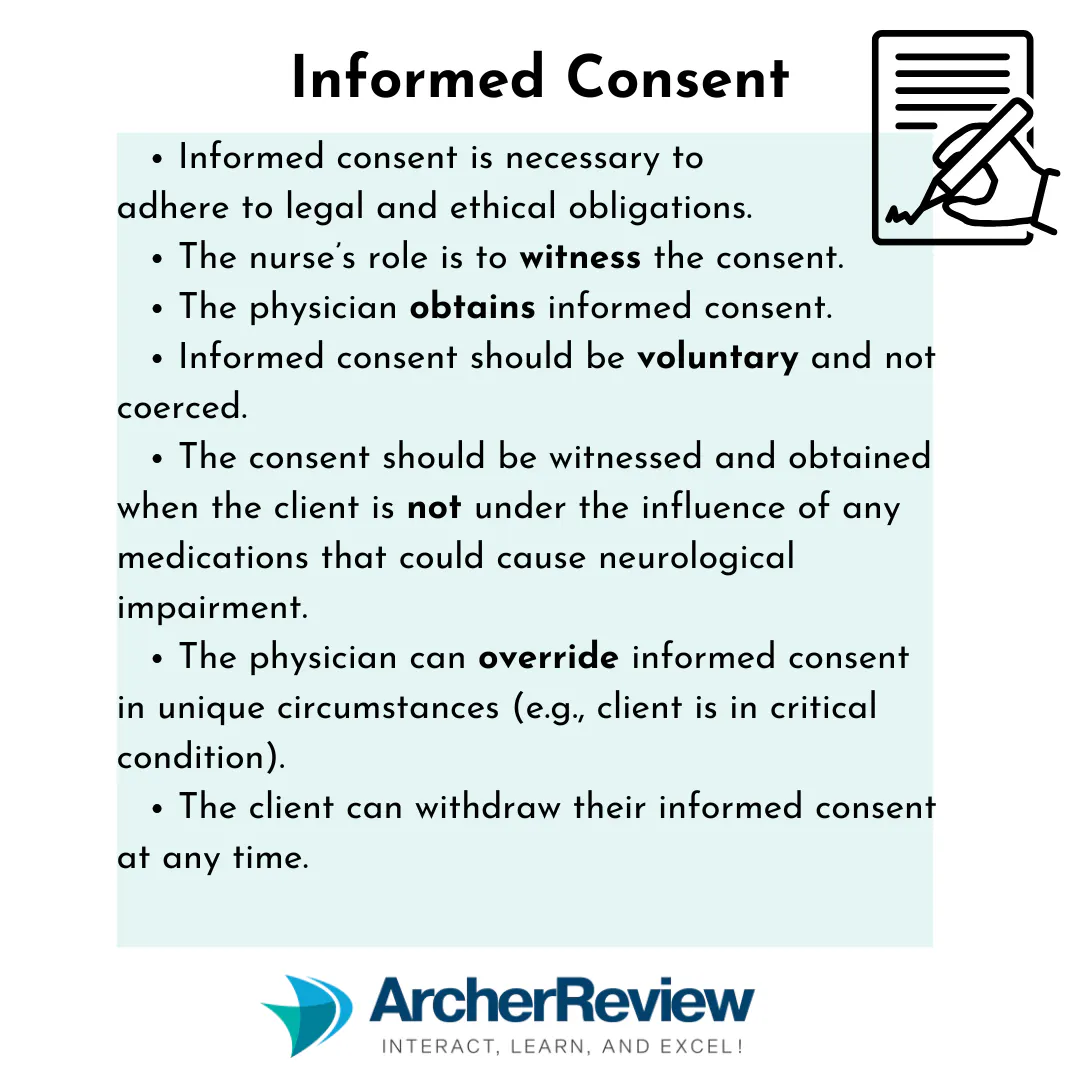
Informed Consent
Item Type
Item Type
Analysis
Explanation
Choice B is correct. Implied consent occurs when a person’s actions suggest consent, even without an explicit verbal or written agreement. In this case, the client extending their arm for the blood pressure measurement implies that they agree to the procedure. This is a nonverbal form of consent, often seen in routine, non-invasive procedures.
Choice A is incorrect. Informed consent involves providing a patient with all relevant information about a procedure, including its risks, benefits, and alternatives, allowing them to make an informed decision. While informed consent is important in healthcare, it is typically required for more invasive procedures or those with significant risks, rather than routine tasks like blood pressure measurement.
Choice C is incorrect. Expressive consent refers to a form of consent that is given verbally or through a clear, explicit expression of approval, such as a verbal agreement or signing a consent form.
Choice D is incorrect. Written consent is a formal, documented form of consent, typically required for high-risk or invasive procedures. Blood pressure measurement is a routine, low-risk task that does not require written consent, making this option incorrect for this situation.
Related Videos
2 Key Topics
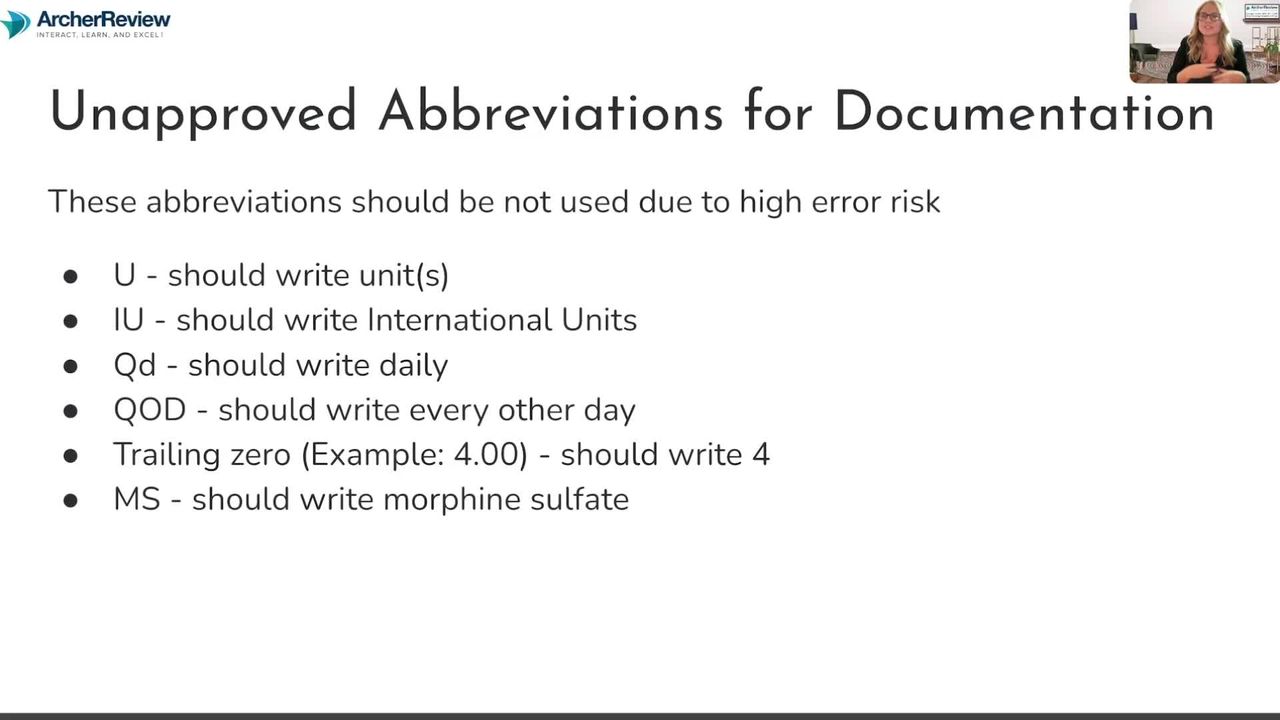
Informed Consent
15.1 Documentation, Consent & Information Systems
Additional Info