The nurse is caring for a client requesting to leave against medical advice. The nurse barricades the client in their room because they feel that the client is not safe to go home. The nurse is demonstrating
The nurse is caring for a client requesting to leave against medical advice. The nurse barricades the client in their room because they feel that the client is not safe to go home. The nurse is demonstrating
A. false imprisonment.
[84%]
B. malpractice.
[9%]
C. negligence.
[2%]
D. invasion of privacy.
[5%]
Statistics
Subject/Lesson
Subject
Leadership & Management
Lesson
Ethical/Legal
Client Need
Test Plan
Management of Care
Related Topic
Legal Rights and Responsibilities
Item Type
Item Type
Analysis
Explanation
Choice A is correct. Refusing to let a client leave against medical advice (AMA) and physically obstructing the client from leaving is a form of false imprisonment.
Choices B, C, and D are incorrect. Malpractice is professional negligence, that is, negligence that occurred while the person was performing as a professional. Malpractice applies to primary care providers, dentists, and lawyers and generally includes nurses. Negligence and professional negligence are unintentional torts that may occur in the health care setting. Negligence is misconduct or practice below the standard expected of an ordinary, reasonable, and prudent person. Such conduct places another person at risk for harm. Both nonmedical and professional individuals can be liable for the negligent act. Invasion of privacy is a right-wrong of a personal nature. It injures the person's feelings and does not consider the effect of revealed information on the person's reputation in the community. The right to privacy is the right of individuals to withhold themselves and their lives from public scrutiny. It can also be described as the right to be left alone.
Related Videos
2 Key Topics
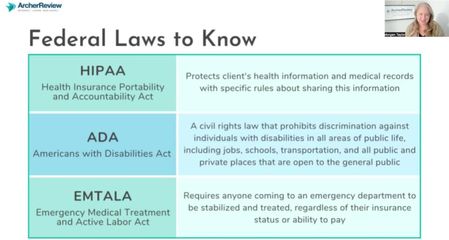
Federal Laws & Terminology
15.12 Healthcare Law & Patient Privacy
Additional Info
False imprisonment is seen when clients want to leave against medical advice or when they are restrained. An adult who can make health care decisions and wants to leave the premises cannot be required to remain. The client must be informed about the consequences of this action, and organizational policies must be followed to address this issue. Nurses must also understand and follow their state's laws regarding clients restrained for psychiatric reasons (prevention of self-harm or harm to others), as these laws vary from state to state.
Huber, D., Joseph, M. L. (082021). Leadership and Nursing Care Management, 7th Edition.
