The nurse is assessing a child with epiglottitis. Which of the following would be an expected finding?
The nurse is assessing a child with epiglottitis. Which of the following would be an expected finding?
A. Absence of spontaneous cough
[51%]
B. Harsh, productive cough
[35%]
C. Generalized skin flushing
[10%]
D. Coarse tremors
[4%]
Statistics
Subject/Lesson
Subject
Child Health
Lesson
Respiratory
Client Need
Test Plan
Physiological Adaptation
Related Topic
Alterations in Body Systems
Item Type
Item Type
Knowledge/Comprehension
Explanation
Choice A is correct. Epiglottitis has an abrupt onset and requires immediate treatment because it can cause progressive obstruction and may lead to respiratory arrest. The absence of spontaneous cough is a common feature of epiglottitis because of severe edema. Edematous epiglottis blocks the airway making it difficult to cough.
Choice B is incorrect. Epiglottitis tends to cause a muffled or hoarse voice rather than a harsh, productive cough.
Choice C is incorrect. Generalized skin flushing is not a feature of this condition, whereas cyanosis may be found because of hypoxia.
Choice D is incorrect. Coarse tremors are not specific to epiglottitis and would not be expected as a primary manifestation.
Learning Objective
Understand that acute epiglottitis is a medical emergency. Recognize that a spontaneous cough may be absent in acute epiglottitis.
Related Videos
3 Key Topics
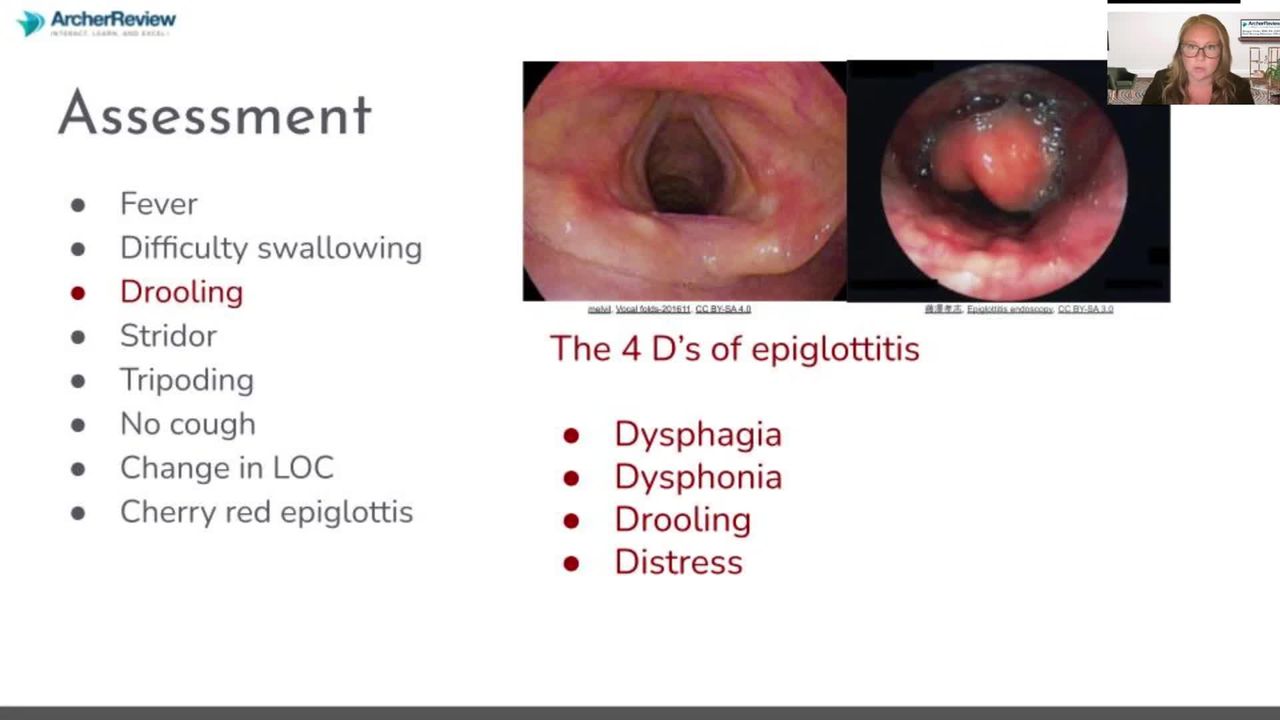
Epiglottitis
31.8 Pediatric Respiratory Conditions
Additional Info
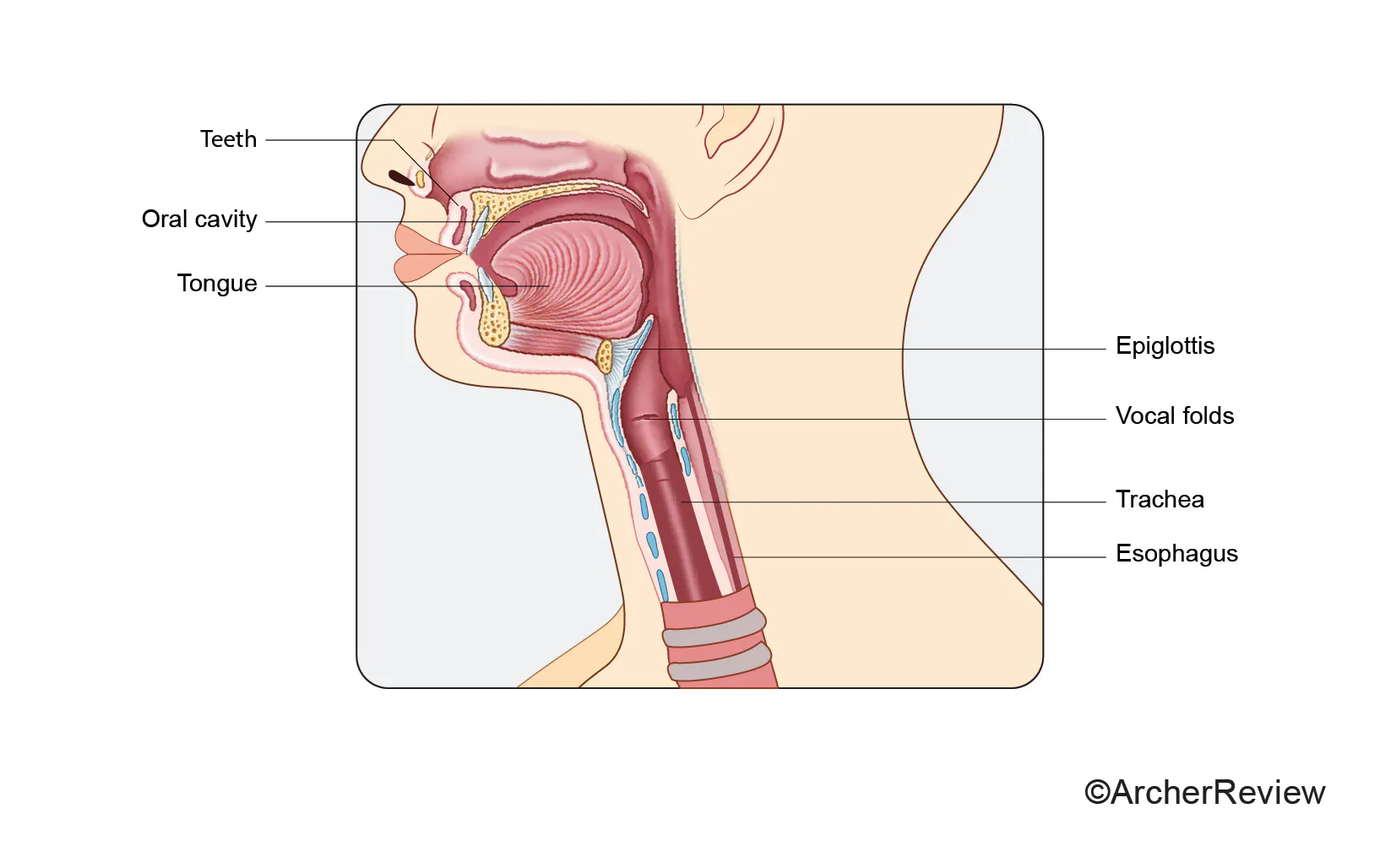
✓ Epiglottis is a cartilaginous flap present at the back of the throat. Its primary function is to close over the airway during swallowing so that the food does not enter the airway.
✓ Acute epiglottitis is a medical emergency that has an abrupt onset. In epiglottitis, the epiglottis becomes inflamed and swollen and constricts the airway.
✓ Classic symptoms of epiglottis include -
- Sore throat and pain in swallowing
- Fever
- The child insists on sitting upright and leaning forward (tripod position), with the chin thrust out, mouth open, and tongue protruding.
- Drooling of saliva
- Red and inflamed mucous membranes
- Large, cherry red, edematous epiglottis
Prevention: Key prevention for epiglottitis is immunization with H. influenzae type B conjugate beginning at two months of age.
Source: Archer ReviewSource: Archer Review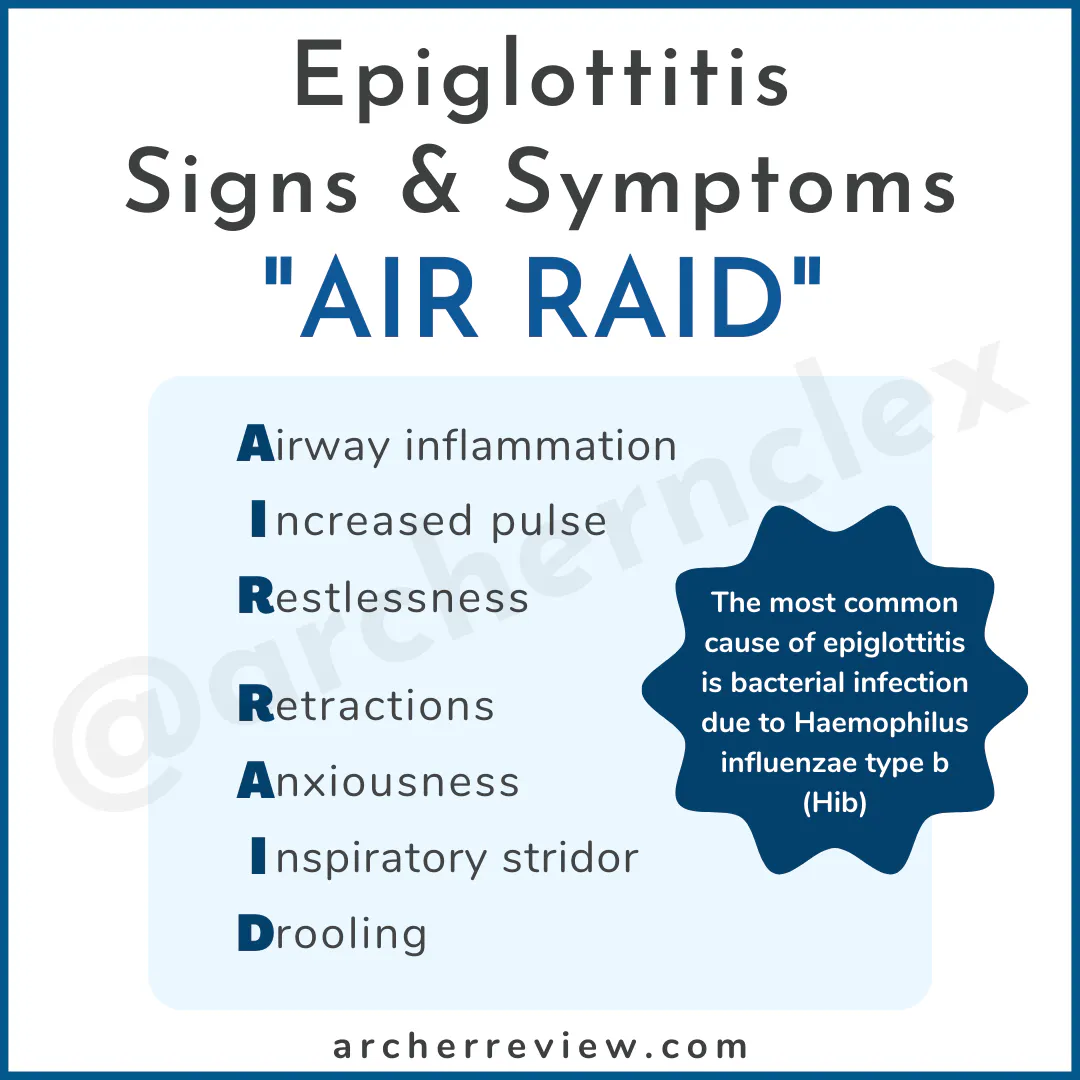 Source : Archer ReviewSource : Archer Review
