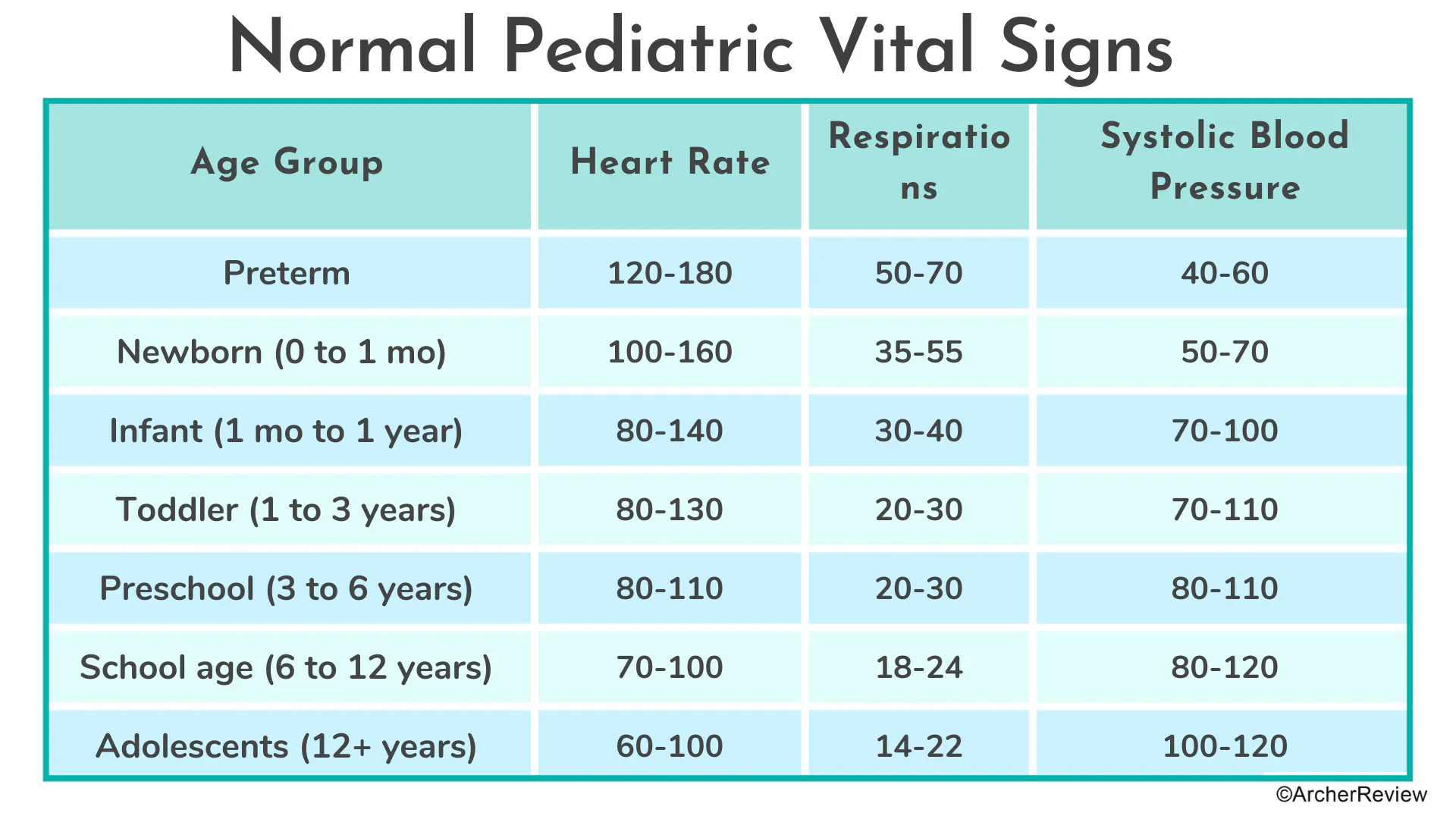
The nurse is assessing a 4-year-old client who was sent to the emergency department from urgent care. Assessment reveals tripod positioning, blue lips, mottled skin, inspiratory stridor, and excessive drooling. Vital signs are:
- Temp: 39 C
- HR: 188
- RR: 46
- O2: 82 %
What is the priority action for the nurse to take at this time?
The nurse is assessing a 4-year-old client who was sent to the emergency department from urgent care. Assessment reveals tripod positioning, blue lips, mottled skin, inspiratory stridor, and excessive drooling. Vital signs are:
- Temp: 39 C
- HR: 188
- RR: 46
- O2: 82 %
What is the priority action for the nurse to take at this time?
A. Keep the child calm and call for emergency airway equipment
[58%]
B. Obtain IV access
[2%]
C. Assess the throat for a cherry red epiglottis
[8%]
D. Place the child on a high flow nasal cannula at 100% FiO2
[32%]
Statistics
Subject/Lesson
Subject
Child Health
Lesson
Respiratory
Client Need
Test Plan
Physiological Adaptation
Related Topic
Medical Emergencies
Item Type
Item Type
Analysis
Explanation
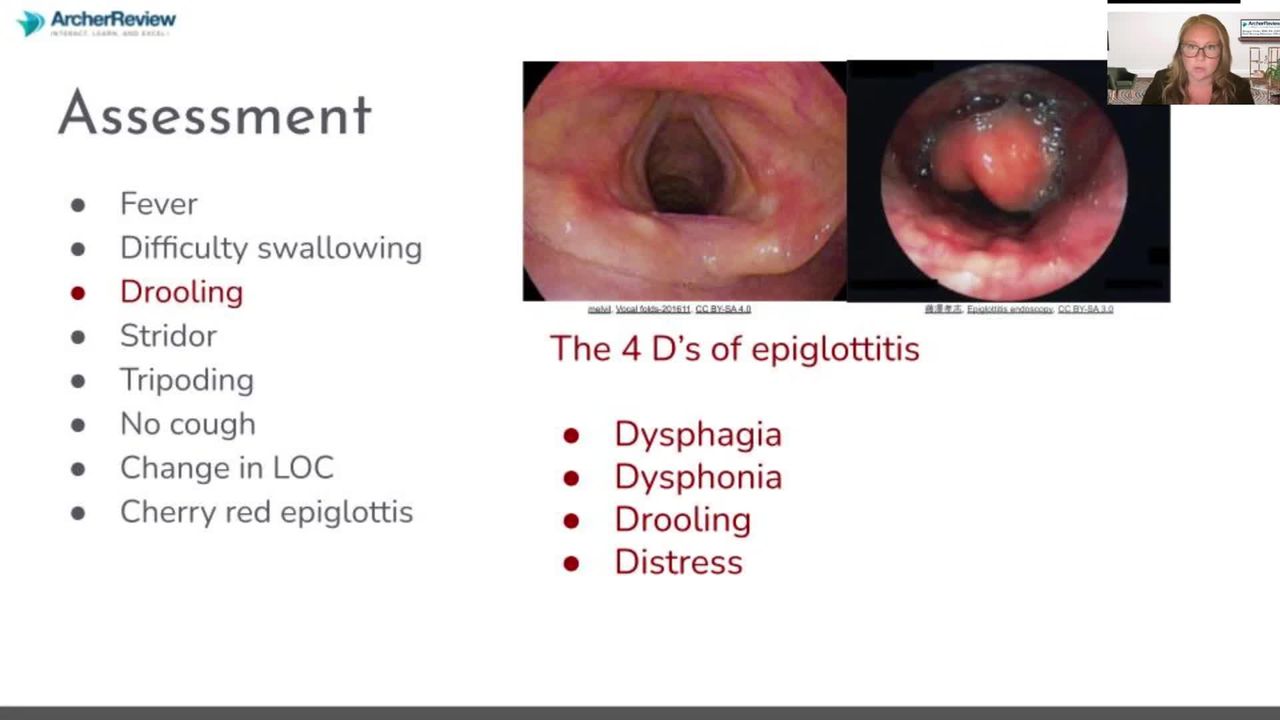
Choice A is correct. Any child presenting with excessive drooling, distress, and stridor is highly suspicious of having epiglottitis. In addition, this client is already showing signs of circulatory compromise, including circumoral cyanosis and mottling. The priority nursing action in this emergency is keeping the child calm and calling for emergency airway equipment. The child is at risk of losing the airway, and the airway is always the priority.
Choice B is incorrect. It is inappropriate to attempt to obtain IV access on a child suspected of epiglottitis before emergency airway equipment is available. The priority action at this time is keeping the child calm and calling for emergency airway equipment.
Choice C is incorrect. It is inappropriate to assess the throat for a cherry red epiglottis. Although a cherry red epiglottis would confirm the diagnosis of epiglottitis, this child is at risk of losing airway patency. The priority action will be to protect the airway before IV access is attempted.
Choice D is incorrect. Placing the child on a high-flow nasal cannula at 100% FiO2 is not the priority now. This answer probably sounded right because, you see, the SaO2 is 82%, and there is circumoral cyanosis. Oxygen sounds like the correct answer, but the airway is always prioritized. It will be challenging to deliver adequate oxygen without establishing airway patency. The child risks losing the airway, so all interventions must wait until emergency airway equipment is nearby. If anything upsets the child, the airway could spasm and obstruct completely, making intubation impossible. Therefore, keeping the child calm and calling for emergency airway equipment is the priority in epiglottitis patients.
Related Videos
3 Key Topics
Epiglottitis