Which of the following medications may be prescribed to control hypertension associated with a nephroblastoma?
Which of the following medications may be prescribed to control hypertension associated with a nephroblastoma?
A. Propranolol
[37%]
B. Enalapril
[39%]
C. Nitroprusside
[21%]
D. Digoxin
[3%]
Statistics
Subject/Lesson
Subject
Child Health
Lesson
Hematological/Oncological
Client Need
Test Plan
Pharmacological and Parenteral Therapies
Related Topic
Expected Actions/Outcomes
Item Type
Item Type
Analysis
Explanation
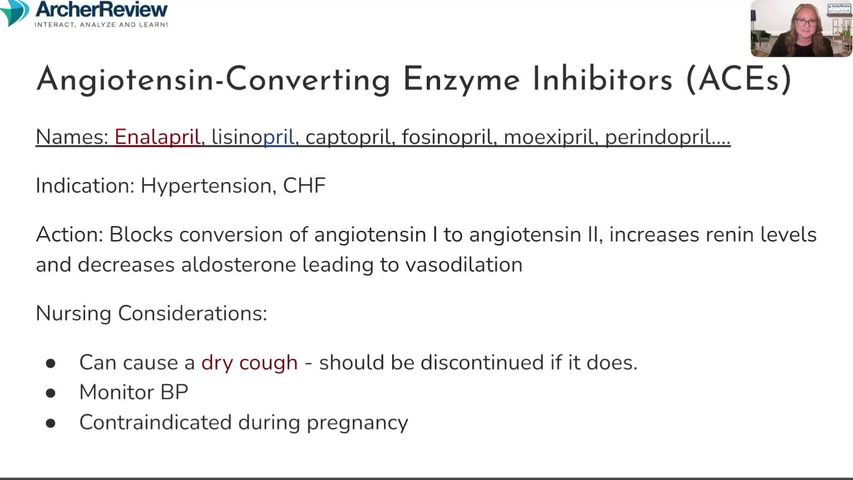
Choice B is correct. Enalapril is an ACE inhibitor used to lower blood pressure. Since clients with nephroblastoma are hypertensive due to increased renin levels, this medication is commonly prescribed to decrease their blood pressure. Any ACE inhibitor reduces blood pressure by inhibiting the formation of angiotensin II in the renin-angiotensin-aldosterone system (RAAS), so they are an excellent choice for treating hypertension caused by nephroblastoma. While ACE-I's may be nephrotoxic, this is still the recommended treatment and is therapeutic as long as the creatinine levels are monitored closely.
Choices A, C, and D are incorrect. Propranolol is a beta-blocker used to slow the heart rate. While it can decrease blood pressure in specific client populations, it is not prescribed to clients with nephroblastoma to reduce their hypertension. Nitroprusside is a direct-acting vasodilator. This means it acts on the muscles of your blood vessels to dilate them, lowering the blood pressure. While this drug also lowers blood pressure, it is not the right choice for hypertension associated with nephroblastoma. It does not address the RAAS, which causes hypertension in clients with nephroblastoma. Digoxin is a cardiac glycoside. It increases the force of contraction of the muscle of the heart and is commonly prescribed to clients with heart failure. It would not be administered to clients with a nephroblastoma to lower their blood pressure.
Related Videos
4 Key Topics
Antihypertensives & Kidneys
21.2 Renal & Blood Pressure Pharmacology
Antihypertensive Medications
6.4 Cardiovascular System Drugs
Additional Info
✓ Nephroblastoma is a tumor affecting the kidney(s).
✓ The average age at diagnosis is three years in children with single kidney disease.
✓ It is slightly younger for those with bilateral involvement.
Nephroblastoma nursing care involves
✓ Frequent blood pressure monitoring because this tumor may induce renin-related hypertension
✓ Avoid any activities that may cause palpation of the abdomen
✓ Gastrointestinal assessment as obstruction may consequently occur (absent bowel sounds, abdominal distention should be reported)
✓ Assessment of hemorrhage (tachycardia and hypotension)
