The nurse is assessing a client with Wilms tumor. Which of the following would be an expected finding?
The nurse is assessing a client with Wilms tumor. Which of the following would be an expected finding?
A. Tachycardia
[15%]
B. Bradypnea
[10%]
C. Hypotension
[19%]
D. Hypertension
[57%]
Statistics
Subject/Lesson
Subject
Child Health
Lesson
Hematological/Oncological
Client Need
Test Plan
Physiological Adaptation
Related Topic
Alterations in Body Systems
Item Type
Item Type
Application
Explanation
Choice D is correct. Hypertension is a clinical manifestation of Wilms tumor. This tumor is located on the kidneys and causes increased renin, leading to hypertension through sodium and water retention via the RAAS system.
Choice A is incorrect. Tachycardia is not a clinical manifestation of Wilms tumor. These clients should have an average heart rate. If tachycardia is observed, it should be reported to the healthcare provider and further evaluated to identify the cause.
Choice B is incorrect. Bradypnea is not a clinical manifestation of Wilms tumor. These clients should have a regular respiratory rate. If bradypnea is observed, it should be reported to the healthcare provider and further evaluated to identify the cause.
Choice C is incorrect. Hypotension is not a clinical manifestation of Wilms tumor, but hypertension is. This tumor is located on the kidneys and causes an increased amount of renin to be present in the client. Increased renin levels lead to hypertension through sodium and water retention via the RAAS system, not hypotension.
Related Videos
2 Key Topics
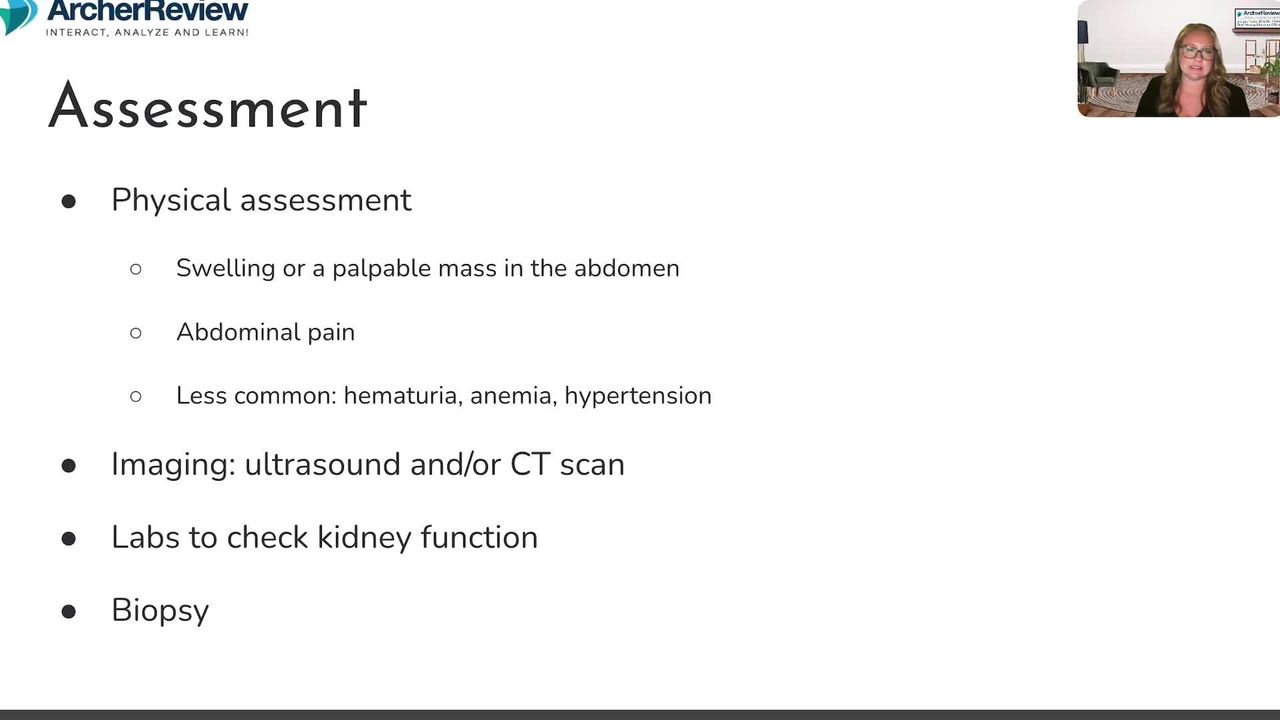
Wilms Tumor
33.6 Pediatric Oncology
Additional Info
✓ Nephroblastoma (Wilm's tumor) is a tumor affecting the kidney(s).
✓ The average age at diagnosis is three years in children with single kidney disease.
✓ It is slightly younger for those with bilateral involvement.
Nephroblastoma nursing care involves
✓ Frequent blood pressure monitoring because this tumor may induce renin-related hypertension
✓ Avoid any activities that may cause palpation of the abdomen
✓ Gastrointestinal assessment as obstruction may consequently occur (absent bowel sounds, abdominal distention should be reported)
✓ Assessment of hemorrhage (tachycardia and hypotension)
