The nurse is caring for a child with nephroblastoma.
The nurse plans to take which action?
The nurse is caring for a child with nephroblastoma.
The nurse plans to take which action?
A. Post a sign that states, “Do not palpate abdomen"
[63%]
B. Recommend foods low in protein
[14%]
C. Insert an indwelling urinary catheter
[10%]
D. Administer corticosteroids
[12%]
Statistics
Subject/Lesson
Subject
Child Health
Lesson
Hematological/Oncological
Client Need
Test Plan
Physiological Adaptation
Related Topic
Illness Management
Item Type
Item Type
Application
Explanation
Choice A is correct. Nephroblastoma, commonly known as Wilms tumor, is the most prevalent type of kidney cancer in children and is typically diagnosed before the age of 5. Wilms tumor is a significant pediatric malignancy, and the primary nursing intervention for a child with this condition is to avoid palpating the abdomen. The tumor is often encapsulated and can easily rupture, which increases the risk of metastasis. Therefore, the abdomen should be handled as little as possible, and a clearly visible sign should be posted above the child's bed that reads “Do Not Palpate Abdomen.” This is a crucial safety measure.
Choice B is incorrect. Wilms tumor patients often experience malnutrition, making adequate nutritional support essential. High-protein foods, such as peanut butter-based supplements, are recommended. Proper nutrition helps children tolerate chemotherapy better, as treatments can lead to weight loss and muscle wasting. Including high-calorie, high-protein foods like nuts and dairy products is important for maintaining weight and muscle mass. While low-protein diets are advised for patients with chronic renal failure to reduce kidney workload, renal failure related to Wilms tumor typically occurs as a late complication, often 10 to 20 years after diagnosis, linked to treatments like nephrectomy, chemotherapy, and radiation. Therefore, there is no reason to limit protein intake in a patient with an acute diagnosis of Wilms tumor.
Choice C is incorrect. While encouraging high fluid intake and using an indwelling catheter to monitor input and output are common interventions for children with certain types of renal insufficiency, they are not key interventions in the management of Wilms tumor.
Choice D is incorrect. Administering corticosteroids is not a standard treatment for Wilms tumor. Corticosteroids are more commonly used to treat conditions such as nephrotic syndrome or leukemia, but they are not a primary treatment for nephroblastoma. If corticosteroids are used in the context of Wilms tumor, it is typically as supportive therapy to help reduce the side effects of chemotherapy, such as nausea and vomiting.
Related Videos
2 Key Topics
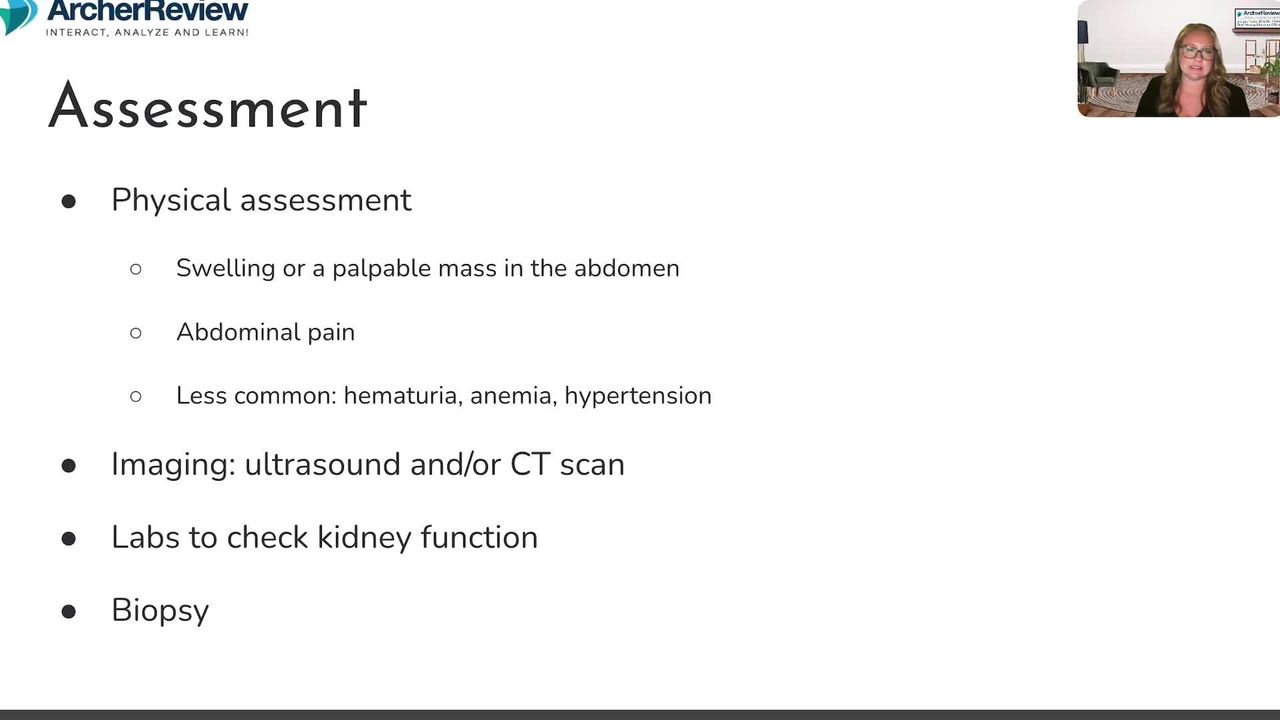
Wilms Tumor
33.6 Pediatric Oncology
Additional Info
✓ Nephroblastoma is a tumor affecting the kidney(s).
✓ The average age at diagnosis is three years in children with single kidney disease.
✓ It is slightly younger for those with bilateral involvement.
Nephroblastoma nursing care involves
✓ Frequent blood pressure monitoring because this tumor may induce renin-related hypertension
✓ Avoid any activities that may cause palpation of the abdomen
✓ Gastrointestinal assessment as obstruction may consequently occur (absent bowel sounds, abdominal distention should be reported)
✓ Assessment of hemorrhage (tachycardia and hypotension)
