The nurse is caring for a client receiving mechanical ventilation. Which prescription from the primary healthcare physician (PHCP) should the nurse anticipate?
The nurse is caring for a client receiving mechanical ventilation. Which prescription from the primary healthcare physician (PHCP) should the nurse anticipate?
A. hydroxyzine
[26%]
B. pantoprazole
[44%]
C. rivastigmine
[14%]
D. verapamil
[16%]
Statistics
Subject/Lesson
Subject
Pharmacology
Lesson
Respiratory
Client Need
Test Plan
Pharmacological and Parenteral Therapies
Related Topic
Expected Actions/Outcomes
Item Type
Item Type
Application
Explanation
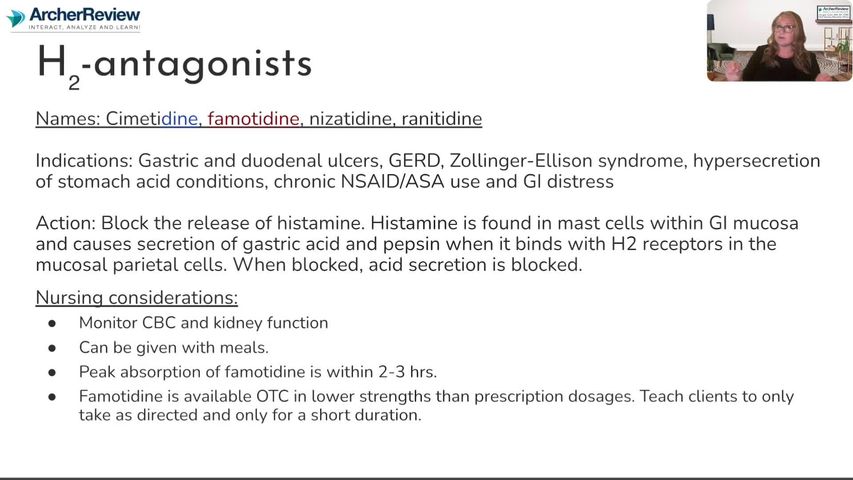
Choice B is correct. Mechanical ventilation may cause a stress ulcer. A proton pump inhibitor (PPI) or a histamine-2 receptor antagonist (H2 blocker) may be utilized to prevent this ulcer which may lead to a gastrointestinal bleed.
Choice A, C, and D are incorrect. Hydroxyzine is an antihistamine with anticholinergic effects utilized in allergic reactions and anxiety. Rivastigmine increases acetylcholine in the central nervous system and is indicated for dementia. Verapamil is a calcium channel blocker indicated for hypertension and migraine headache prophylaxis. These medications have no relevance to mechanical ventilation management.
Related Videos
4 Key Topics
Proton Pump Inhibitor Medications
6.7 GI Drugs
Ventilators
11.2 Respiratory Procedures & Support
Additional Info
✓ Mechanical ventilation poses a risk for a stress ulcer to form.
✓ This is caused by hypersecretion of gastric acid and impaired protection of the gastric mucosa.
✓ Stress ulcers pose a serious risk as they may cause gastrointestinal bleeding.
✓ This bleeding may lead to perforation and then shock.
✓ PPIs such as pantoprazole or H2 blockers famotidine may be used to mitigate this risk.
✓ A concern with PPI usage is that it may increase the risk of pneumonia. This must be considered when a client is prescribed this type of therapy.
✓ Manifestations of stress ulcers include hematemesis, melena, anemia, and shock.
