A client was admitted to the emergency department due to low serum calcium levels. Upon further examination, the client demonstrates carpopedal spasms and reports numbness in their lips and hands. An ECG revealed a prolonged QT interval. Based on this information, the nurse should suspect which condition?
A client was admitted to the emergency department due to low serum calcium levels. Upon further examination, the client demonstrates carpopedal spasms and reports numbness in their lips and hands. An ECG revealed a prolonged QT interval. Based on this information, the nurse should suspect which condition?
A. Hyperthyroidism
[7%]
B. Hypothyroidism
[14%]
C. Hyperparathyroidism
[17%]
D. Hypoparathyroidism
[62%]
Statistics
Subject/Lesson
Subject
Adult Health
Lesson
Urinary/Renal/Fluid and Electrolytes
Client Need
Test Plan
Physiological Adaptation
Related Topic
F&E Imbalances
Item Type
Item Type
Analysis
Explanation
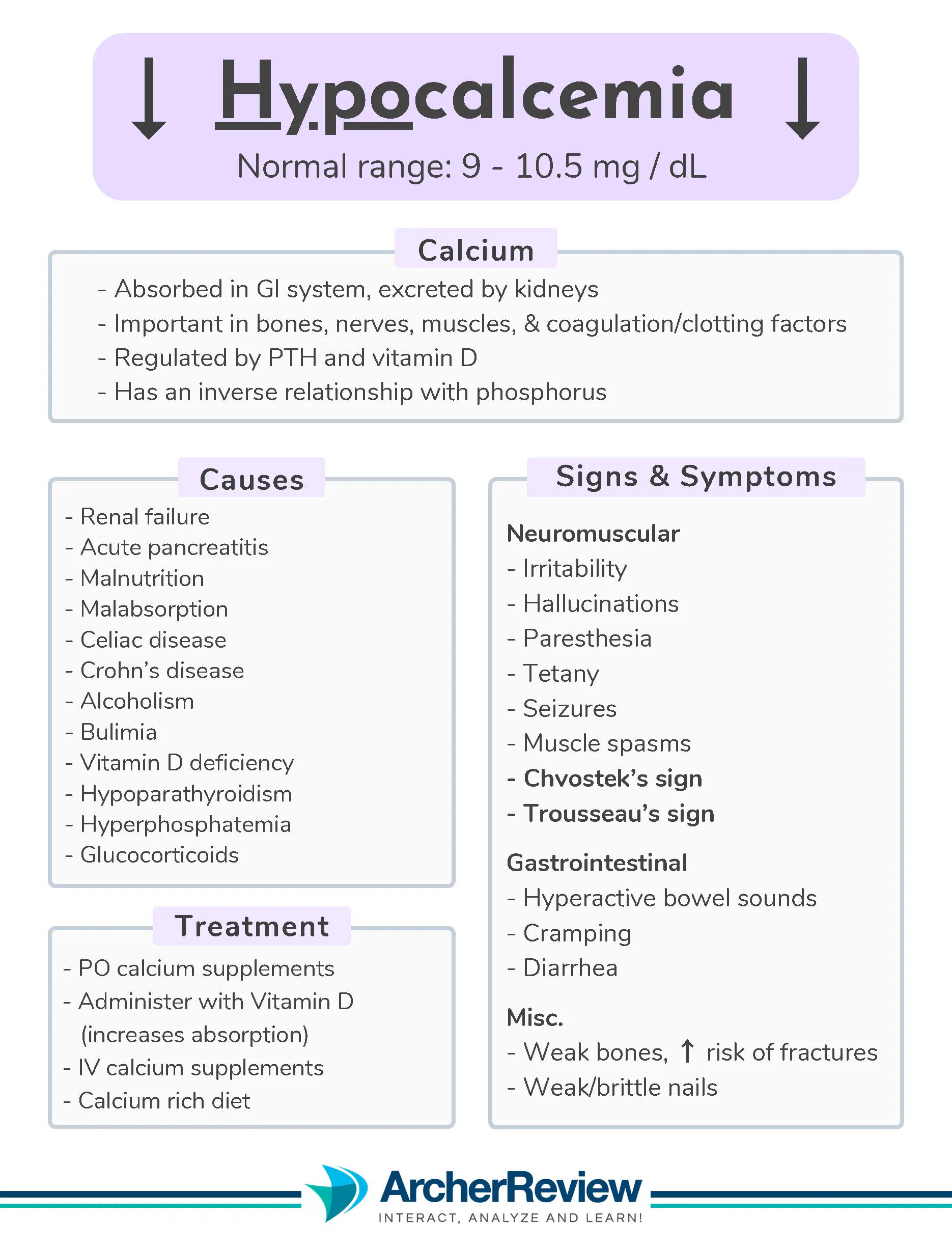
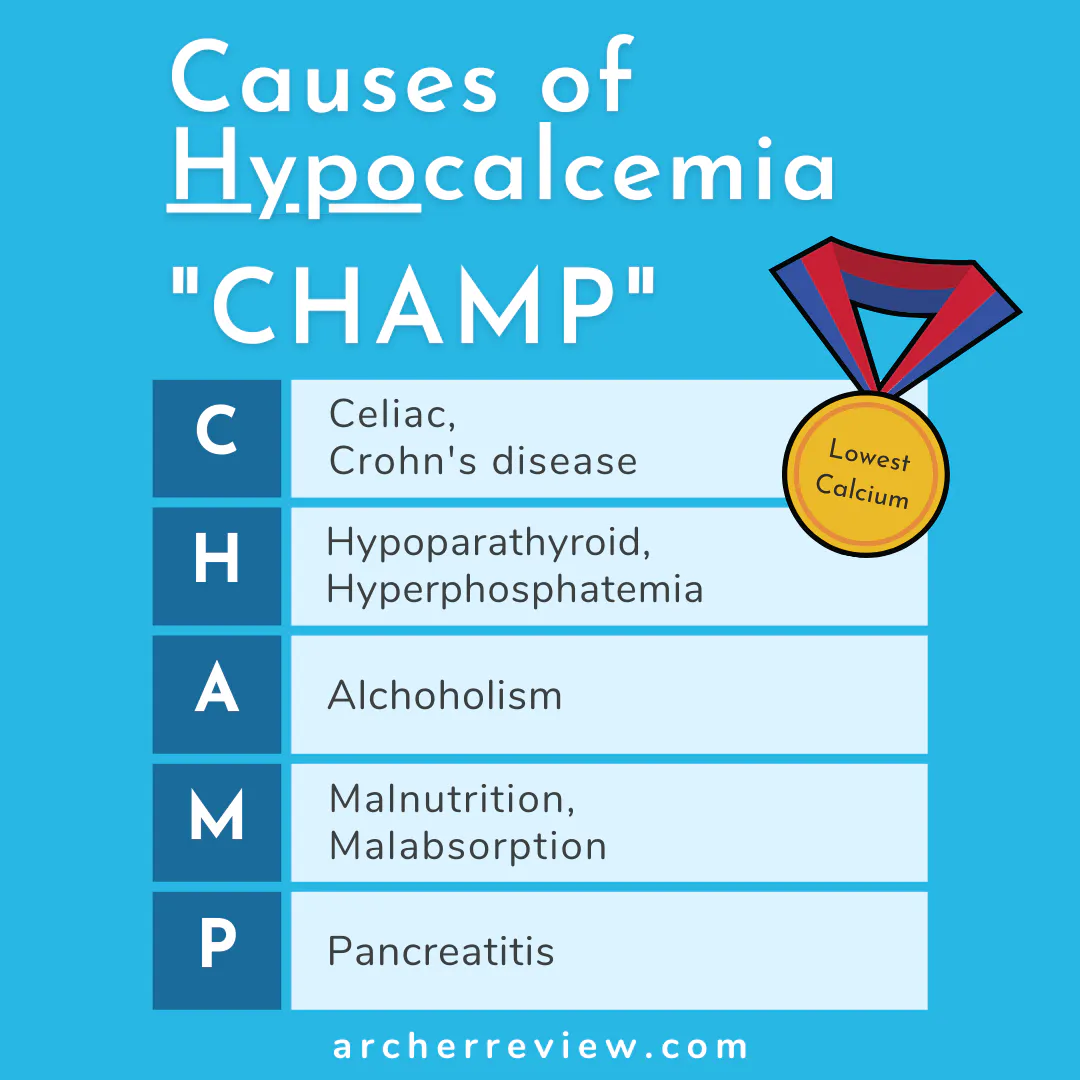
Choice D is correct. Although hypoparathyroidism symptoms often mirror hypocalcemia, the nurse should suspect hypoparathyroidism in this client based on the client's complaints and presentation. Hypoparathyroidism symptoms often manifest as numbness and tingling of the lips and hands, tetany, carpopedal spasms (Trousseau's sign), Chvostek's sign, and/or muscle/abdominal cramps. ECG analysis often reveals changes in the T waves and prolonged QT intervals. Due to low serum calcium levels, serum phosphorus levels are usually increased, as phosphorus and calcium have an inverse relationship in this situation.
Choice A is incorrect. In clients with hyperthyroidism, excessive thyroid hormones reduce cellular regulation by increasing metabolism in all body organs. The excessive thyroid hormones stimulate most body systems, causing symptoms including, but not limited to, palpitations, tachycardia, heat intolerance, fatigue, tremors, insomnia, thinning of scalp hair, weight loss, amenorrhea, restlessness, manic behavior, and/or goiter.
Choice B is incorrect. Clients with hypothyroidism experience decreased metabolism from low levels of thyroid hormones, resulting in a reduced metabolic rate. Symptoms in hypothyroidism clients include, but are not limited to, dyspnea, bradycardia, dysrhythmias, cold intolerance, weight gain, constipation, confusion, and/or impaired memory.
Choice C is incorrect. Hyperparathyroidism is a disorder in which parathyroid secretion of parathyroid hormone increases, resulting in hypercalcemia and hypophosphatemia. Symptoms (which may be related to the effects of excessive parathyroid hormone or the accompanying hypercalcemia) include, but are not limited to, kidney stones, gastrointestinal issues (nausea, vomiting, constipation, epigastric pain), fever, lethargy, etc. In severe cases, coma or death may occur.
Learning Objective
As the nurse caring for a client admitted to the emergency department due to low serum calcium levels who, upon assessment, reports numbness in their lips and hands, exhibits carpopedal spasms, and whose ECG revealed a prolonged QT interval, correctly identify hypoparathyroidism as the suspected condition in this client.
Related Videos
4 Key Topics
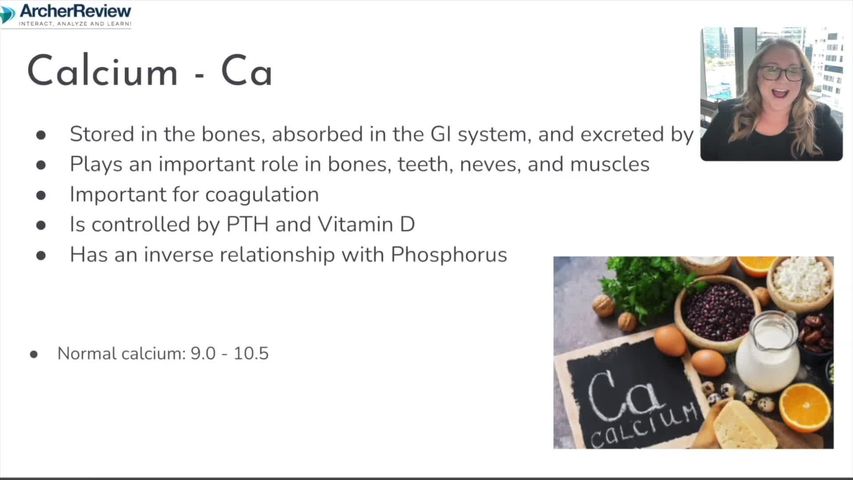
Hypocalcemia
5.4 Calcium Balance Disorders
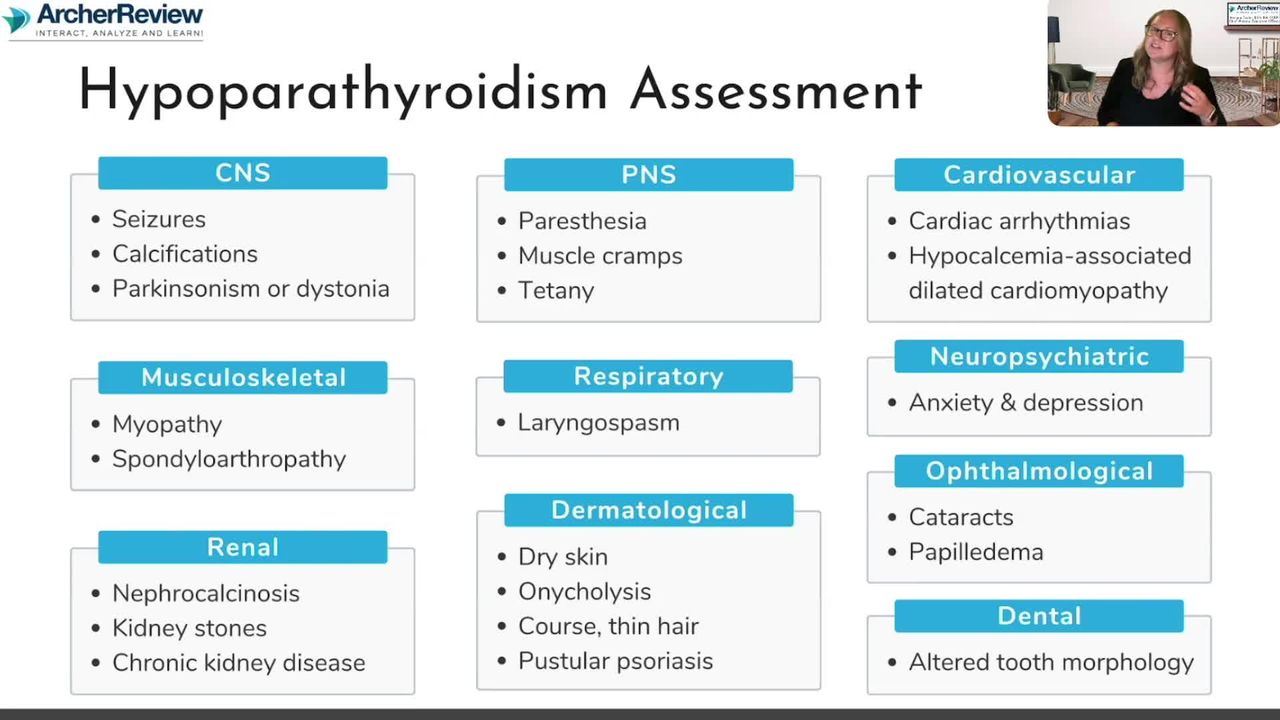
Hypoparathyroidism
19.9 Parathyroid Disorders
Additional Info
- Hypoparathyroidism is a deficiency of parathyroid hormone often caused by an autoimmune disorder or removal of the glands during thyroidectomy.
- Hypoparathyroidism causes hypocalcemia and related symptoms of tingling in the hands or around the mouth, muscle cramps, and/or tetany (in severe cases).
- Treatment typically involves calcium and vitamin D.Source : Archer Review
 Source : Archer Review
 Source : Archer Review
