The nurse cares for a child diagnosed with laryngotracheobronchitis who is assessed to have worsening inspiratory stridor with an oxygen saturation of 92% on room air. The nurse should obtain a prescription for which medication?
The nurse cares for a child diagnosed with laryngotracheobronchitis who is assessed to have worsening inspiratory stridor with an oxygen saturation of 92% on room air. The nurse should obtain a prescription for which medication?
A. Formoterol via dry powder inhaler
[3%]
B. Nebulized racemic epinephrine
[30%]
C. Albuterol via nebulizer
[63%]
D. Oral montelukast
[3%]
Statistics
Subject/Lesson
Subject
Pharmacology
Lesson
Respiratory
Client Need
Test Plan
Pharmacological and Parenteral Therapies
Related Topic
Expected Actions/Outcomes
Item Type
Item Type
Analysis
Explanation
Choice B is correct. Nebulized racemic epinephrine is an effective medication in moderate to severe laryngotracheobronchitis (croup) because it has a rapid onset of action and acts by reducing airway edema. It decreases the stridor and helps to lessen airway obstruction. Racemic epinephrine is given via nebulizer for over fifteen minutes and can be repeated until symptom reduction.
Choice A is incorrect. Formoterol is a maintenance medication indicated for asthma. Fometerol is a long-acting bronchodilator and would not help treat acute laryngotracheobronchitis.
Choice C is incorrect. Albuterol is a short-acting bronchodilator. It is used as a rescue inhaler and is helpful in acute asthma attacks. In croup, the upper airways are edematous and inflamed, causing stridor and airway obstruction. Albuterol is not beneficial in the management of croup because it does not target the upper airways.
Choice D is incorrect. Montelukast is a leukotriene inhibitor. It is given two hours before exercise to prevent/ reduce the symptoms of exercise-induced asthma.
Learning Objective
Understand that croup causes upper airway swelling and obstruction. In severe cases, nebulized racemic epinephrine can help decrease this airway inflammation and obstruction.
Related Videos
4 Key Topics
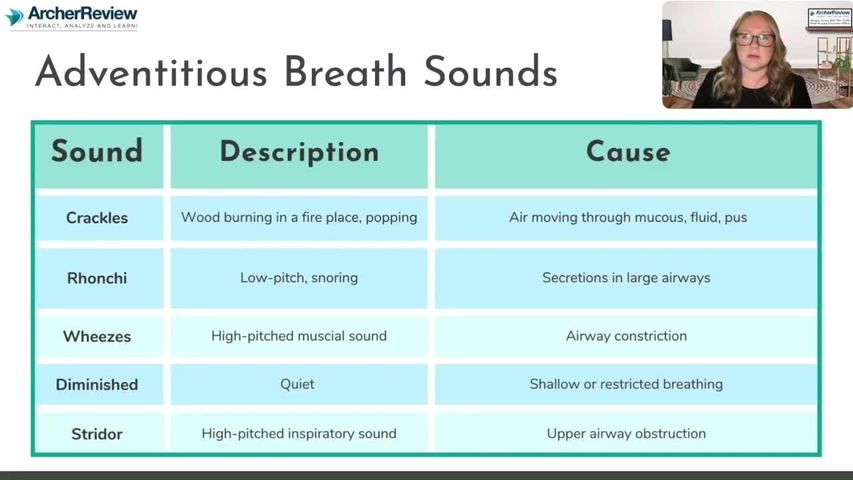
Adventitious Breath Sounds
17.2 Adventitious Breath Sounds
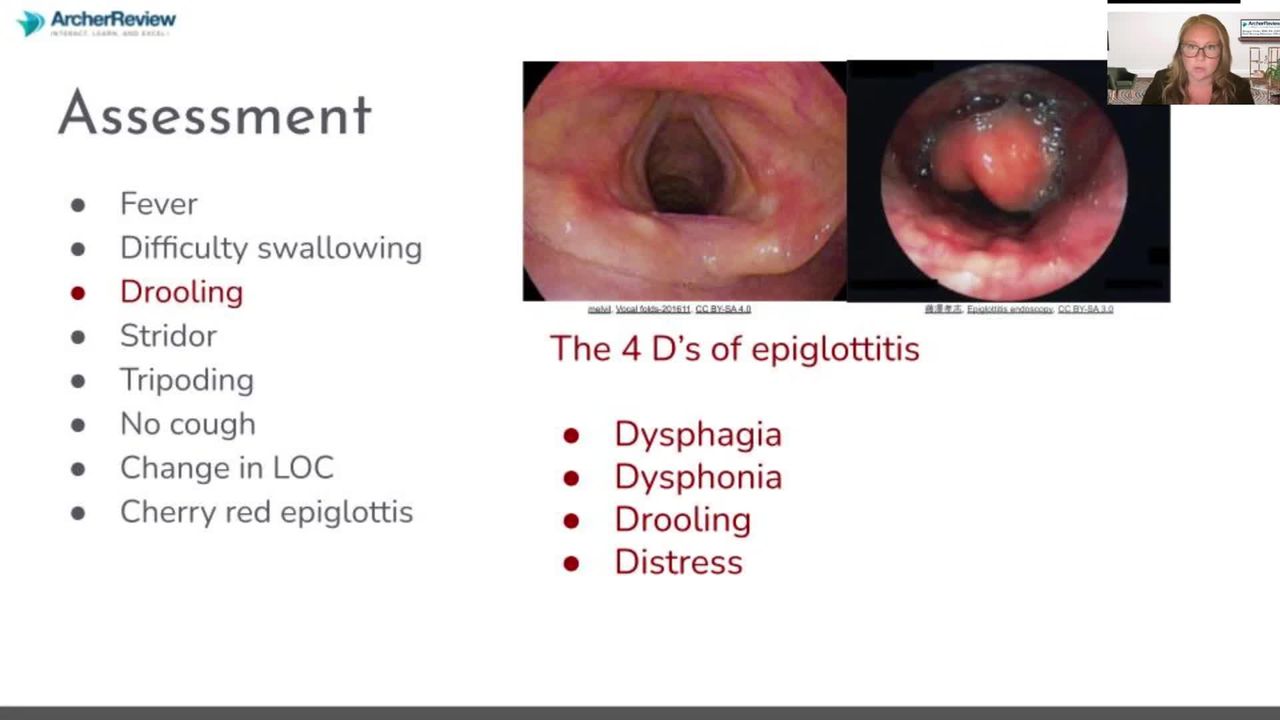
Croup
31.8 Pediatric Respiratory Conditions
Additional Info
✓ Croup (laryngotracheitis and laryngotracheobronchitis) is commonly caused by a viral infection (influenza types A and B, adenovirus, RSV, and measles) that is slowly progressive
✓ It typically features a brassy (barking) cough, hoarseness, restlessness because of the frequent coughing, low-grade fever, and inspiratory stridor. The inflammation and swelling of the upper airways result in stridor. In severe croup, the child should be evaluated very carefully not to cause any additional discomfort because any increase in agitation or crying can further worsen the airway narrowing.
✓ Treatment is with corticosteroids, fluids, and nebulized epinephrine in severe cases
https://app.archerreview.com/test-screen/MjQyNzUxNDE=/MTI0OTA=
