The nurse is supervising a newly hired nurse administer prescribed medications via a double-lumen nasogastric tube (NGT) with an air vent. Which action by the newly hired nurse requires follow-up? The newly-hired nurse
The nurse is supervising a newly hired nurse administer prescribed medications via a double-lumen nasogastric tube (NGT) with an air vent. Which action by the newly hired nurse requires follow-up? The newly-hired nurse
A. irrigates the air vent before medication administration with water.
[72%]
B. contacts the pharmacy to obtain available medications in liquid form.
[12%]
C. flushes the NGT between medications with water.
[9%]
D. administers each medication separately through the NGT.
[7%]
Statistics
Subject/Lesson
Subject
Pharmacology
Lesson
Medication Administration
Client Need
Test Plan
Pharmacological and Parenteral Therapies
Related Topic
Medication Administration
Item Type
Item Type
Analysis
Explanation
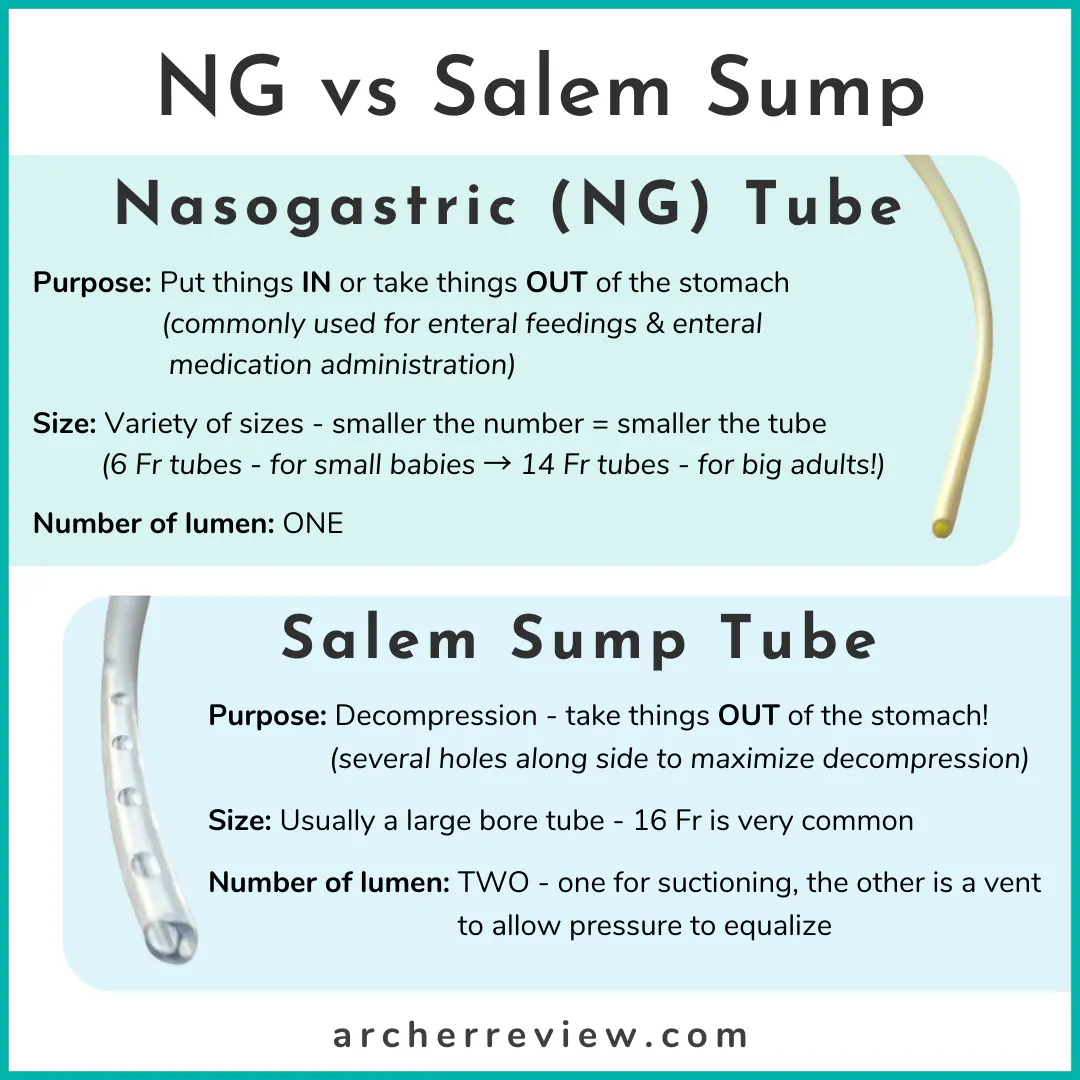
Choice A is correct. The air vent should not be irrigated with water or used to administer medications. The purpose of the air vent is to permit free, continuous drainage of secretions when the NGT is connected to suction. This vent is found on a Salem sump tube and is often called a blue "pigtail."
Choices B, C, and D are incorrect. These actions are correct and do not require follow-up. Fragments of medication may clog an NGT, and medications interchanged into a liquid form are preferred to prevent this obstruction. Medications should be administered individually to prevent medications from reacting with each other and causing obstruction in the tubing. Flushing the tube with 15-30 mL of water in between each medication is essential to prevent obstruction of the tubing.
Related Videos
4 Key Topics
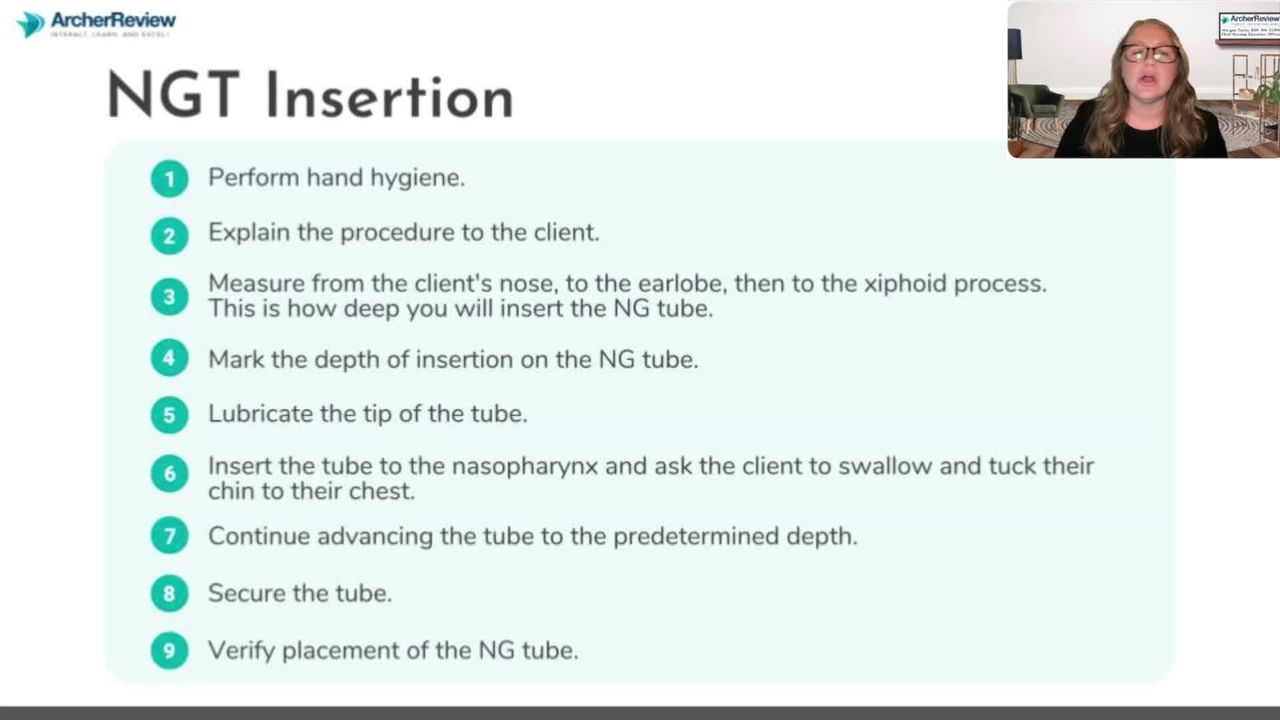
NG Tubes
4.1 Enteral & Airway Tubes
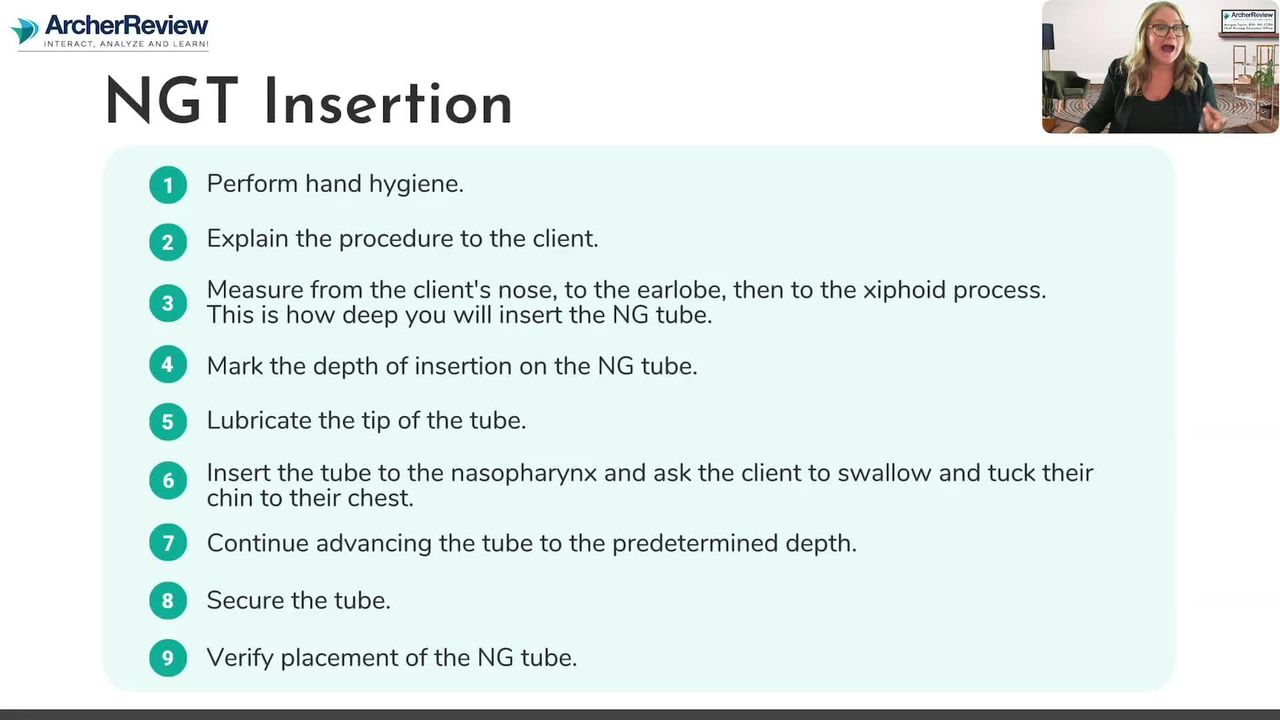
Reduction of NG Tube Risk
12.6 Tubes, Lines & Catheters
Additional Info
 ✓ After the placement of an NGT, the nurse should verify the placement via an x-ray
✓ Subsequent verification should come through gastric pH analysis. A pH < 4 indicates the tube is likely in the stomach.
✓ When administering medications via NGT, the nurse should never crush extended-release or sustained-release medications.
✓ To administer medications via NGT, the nurse should disconnect the NGT suctioning.
✓ The nurse should initially flush the NGT with 20-30 mL of tepid tap water.
✓ The nurse should flush the tube with 15 mL between each medication.
✓ Once the medications have been administered, the nurse should flush the NGT with 20-30 mL of tepid tap water.
✓ The Levin and Salem sump tubes are the most common for stomach decompression.
✓ The Levin tube is a single-lumen tube with holes near the tip
✓ The Salem sump tube is preferable for stomach decompression. The tube has two lumina: one for removal of gastric contents and one to provide an air vent.
Potter, P., Perry, A., Stockert, P., Hall, A. (012022). Fundamentals of Nursing, 11th Edition.
