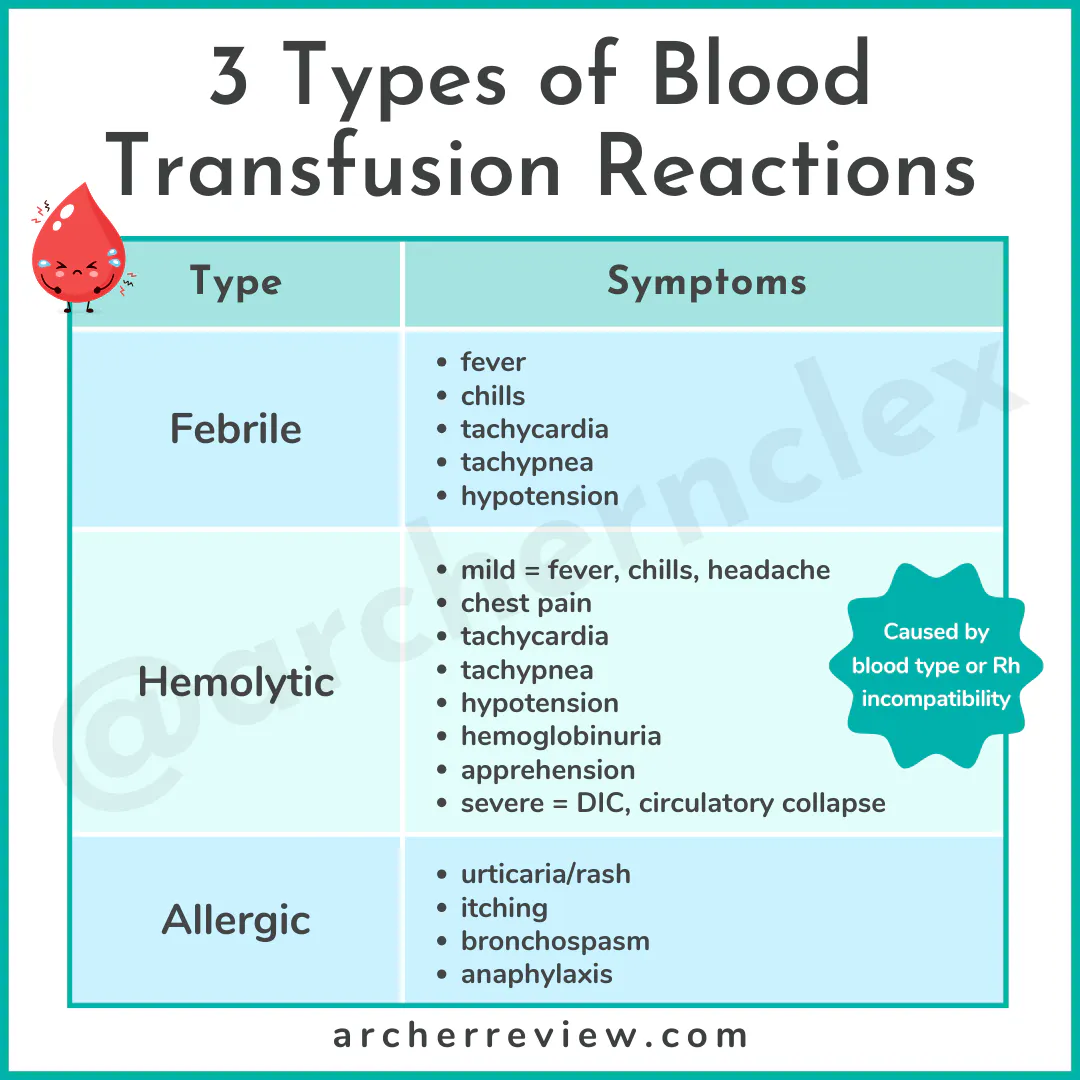
The nurse is preparing to administer one unit of packed red blood cells (PRBCs) to a client with sickle cell disease. The nurse suspects that the client is experiencing a transfusion reaction.
Select the clinical manifestation with the corresponding transfusion reaction
The nurse is preparing to administer one unit of packed red blood cells (PRBCs) to a client with sickle cell disease. The nurse suspects that the client is experiencing a transfusion reaction.
Select the clinical manifestation with the corresponding transfusion reaction
| Suspected Reaction | Clinical Findings |
|---|---|
Hemolytic reaction |  |
Febrile reaction |  |
Allergic reaction |  |
Statistics
Subject/Lesson
Subject
Pharmacology
Lesson
Blood and Blood Products
Client Need
Test Plan
Pharmacological and Parenteral Therapies
Related Topic
Blood and Blood Products
Item Type
Item Type
RecognizeCues
Explanation
The two earliest reactions that may occur during a blood transfusion are allergic or hemolytic.
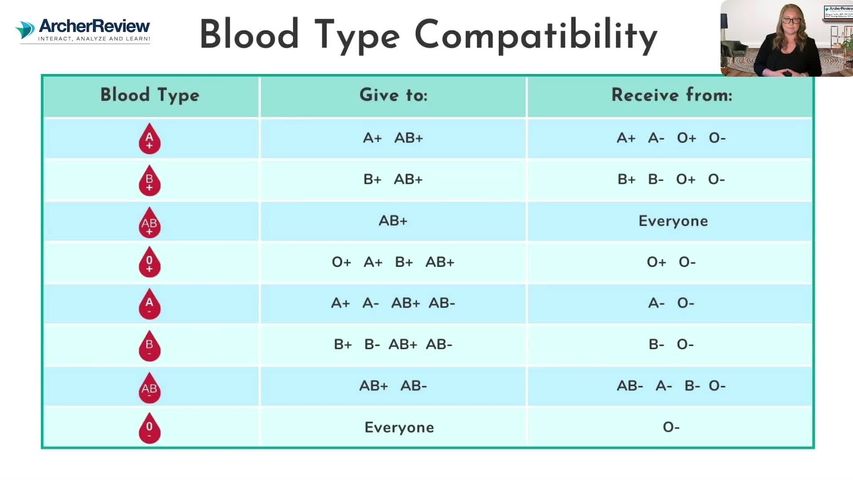
➢ Hemolytic reactions occur due to ABO blood type incompatibility. Manifestations of a hemolytic reaction include low back pain, tachycardia, flank pain, headache, and a feeling of impending doom.
➢ Allergic reactions occur during blood transfusions due to the patient's sensitivity to the donor's blood plasma proteins. The severity may range from mild to moderate (pruritus, urticaria) to severe (anaphylactic shock). Treatment includes pausing the transfusion and administering prescribed medications such as diphenhydramine or prednisone.
➢ Febrile reactions may occur up to 24 hours following the transfusion of a blood product. Manifestations of a febrile reaction include flu-like symptoms (fever, chills, muscle aches). Treatment includes pausing the transfusion and administering prescribed medications such as acetaminophen or naproxen.
Related Videos
2 Key Topics
Blood Administration- Hematologic System
24.4 Blood Products & Administration
Additional Info
The nurse should remain with the client during the first fifteen to thirty minutes of a transfusion to observe for a hemolytic or allergic reaction. A hemolytic blood transfusion may be fatal if not caught promptly. The primary cause of this reaction is the misidentification of the client and the blood product. Manifestations of a hemolytic reaction include low-back pain, chest pain, tachycardia, hypotension, and a feeling of impending doom. If a hemolytic reaction is assessed, the nurse should immediately discontinue the transfusion and save the tubing and unit of blood for further analysis. Immediate client care involves spiking a new bag of isotonic saline (with new tubing) and keeping the intravenous catheter patent.