The nurse is caring for a client receiving mechanical ventilation receiving fentanyl and midazolam. Which of the following assessment findings would indicate fentanyl toxicity?
A. constricted pupils
[62%]
B. hypertension
[6%]
C. coarse Tremors
[27%]
D. diarrhea
[4%]
Statistics
Subject/Lesson
Subject
Pharmacology
Lesson
Analgesics
Client Need
Test Plan
Pharmacological and Parenteral Therapies
Related Topic
Adverse Effects/Contraindications/Side Effects/Interactions
Item Type
Item Type
Knowledge/Comprehension
Explanation
Choice A is correct. Fentanyl is an opioid. A clinical feature of opioid toxicity includes central nervous system depression that manifests as lethargy leading to somnolence. Further, the client will have pupillary constriction, bradypnea, and decreased gastrointestinal motility. While opioids cause pupillary constriction, this would also be a finding in toxicity. Since this client receives mechanical ventilation, respiratory depression would not be a reliable finding.
Choice B is incorrect. Manifestations of opioid toxicity would consist of hypotension, not hypertension, because of the effects of histamine.
Choice C is incorrect. Tremors are not a manifestation associated with opioid toxicity.
Choice D is incorrect. Diarrhea is not a finding consistent with opioid toxicity. Opioids decrease peristalisis, leading to constipation.
Related Videos
2 Key Topics
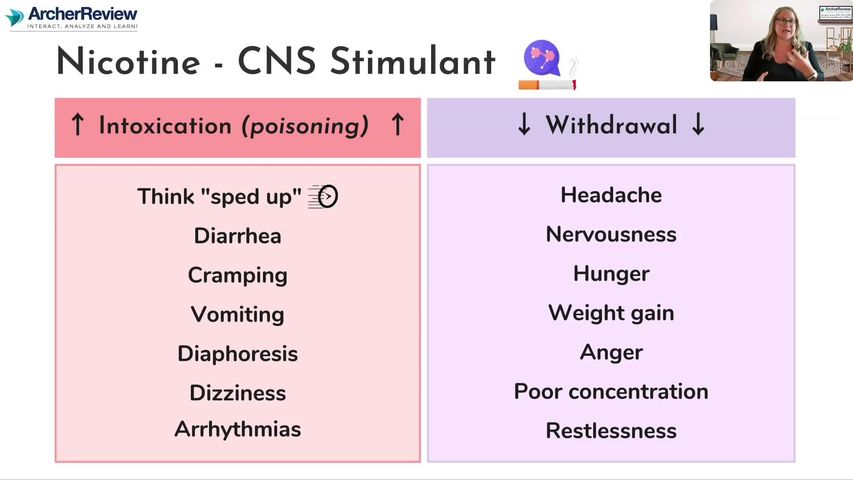
Substance abuse
13.4 Substance Use & Family Systems
Additional Info
✓ Opioids such as fentanyl, morphine, hydromorphone, and oxycodone may produce life-threatening manifestations if taken in excess.
✓ Opioid use disorder is a treatable illness through medication-assisted treatment and psychotherapy.
✓ Treatment of acute opioid toxicity includes stopping the offending agent and the administration of naloxone.
