The nurse is conducting a health screening at a local health fair. Which of the following should the nurse recognize as risk factors for peptic ulcer disease (PUD)? Select all that apply.
The nurse is conducting a health screening at a local health fair. Which of the following should the nurse recognize as risk factors for peptic ulcer disease (PUD)? Select all that apply.
Statistics
Subject/Lesson
Subject
Adult Health
Lesson
Gastrointestinal
Client Need
Test Plan
Health Promotion and Maintenance
Related Topic
Health Promotion/Disease Prevention
Item Type
Item Type
Knowledge/Comprehension
Explanation
Choices A, B, D, and E are correct. These products are gastric irritants, and overexposure to these substances may cause PUD. Prolonged NSAID use (such as ibuprofen) is commonly implicated in the causation of PUD because of their ability to inhibit COX-1 in the gastrointestinal tract. H. pylori is a gram-negative bacteria that may be acquired by an individual consuming contaminated food or water. Alcohol and tobacco usage causes more gastric acid to be discharged. When used together, the risk for PUD is substantially increased.
Choice C is incorrect. IBS is a functional GI disorder that causes spasms of the large bowel. This disorder is not implicated in causing PUD.
Related Videos
4 Key Topics
Gastric Ulcer
20.5 Esophageal & Gastric Disorders
Duodenal Ulcer
20.5 Esophageal & Gastric Disorders
Additional Info
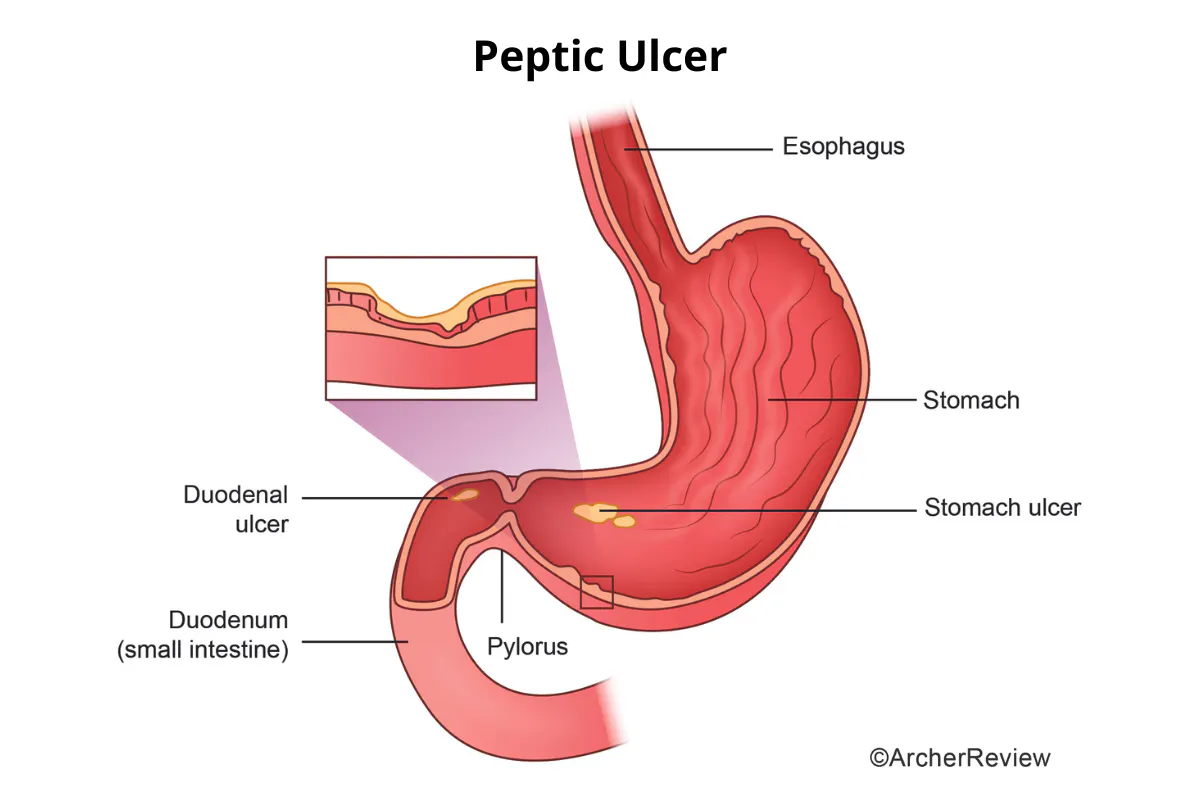
Three ulcers make up PUD and include duodenal ulcers, gastric ulcers, and stress ulcers. Many ulcers are caused by H. pylori infection.
Gastric ulcers usually develop in the antrum of the stomach near acid-secreting mucosa. Duodenal ulcers occur more often than other types. Most duodenal ulcers are present in the upper portion of the duodenum. Stress ulcers are acute gastric mucosal lesions occurring after an acute medical crisis or trauma.
Treatment for PUD includes PPIs, H2 blockers, and antibiotics if the cause is H. pylori.