A nurse cares for a client who has missed their last appointment with the primary healthcare provider (PHCP). The client states, "I missed my appointment because I overslept, but I knew it would be pointless anyway." The client is demonstrating which defense mechanism?
A nurse cares for a client who has missed their last appointment with the primary healthcare provider (PHCP). The client states, "I missed my appointment because I overslept, but I knew it would be pointless anyway." The client is demonstrating which defense mechanism?
A. Projection
[8%]
B. Reaction formation
[14%]
C. Denial
[9%]
D. Rationalization
[69%]
Statistics
Subject/Lesson
Subject
Mental Health
Lesson
Mental Health
Client Need
Test Plan
Psychosocial Integrity
Related Topic
Stress Management
Item Type
Item Type
Analysis
Explanation
Choice D is correct. Rationalization is a higher-level defense mechanism that involves an individual justifying behavior that is often offensive or abnormal through statements that they believe provide validation. However, rationalizing the behavior is done to avoid authentic feelings such as guilt if they have done something wrong. The client missing their appointment because they overslept is rationalizing this choice because they perceived the appointment as pointless.
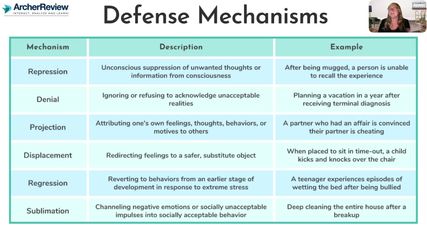
Choice A is incorrect. The client is not demonstrating projection because they are not attributing their unacceptable feelings and thoughts to someone else. An example of projection is when an individual has an extramarital affair and accuses their partner of infidelity.
Choice B is incorrect. Reaction formation is when an individual acts opposite to their true feelings or actions. An example is if a client has contempt for another person but is overly kind and bright in that person's presence.
Choice C is incorrect. Denial is not exhibited because the client is acknowledging the missed appointment. Denial is when individuals block situations because they refuse to embrace the situation and associated emotions.
Related Videos
4 Key Topics
Defense Mechanisms in Mental Health
32.2 Psychological Concepts & Safety
Defense Mechanisms
13.1 Psychosocial Stressors & Coping
Additional Info
✓ Defense mechanisms may be immature or mature
✓ Immature defense mechanisms include
- acting out
- denial
- projection
- devaluation
- regression
- passive aggression
✓ Mature defenses include
- impression
- sublimation
- humor
- altruism
- identification
✓ Engage in open and non-judgmental communication to encourage the client to express their feelings and concerns. Provide a supportive environment for them to share their thoughts.
